

























































The bill would guide removal priorities, not settle where fuel goes
Reps. Mike Levin and Darrell Issa have reintroduced the bipartisan Spent Fuel Prioritization Act. It would require the Department of Energy to consider nearby population, seismic hazards and national-security issues when deciding which decommissioned reactors should have fuel removed first, according to ANS Nuclear Newswire. The proposal would not establish a permanent repository or an interim-storage site, and it would not authorize sending spent fuel to a state or locality that has not consented, ANS reports.
The legislation would set criteria for prioritization but does not itself provide a destination or transfer date for San Onofre’s fuel. Levin has said he wants the fuel moved during his time in Congress and hopes that could happen in the middle to latter part of the next decade, Spectrum News reported.
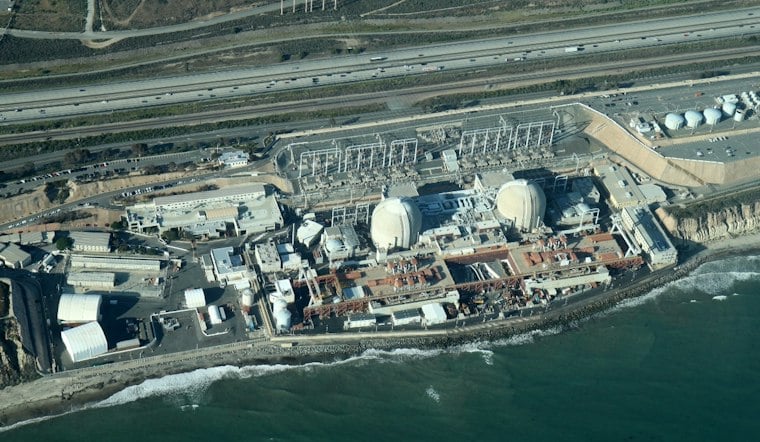
Fuel remains at the closed coastal plant
San Onofre shut down in 2013, but about 3.6 million pounds of spent fuel remain there. After cooling in pools for at least five years, the fuel was moved by 2020 into underground steel canisters, according to Times of San Diego. The storage area is about 100 feet from the Pacific, the Los Angeles Times reports.
The plant is undergoing a six-year, $4.7 billion decommissioning, with demolition of its twin domes scheduled to begin in late 2027, Spectrum News reported. The waste is expected to remain after much of the former plant is demolished; the United States has no permanent repository currently accepting commercial spent fuel, according to Times of San Diego.
Federal campus proposal has no stated opening date
The Department of Energy is pursuing Nuclear Lifecycle Innovation Campuses that could handle several stages of the nuclear fuel cycle, including fuel production, reprocessing and disposal, according to ANS Nuclear Newswire. The outlet reports that Idaho, Louisiana, Oklahoma, Tennessee, Utah and West Virginia have signed memorandums of understanding as finalists. Twenty-eight states applied for consideration, according to Engineering News-Record.
Federal law identifies Nevada’s Yucca Mountain as the nation’s only authorized repository, and changing the law would be necessary to allow other disposal pathways, Spectrum News reported. The Department of Energy did not provide that outlet with a timeline for when a campus might open.
Nearby advocates oppose continued coastal storage
Pete Stauffer, who lives within two miles of the plant and works for the Surfrider Foundation, has argued that storing the fuel on the coast is unsuitable and that any relocation should involve community consent, Spectrum News reported. The outlet also reported that Surfrider will continue advocating for the material to be moved while the proposed campuses remain unopened.





