

























































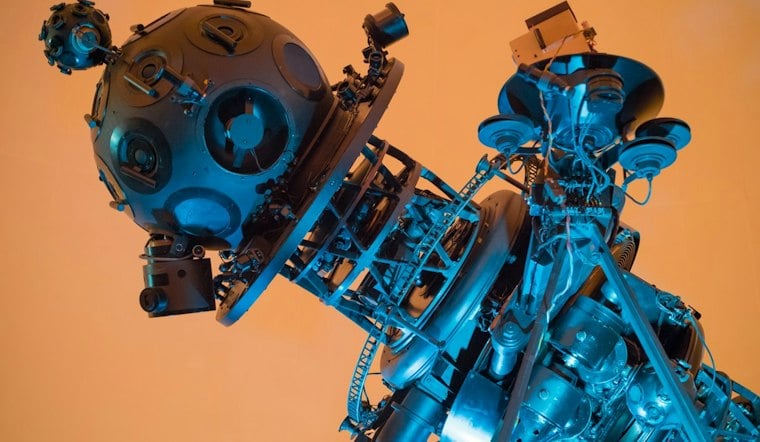
San Francisco State University's Charles F. Hagar Planetarium went dark this past week after more than 50 years of star shows, closing its doors for a long-planned renovation that will swap in modern projection technology while trying to hold onto the charm that made it a campus fixture since 1973. The final public show, titled “Tracing Humanity Through the Stars,” played out on Oct. 13.
A Final Night Under the Dome
Astronomy graduate student Gillis Lowry, who has presented planetarium shows at SF State since October 2025, led that closing presentation, according to Golden Gate Xpress. Lowry said connecting people to the natural world matters, a sentiment that framed the night as both a send-off and a reminder of what the little dome has offered the campus for decades. Jim Muyo, SF State's director of development communications and an alumnus of the university, attended the Oct. 13 show and said the final presentation taught him about the moons of Jupiter and Saturn, per the same report.
The planetarium, named for Charles Hagar, has operated for more than 50 years and has served roughly 100,000 visitors since opening in 1973, according to SF State's development office. The venue is modest by design — it seats just 45 people for live shows — but it has quietly functioned as both a classroom and a community space, hosting SF State astronomy laboratory classes alongside free public programs and shows for schoolchildren, the university notes.
Why the Timing Finally Stuck
Renovation planning has been in the works for three years, according to Dr. Adrienne Cool, who leads the project, as reported by Golden Gate Xpress. The closure date has shifted before: the planetarium was expected to shut down “this fall,” while a February report from Golden Gate Xpress said renovations had been postponed until May 2026, and an earlier November report from the same outlet said work was slated to begin Feb. 26, 2026. Whatever the exact path, the October shows were promoted as the last chance to see the facility's vintage projector in action, according to an SF State campus memo.
That projector, a Spitz 512, has been running the show for more than 50 years, per the planetarium's own description. The renovation will retire it in favor of a Zeiss projector, chosen for the quality of its night-sky projection, the department reports. The new system is expected to produce an accurate night sky of 9,500 stars along with fine details of the Milky Way, according to SF State News.
Funding a New Era, One Piece at a Time
The project carries financial backing from the Heising-Simons Foundation, a San Francisco-based funder that supports climate and clean energy, early childhood education, fundamental physics, astronomy research and human rights. The foundation's total philanthropic investment in the planetarium now stands at $1.95 million, after it added $450,000 to an earlier $1.5 million commitment in March 2025, per SF State's development office. Even so, the planetarium still needs additional funds for a full renovation, and the College of Science and Engineering is actively raising money for new seating and dome lighting required before it can reopen.
Fundraising for the video projection system is expected to follow that seating and lighting campaign, meaning the full-dome video component could be installed later if necessary, per the same account. When it does arrive, the system is planned to display images from sources such as the James Webb Space Telescope and enable simulated journeys across the surfaces of planets and moons, according to SF State News. University officials say the renovated facility is expected to increase student participation, broaden training opportunities and improve the overall visitor experience.
Keeping the Old Projector's Legacy Alive
Not everything is being swapped out in the name of modernization. Renovation planning considers preserving the existing Spitz projector as part of the planetarium's history, and the broader plans aim to keep the venue's interactive format intact even as the technology changes, according to Golden Gate Xpress. Planetarium and Observatory Technician Jim Gibson has said a dedicated star projector reproduces the night sky better than video alone — part of the reasoning behind retaining a physical star projector alongside the new digital system rather than going all-digital.
Chris McCarthy, an adjunct assistant professor of exoplanetary science who teaches an astronomy laboratory course that uses the planetarium, said the facility enables a connection to the night sky that's otherwise hard to come by in foggy, light-polluted San Francisco. That connection won't be available in the usual way for a while: introductory astronomy laboratory students will no longer meet in the planetarium during the closure, per Cool, and instructors will need to adjust how their classes operate in the meantime. Some of those instructors previously taught without access to the facility during the COVID-19 pandemic, giving them a playbook of sorts, while free software like Stellarium offers another way to simulate the night sky in the interim.
The department hopes to reopen the planetarium for the fall 2027 semester, though the exact timeline depends on how quickly the remaining funds are raised, per the department's own account relayed through Golden Gate Xpress. Until then, the Spitz 512 that guided generations of SF State students through the moons of Jupiter and Saturn sits dark, waiting for its successor to take the stage.




