

























































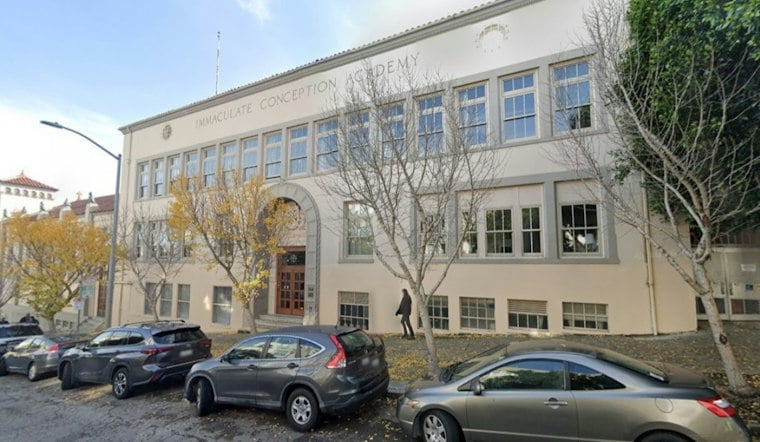
San Francisco Unified School District says it will not hit its own goal of getting 70% of graduates ready for college or a career, with district leaders describing progress toward that target as significantly off track. The New York Post reports that 59.2% of the graduating cohort was marked ready in 2026, still below the district's 70% target.
SFUSD's college and career readiness goal is reaching 70% by June 2027, as stated in the district's 2023 board monitoring report and 2025-26 Local Control and Accountability Plan. The district's reported readiness rate was 58% in both 2023 and 2024, although the 2024 figure may be inaccurate. That same plan states SFUSD's rate exceeded the California state average of 45% that year, though statewide readiness figures vary considerably depending on which measure and source is used.
What Counts as 'Ready' in San Francisco
The metric driving the conversation is known as the College/Career Indicator, a composite measure that factors in a high school student's academic performance alongside their participation in readiness activities. Per a SFUSD board monitoring report, the indicators folded into that score include high school graduation, performance on the SBAC state assessment, completion of “a-g” coursework with a C or higher, dual enrollment, career technical education, and Advanced Placement participation, among other measures.
Separate district progress monitoring from February 2025 shows how uneven the underlying pieces can be. Only 45% of targeted 11th- and 12th-grade students enrolled in CTE, college-credit, or AP courses earned a C- or higher by the end of the fall 2024 semester, the same report notes. Meanwhile, 69% of 10th graders were on track to earn the credits they need to graduate through state-approved a-g courses as of that same point, according to the district's progress monitoring document.
Internships and CTE Participation
That strain comes even as the district has made real gains in getting students into the workforce pipeline. The number of SFUSD student interns rose from 251 in 2019 to 1,211 in 2022, per the board's 2023 monitoring report. At the same time, participation in career technical education among 9th through 12th graders in the district actually slipped slightly, falling from 26% in 2022 to 25% in 2023, the same report shows.
How California's Numbers Compare
Statewide readiness figures depend heavily on which yardstick is used. The Public Policy Institute of California reports that 52% of California high school graduates are prepared for college or a career under its measure, with another 14% rated as approaching prepared, according to a PPIC analysis. Using a narrower academic-only standard — meeting both English and math benchmarks on the grade 11 SBAC exam — PPIC found only 23% of California's 2025 graduates qualified as academically prepared for college, a figure the researchers note should not be confused with the broader readiness measure. PPIC also points out that A-G course completion rates have risen every year statewide since 2018.
The New York Post reported on California's 2026 district-level performance metrics, framing SFUSD's situation within a broader statewide readiness picture, according to the New York Post.
Lessons From Los Angeles
A new SRI International report found that LAUSD students who completed CTE pathways graduated at higher rates and were more likely to complete college-preparatory coursework and enroll in college than their peers, as reported by EdSource. Graduates who finished a certified Linked Learning pathway specifically were 16% more likely to complete college-prep coursework and 24% more likely to enroll in college than students who took no CTE courses at all, the outlet's reporting on the SRI study found. Program completion rates told a similar story: about half of students in certified Linked Learning pathways finished their programs, compared with roughly a quarter of students in traditional CTE tracks.
LAUSD's 2026-30 strategic plan formally commits to ensuring every student graduates prepared for college, career, and life, according to the district's own strategic plan.
For now, San Francisco Unified's own numbers remain the clearest local benchmark of how far the district still has to go to close the gap between its stated ambitions and what students are actually achieving by graduation.





