

























































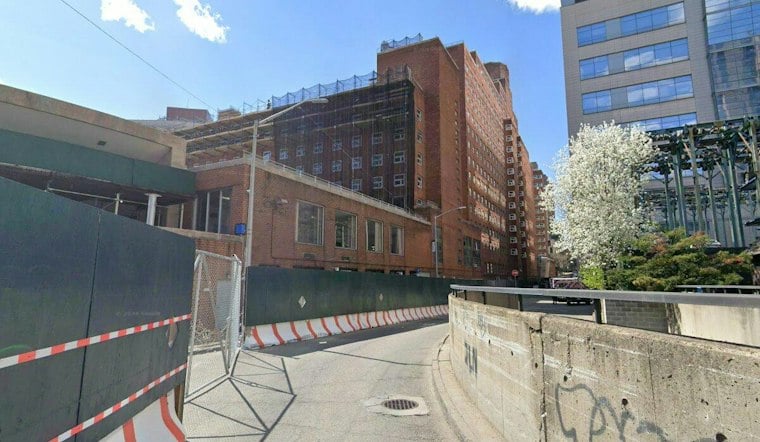
A notoriously narrow stretch of Manhattan's East River waterfront, where cyclists and pedestrians have long been forced to squeeze past each other on a path just four feet wide, is getting a $163 million fix. The New York City Department of Design and Construction has selected a joint venture of Skanska USA Building Inc. and architecture firm WXY to design and build the East Side Greenway 14th Street Connector, a new elevated esplanade meant to close one of the most persistent gaps in the city's waterfront trail network.
DDC announced the Skanska/WXY team as the apparent selected proposer on June 29, 2026, and Skanska signed the contract on October 21, 2026. WXY is led by Claire Weisz and previously helped shape early conceptual designs for the East River waterfront, according to the NYC Department of Design and Construction. The award followed a best-value competition among three shortlisted design-build teams, including Walsh Construction/Jacobs and Weeks Marine/Kiewit, with all finalist proposals capped near the $163 million project ceiling, Engineering News-Record reported. Separately, the Zurich-based financial outlet VZ VermögensZentrum reported the contract is valued at roughly SEK 1.5 billion and that Skanska will include it in its U.S. order bookings for the fourth quarter of 2026.
A Four-Foot Bottleneck Between the Highway and a Power Plant
The project targets a long-standing pinch point near East 14th Street, where the current waterfront path narrows to just four feet between the FDR Drive and Con Edison's power generating facility. That bottleneck sits within a larger problem: roughly 4.5 miles of gaps remain in the 32-mile circumferential Manhattan Waterfront Greenway, according to a report from Streetsblog New York City. Advocates have also outlined priorities for the Greenway.
Once complete, the new outboard structure will link East River Park to Captain Patrick J. Brown Walk and Stuyvesant Cove Park, a 1.9-acre former brownfield that was converted into an eco-park, according to Engineering News-Record. The esplanade will include a shared pedestrian and bicycle path, and Stuyvesant Cove Park sits adjacent to the Stuyvesant Town-Peter Cooper Village residential complex.
Tying Into a Much Larger Flood Barrier System
Tying Into a Much Larger Flood Barrier System The adjacent $1.45 billion East Side Coastal Resiliency project is building a 2.4-mile continuous flood barrier stretching from Montgomery Street to East 25th Street, the city's design and construction agency notes. The completed higher elevation of East River Park will provide the right footing for the connector's southern end, Engineering News-Record reported. Hoodline previously detailed the progress and community debate surrounding that broader resiliency effort, which combines elevated parkland, berms, and 18 floodgates.
Design-build delivery itself is central to the city's pitch. Municipal officials estimate the approach will shorten the connector's construction schedule by two years and save approximately $16 million compared to traditional lowest-bidder contracting, according to DDC. That authority stems from New York State's recent expansion of the city's power to use design-build on major infrastructure projects.
New DDC Leadership Pushes Faster Delivery
The push for speed lines up with priorities set by DDC Commissioner Paul A. Ochoa, appointed in April, who has prioritized expanding design-build delivery to accelerate long-delayed capital infrastructure projects across the city. Hoodline reported on his appointment this spring, noting Ochoa previously served as executive deputy commissioner at the city's Department of Transportation.
Skanska brings direct experience to the job. The East Midtown Greenway opened in December 2023 as a 1.8-acre waterfront promenade. Hoodline mentioned the project in an unrelated Manhattan real estate story this past August.
Engineering Around an Active Power Plant
Engineering Around an Active Power Plant Design and engineering plans must navigate unusual site constraints because the new outboard esplanade will run alongside an active Con Edison generating plant and its operational industrial pier, Engineering News-Record reported. The project also involves unusual marine conditions and permitting.
Despite the contract award, construction is not imminent. Groundbreaking is not expected until early 2028, with completion targeted for the end of 2030. The timeline also requires coordination among multiple city agencies and Con Edison, work that will play out over the next several years before Lower Manhattan's waterfront walkers and cyclists see the bottleneck disappear for good.





