

























































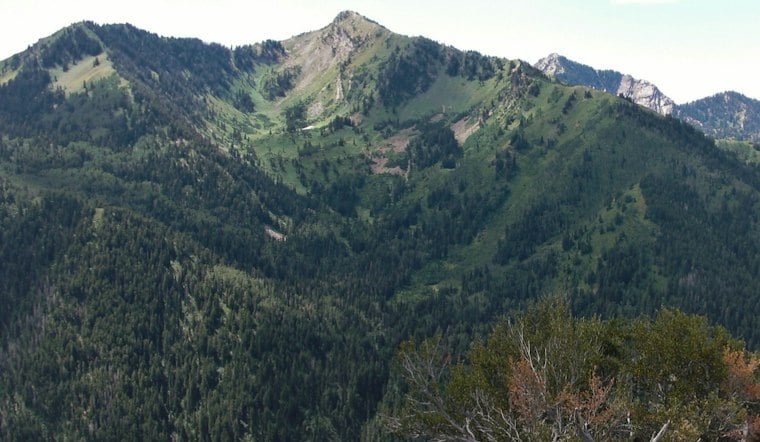
Drivers along the Wasatch Mountain range may notice smoke and flames through Tuesday as the U.S. Forest Service carries out prescribed burns across roughly 114 acres in three Salt Lake County canyons. The operations, which began Sunday, are designed to clear overgrown vegetation and dead trees that have piled up risk for the next major wildfire.
According to KJZZ, the Unified Fire Authority said the burns will take place in Millcreek Canyon, Lambs Canyon and near Parleys Summit, with fire operations expected to continue throughout the week. The breakdown, as reported by KSL, covers approximately 64 acres in Lambs Canyon, 25 acres in Millcreek Canyon and another 25 acres in Parleys Canyon, with the work scheduled to run from Sunday through Tuesday barring weather concerns.
Residents already got a preview of what that looks like. A prescribed fire produced visible smoke in Parleys Canyon on Sunday while crews cleared vegetation there, according to the Salt Lake Tribune. Officials have stressed that the prescribed burns remain under control and are being monitored by federal foresters throughout the process.
Why Officials Are Burning Now
The Forest Service says the goal is straightforward: thin out fuel before it becomes the next big fire. Foresters believe the work will help protect communities, infrastructure and natural resources from future wildfires, per KSL's reporting. The agency points to a buildup of dead trees driven by the natural life cycle of trees, beetle damage and ongoing drought, all of which have pushed fire risk higher in the canyons.
Salt Lake County Emergency Management said the controlled burns will reduce accumulated vegetation and other fuels in the area, an effort aimed squarely at shrinking the odds of a repeat of this year's fire season. A University of Utah wildfire researcher cited by KSL cautioned that continued drought could push fire risk into higher elevations, even in the Wasatch, underscoring why foresters are getting ahead of conditions now rather than later.
What Drivers and Residents Should Know
Smoke may be visible during operations, and ABC4 advised drivers to slow down and turn on their headlights if smoke drifts across roadways. Some roads in the burn areas may be closed for public safety while crews work, the station reported.
Officials also want to head off a flood of unnecessary 911 calls. Residents should not be alarmed by smoke from the prescribed burns, and calling 911 to report it is unnecessary, according to the canonical guidance released alongside the operation. That said, officials said people should still call 911 if smoke or fire appears unrelated to the prescribed burns or poses an immediate threat to life or property.
A Record-Breaking Fire Season Sets the Backdrop
The timing follows Utah's roughest wildfire season in nearly two decades. More than 500,000 acres have burned statewide in 2026, making it the state's most severe fire season since 2007, according to a Utah State University analysis. That eclipses the state's next-highest recent total of more than 400,000 acres burned in 2018, per the same report.
Utah logged 1,240 wildfires this season, and lightning caused roughly half of them, according to state data. Two of the largest, the Widemouth 2 Fire and the Babylon Fire, were both determined to be naturally caused and together burned more than 236,000 acres over the summer.
Fire managers elsewhere in the state have been leaning on prescribed burns as a cheaper, more controlled alternative to fighting fires after they ignite. A prescribed burn at a site in Richfield, Utah, cost less than $40 per acre to carry out, compared with the $1,500 per acre it took to contain last year's Monroe Canyon fire, according to Deseret News. The Forest Service has also planned a roughly 1,000-acre prescribed burn near the West Fork of the Duchesne River, about 15 miles east of Heber, as reported by KPCW.
Bureau of Land Management officials have said prescribed fire is generally less expensive than mechanical thinning or logging and delivers ecological benefits those methods cannot match, restoring some of the natural balance historically maintained by wildfires before human intervention. For now, the message to Salt Lake County residents watching smoke curl over the ridgelines this week is simple: it is intentional, it is being watched, and it is part of a broader statewide push to keep next year's fire season from looking like this one.





