

























































Utah has joined 16 other states in a $665 million settlement with Snap Finance, a lease-to-own payment company accused of misleading customers with confusing payment terms and false promises about credit scores. The deal cancels more than $16.7 million in lease payments owed to Snap Finance by Utah consumers alone, and the company will also pay the state $150,000.
Utah's Share of a Sweeping Crackdown
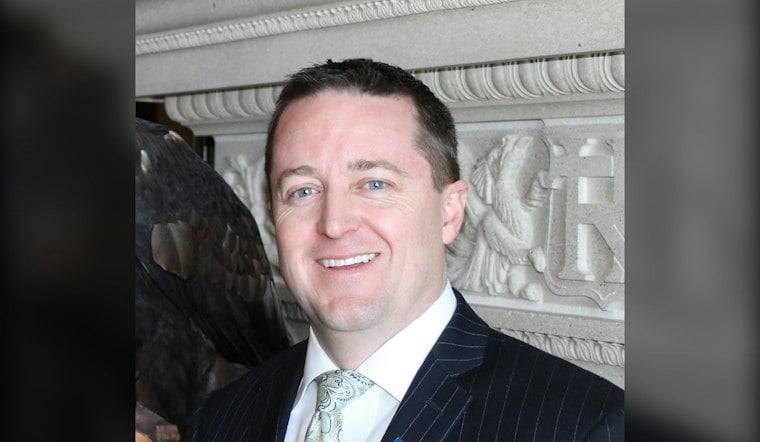
Utah Attorney General Derek Brown said the settlement cancels what Utahns owed and allows them to keep the merchandise they had been leasing, according to KUTV. Daniel Larsen, director of the Utah Division of Consumer Protection, said misrepresenting or hiding transaction terms harms Utahns, undermines marketplace trust, and damages the state's economy, per the same report. According to the lawsuit, Snap Finance offered lease-to-own agreements through partner retailers, buying merchandise from those stores whenever a customer chose Snap at checkout and then retaining ownership of the item while leasing it back to the customer until payment was complete.
States involved in the settlement accused Snap Finance of misleading customers about lease terms, failing to show the full terms of lease contracts, and relying on confusing payment structures. Investigators also found the company made it difficult for customers to reach Snap Finance when they tried to return leased items. Perhaps most strikingly, states said Snap Finance falsely claimed that on-time lease payments could raise customers' credit scores — a claim regulators determined was inaccurate.
Debt Relief Rolling Out State by State
The financial impact is landing hardest in states where Snap Finance had the largest customer bases. Nebraska and Iowa co-led the multi-state investigation, and Nebraska Attorney General Mike Hilgers announced Wednesday that $2,652,091 in remaining lease payments will be automatically canceled for 1,349 Nebraska consumers, according to 1011 Now. Also on October 21, West Virginia Attorney General JB McCuskey said Snap Finance would automatically wipe out $4,442,388 in lease payments owed by West Virginia residents who signed agreements between 2017 and 2022, with those consumers also keeping full ownership of their leased merchandise, the West Virginia Attorney General's Office announced.
Beyond Utah, Nebraska and West Virginia, the settlement covers consumers in Arkansas, Florida, Georgia, Idaho, Iowa, Kansas, Kentucky, Louisiana, Mississippi, Missouri, North Dakota, Oklahoma, Texas and Wyoming. Under the terms of the deal, Snap Finance must stop using slogans like “cash payoff,” “same as cash,” and “no additional fees required.” The company is also barred from making credit score claims, and it must show customers the full terms of their leases, repair or replace leased property in certain situations, provide practical ways for customers to return items, and guarantee customers the right to end a lease. Snap Finance cooperated with the investigation, according to the Utah Attorney General's Office, and agreed to change its business practices as part of the settlement.
How a Federal Case Fell Apart First
The state-led settlement follows a failed attempt by federal regulators to rein in Snap Finance through traditional credit law. In July 2023, the Consumer Financial Protection Bureau sued the company in the U.S. District Court for the District of Utah, alleging violations of the Truth in Lending Act, the Electronic Fund Transfer Act, and the Consumer Financial Protection Act, according to the Consumer Financial Protection Bureau. That complaint alleged Snap Finance charged consumers more than double the cash price of items over 12-month lease schedules, and court filings showed the company's internal strategy specifically targeted what it called “ALICE” consumers — those who are Asset-Limited, Income-Constrained, and Employed, and often lack access to traditional bank credit.
But U.S. District Judge Jill N. Parrish ruled in August 2024 that Snap Finance's lease-to-own contracts were not extensions of credit under federal law, since the agreements lacked the deferred debt obligation required for traditional credit classification. That ruling prompted the CFPB to voluntarily dismiss its lawsuit against Snap Finance with prejudice in May 2025. The state-led settlement addresses alleged misleading point-of-sale disclosures and unclear lease-termination rules.
A Pattern of Prior Settlements
This is not Snap Finance's first brush with regulators over similar practices. In May 2023, Pennsylvania Attorney General Michelle Henry reached a separate $11.4 million settlement with the company — including $7.3 million in cash restitution and $3.15 million in debt relief — over allegations it disguised 12-month leases carrying fees equivalent to 152% APR as “100-Day Cash Payoffs,” according to CBS News.
Snap Finance has also faced legal challenges unrelated to its lease terms. A $1.8 million class-action settlement over a 2022 data breach that affected about 61,302 people received final approval on January 23, 2024, according to the Murphy Law Firm. And in November 2022, the company established a $5 million settlement fund to resolve a class-action lawsuit alleging it made unsolicited robocalls to people who were not even its account holders, per Top Class Actions.
Headquartered in Utah, Facing a National Reckoning
Snap Finance LLC is headquartered in West Valley City, Utah, and was founded in 2012 by Matthew Hawkins to provide virtual point-of-sale lease-to-own financing through retail partner stores nationwide, according to Preqin. The company partners with merchants selling furniture, auto parts and appliances, giving it a footprint across a wide range of retail categories.
The broader legal question hanging over the lease-to-own industry remains unresolved. The lease-to-own industry maintains that termination rights distinguish its leases from credit sales, a distinction that courts have so far upheld even as state regulators continue pursuing companies like Snap Finance under consumer protection statutes instead.





