

























































Alector, the South San Francisco biotech that spent much of the past year cutting staff after a string of failed drug trials, just landed a lifeline from Genentech. Genentech agreed to pay $100 million upfront for exclusive global rights to AL050, an experimental brain-penetrating enzyme therapy aimed at Parkinson's disease, and Alector's stock jumped roughly 22% in Monday morning trading as the news broke.
The agreement, announced Monday, gives Genentech exclusive development and commercialization rights to AL050 across all disease indications, according to BioSpace. Genentech will also owe Alector additional milestone payments and tiered royalties on future sales, and takes on responsibility for developing, regulating, manufacturing, and commercializing the drug going forward. Alector keeps ownership of the underlying blood-brain barrier delivery platform that made the deal possible in the first place. Shares reportedly jumped about 22% in morning trading Monday following the announcement, as noted by Seeking Alpha.
AL050 is designed to deliver an engineered version of the enzyme glucocerebrosidase into the brain, where it breaks down toxic lipids — specifically glucosylsphingosine and glucosylceramide — that build up in brain cells when natural GCase activity runs low, according to a release carried by GlobeNewswire. That lipid buildup is thought to be a significant risk factor for Parkinson's progression. Mutations in the GBA1 gene, which impair GCase production, are associated with Parkinson's disease; a study posted on medRxiv describes GBA1 variants as the largest proportion of genetic variants and cites recent studies attributing up to 14.8% of Parkinson's cases to them.
A Deal Years in the Making, Built on Borrowed IP
Alector CEO Arnon Rosenthal said AL050 pairs the engineered GCase enzyme with Alector's brain carrier technology, which is designed to ferry therapies past the blood-brain barrier, according to the BioSpace report. Rosenthal's connection to Genentech runs deep: he spent a decade there as a research scientist from 1990 to 2000 before leaving to co-found Rinat Neuroscience and later Alector in 2013, per Alector's own investor materials. For Rosenthal, the agreement effectively brings AL050 back to the company where his research career began.
But Genentech couldn't simply license AL050 on its own terms. In parallel with the Genentech agreement, Alector exercised an option to license non-exclusive worldwide rights to engineered GCase patents from Spur Therapeutics, agreeing to pay Spur $15 million upfront plus a mid-teens percentage of future sublicense partnering income, according to TradingView. The patent license was arranged in parallel with Alector's grant of exclusive global rights to AL050.
Cash Runway Had Been Projected Through 2027
Alector had $172.8 million on hand previously, a balance the company had said would last only through 2027, per BioSpace.
Alector says it will put the new cash toward advancing its fully human anti-amyloid-beta antibody AL137, designed for subcutaneous delivery in Alzheimer's disease, along with pushing its siRNA programs through preclinical development. The company has scheduled a corporate scientific presentation for October 13 to detail its remaining wholly owned blood-brain barrier platform programs, including tau and alpha-synuclein siRNA candidates, according to a filing noted by StockTitan — a signal that Alector is steering investor attention toward the nucleic acid delivery pipeline it still owns outright.
A Rough Stretch Preceded the Rebound
The turnaround follows a genuinely difficult run for the company. Alector's partnership with GSK, struck in 2021 to advance two antibodies for neurodegenerative diseases, fell apart after the drugs failed to show significant clinical benefit, with GSK terminating the collaboration in July. That followed the October 2025 failure of latozinemab, which did not slow disease progression in a Phase 3 study of frontotemporal dementia patients, and the discontinuation in April of the Phase 2 PROGRESS-AD trial of nivisnebart after an interim futility analysis, according to Alector's own announcements. Alector also disclosed that AL002 failed to slow Alzheimer's progression in a midstage study.
Those setbacks led to brutal workforce reductions — a 49% downsizing that cut roughly 116 employees, following an earlier 17% layoff wave, per BioSpace. The company rebuilt itself around its blood-brain-barrier delivery programs, and Monday's deal is the clearest evidence yet that the bet is paying off.
Genentech's Broader Push Past the Blood-Brain Barrier
For Genentech and parent company Roche, the AL050 deal fits into a larger strategy of building multiple routes into the brain. Roche already operates its own Brainshuttle platform, used with the antibody trontinemab, which Genentech is assessing in late-stage studies for reducing amyloid in Alzheimer's patients. Beyond Brainshuttle, Roche and Genentech have struck recent platform deals with biotech developers including Sangamo Therapeutics and Manifold Bio, according to FirstWord Pharma — evidence that large pharmaceutical players are diversifying their technology bets for transporting therapeutic proteins past one of the brain's toughest biological barriers.
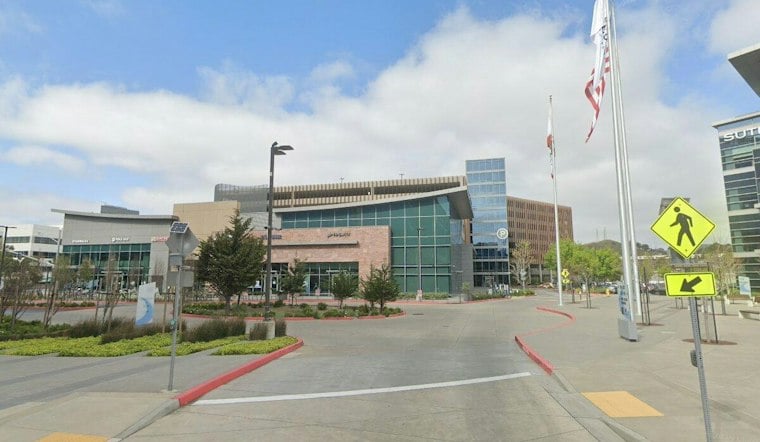
Both companies share a business interest in cross-brain-barrier science. Alector keeps its corporate headquarters in South San Francisco, a Peninsula city branded for decades as the Birthplace of Biotechnology, as Hoodline has previously reported. The dense cluster of commercial biotech campuses and lab infrastructure in South San Francisco is part of the backdrop for the deal, even as the science reaches toward the brain's most stubborn diseases.





