

























































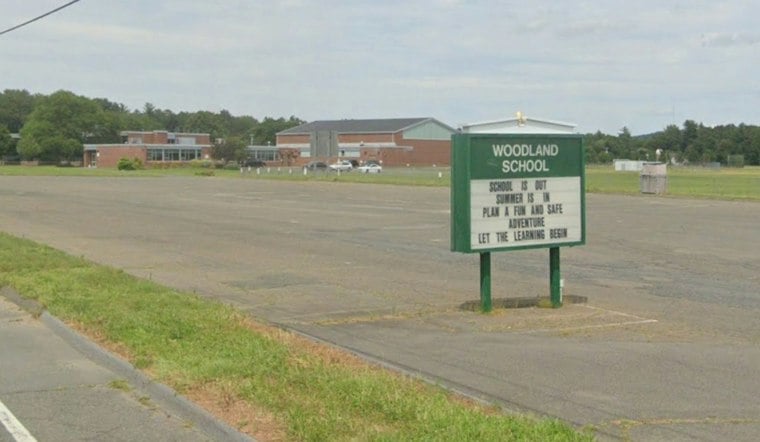
Southwick’s Community Preservation Committee unanimously approved Woodland School’s playground application, moving the proposal to the next step without committing the town to its estimated $240,000 cost. Town Meeting is expected to decide whether to fund it at its next meeting, scheduled for May, MassLive reported.
Approval is not an appropriation
The cost estimate grew from an initial request of about $85,000 for equipment and installation to roughly $240,000 after the proposal added equipment and fencing, according to MassLive’s account of the committee vote. The committee’s approval advances the application; the Town Meeting decision on funding remains outstanding, and the approval alone does not establish that the full estimate will be covered.
The plan would replace a playground designed for children five and older at a school serving pre-kindergarten through second grade. Principal Emma Rood’s proposal is intended for three-year-olds and students with mobility challenges, and includes a buddy bench, a Big John tractor, a multi-user school bus play structure and a shade umbrella, MassLive reported.
A recreation use with local precedent
Southwick’s Community Preservation Act guidance lists installing or replacing outdoor playground equipment on municipally owned recreation land as an allowable capital improvement, though eligibility does not guarantee that this application will receive funding. The town’s recreational-use guidance provides that category.
There is also a local example of CPA money being proposed for recreation improvements, though it is not a direct comparison to Woodland School’s project: a 2012 Southwick Town Meeting warrant explanation described a request for approximately $1.2 million in prior-year and FY13 CPA funds for improvements at Whalley Park. That historical request documents a different project and does not show that the current playground proposal has been funded, according to the town’s warrant document.
Accessibility goes beyond minimum standards
Federal play-area accessibility requirements establish minimums, not a complete measure of inclusive design. The U.S. Access Board’s guide says additional design features can further enhance accessibility. That broader guidance offers context for the proposal’s aim of giving children with different abilities a shared place to play, but it does not establish whether Woodland School’s final design meets every applicable requirement.





