

























































A handwritten letter from George Washington Carver surfaced in the Missouri Botanical Garden's herbarium collection during digitization; Carver had included a plant sample with the letter. Emily Hughes made the find while working through the Garden's herbarium collection, and the letter was addressed to the man who ran the Garden at the time it was written, asking for help identifying a plant that had stumped even the famed botanist himself.
According to discoverandshare.org, which first reported the find, Hughes found something unexpected in the collection: a letter from trailblazing botanist George Washington Carver. The letter was written to then-Garden Director William Trelease, who led the Garden from 1899 to 1912, according to seed facts reported by STLtoday.com. In it, Carver asked Trelease for help identifying a plant specimen that was later determined to be Dichondra carolinensis, commonly known as Carolina ponyfoot.
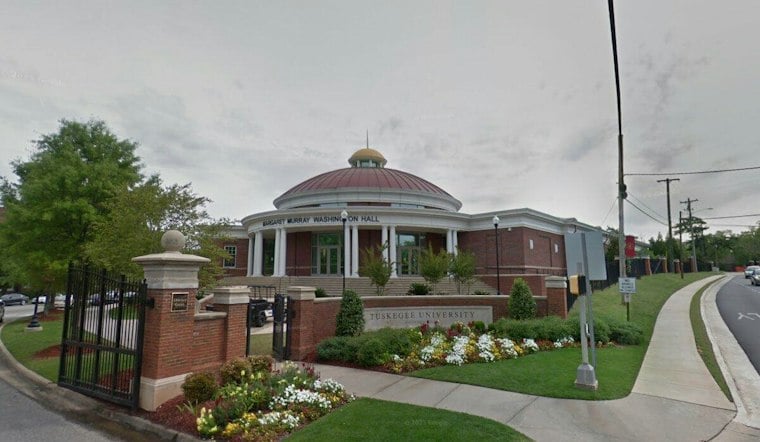
The letter is dated July 2, 1903, according to STLtoday.com, consistent with Discover + Share's reported 1903 date. The note was written on Tuskegee Normal and Industrial Institute letterhead and signed by Carver himself, who at the time served as director of the agriculture department and experiment station there. That institution is now known as Tuskegee University.
A Scientist Who Reshaped Southern Farming
Carver was a famed botanist who developed new uses for crops and worked to restore soil nutrients that had been depleted by years of cotton farming, per STLtoday.com's reporting. He taught farmers to rotate their crops and collected fungi that destroyed crops as part of his broader research. Carver became the first African American to enroll at Iowa State in 1891, according to discoverandshare.org, before he went on to teach and conduct research at Tuskegee University from 1896 until his death in 1943, per the Tuskegee University Archives.
Jordan Teisher, director of the Garden herbarium, said the discovery highlights the human activity underpinning herbarium collections and the enduring legacy of people like Carver, according to STLtoday.com. Most of the Carver specimens in the Garden's collection are grass species, and STLtoday.com reports that the collection holds samples of at least 39 other species Carver collected.
A Six-Year Hunt Through Millions of Specimens
The letter surfaced as part of a six-year project to digitize the Garden's entire herbarium, which STLtoday.com describes as one of the world's largest, with nearly 8 million dried plant specimens. The project, which began in early 2025, is being funded by an anonymous $14.4 million grant, according to STLtoday.com.
The effort, known as Revolutionizing Species Identification, is also drawing on artificial intelligence and 20 new positions created to feed and track that technology, according to First Alert 4. The Garden says the work will support plant identification, taxonomy, systematics, and restoration and conservation efforts worldwide, the station reports.
Carver's Paper Trail Stretches Across the Country
St. Louis is far from the only place where Carver's handiwork has resurfaced in old plant collections. At least 25 fungi specimens he collected more than a century ago were discovered at the Wisconsin State Herbarium at UW-Madison in February 2016, according to the University of Wisconsin-Madison. That university noted at the time that the count could climb further, since roughly 100,000 samples in its collection still remained unprocessed.
Other institutions hold smaller pieces of the same story. The North Carolina Botanical Garden reports that the University of North Carolina at Chapel Hill Herbarium has 18 fungal specimens Carver collected.


