

























































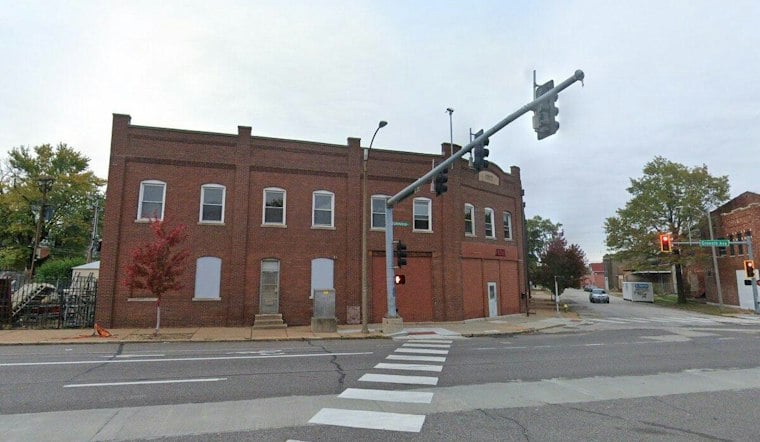
A St. Louis nonprofit that spent more than a decade rescuing historic building materials from the wrecking ball has gone dark, leaving preservationists without a key source for hard-to-find pieces and its founder facing criminal charges tied to a soured warehouse deal. ReFab, which operated out of a sprawling Benton Park West warehouse, closed suddenly in May 2026, cutting off homeowners who relied on the salvage yard to restore historic properties.
For Sarah Ulrich, the closure landed close to home. According to First Alert 4, Ulrich spent 25 years searching for a glass block to complete a window in her 1940s home in the Marine Villa neighborhood before finally finding one at ReFab's shop along Gravois Avenue near Tower Grove East a couple of years ago. She also obtained special tiles from the salvage yard as part of a decades-long collection of pieces from the Art Deco period, which the outlet dates to between 1925 and 1940.
ReFab's mission centered on preserving historic materials rather than letting them end up in a landfill, and the nonprofit had built a following of thousands of social media followers along the way, per the same report. That mission is now on hold, with no indication of when or whether the operation might resume.
Criminal Charges Tied to a Warehouse Purchase Gone Wrong
ReFab founder and executive director Eric Schwarz was criminally charged with burglary and theft by the City of St. Louis, First Alert 4 reported. Court documents cited by the station connect the charges to a civil dispute in which Schwarz had initially agreed to purchase the warehouse from his landlord, Adam Kuene, for $1.25 million — but the article notes that the contract was never followed.
Kuene told the station the closure was disappointing and jarring. He said the South City warehouse had previously been cited for several building violations and had junk sitting outside even as ReFab's operations wound down.
Schwarz has been released from custody, with his next court hearing scheduled for October 2026. Case details, including docket entries and hearing dates, can be tracked through Missouri Courts' Case.net system. Schwarz did not respond to First Alert 4's request for comment as of the report.
Unsold Inventory Piles Up as Auctions Fall Flat
With ReFab gone, Kuene has been left trying to clear out what remains. He said three auctions have been held for leftover warehouse items, including scrap lumber and historic wood, and that no one bid on those materials or similar items. The unsold inventory has done little to offset Kuene's losses from the deal, the station reported.
A Decade of Deconstruction Work Now in Limbo
ReFab's closure marks an abrupt end to an operation that had grown considerably since its founding. Schwarz officially launched ReFab in 2012, with its first job involving the deconstruction of 81 housing units for Washington University, according to thestl.com. The nonprofit worked out of a 40,000-square-foot warehouse in Benton Park West that held roughly 140 years of St. Louis architectural history in carefully organized rows and stacks, carefully deconstructing buildings and homes slated for demolition to salvage reusable materials, fixtures and hardware.
The organization's reach extended well beyond its own warehouse walls. By November 2018, Refab had deconstructed more than 100 buildings across St. Louis and had been awarded a contract by the St. Louis Development Corporation to deconstruct an 1884 warehouse on Martin Luther King Junior Drive, as reported by St. Louis Public Radio. That reporting noted deconstruction is far more labor-intensive than standard demolition, though the resale of salvaged wood and lumber could help offset the added labor costs; the city had also been selecting 30 city-owned vacant buildings for a deconstruction pilot project to compare against traditional demolitions.
Beyond deconstruction, ReFab had expanded into the Refab Lab, turning reclaimed lumber into custom tables, butcher-block countertops, shelves and mantles, and ran a training program aimed at helping people who had recently experienced homelessness land steady jobs, per thestl.com's earlier reporting. By the time Ladue News profiled the nonprofit, its resale store and lab sat at 3130 Gravois Avenue and its staff had grown to a team of 20 performing deconstruction work throughout the St. Louis area.
ReFab is far from the only salvage operation to hit hard times recently. In Florida, Sarasota Architectural Salvage announced it was closing its storefront after 23 years in business, though owner Jesse White said he planned to continue salvage and preservation work on a mobile basis, according to the Business Observer. For now, St. Louis preservationists like Ulrich are left without the local source they once relied on to track down the pieces that keep the city's older homes intact.





