

























































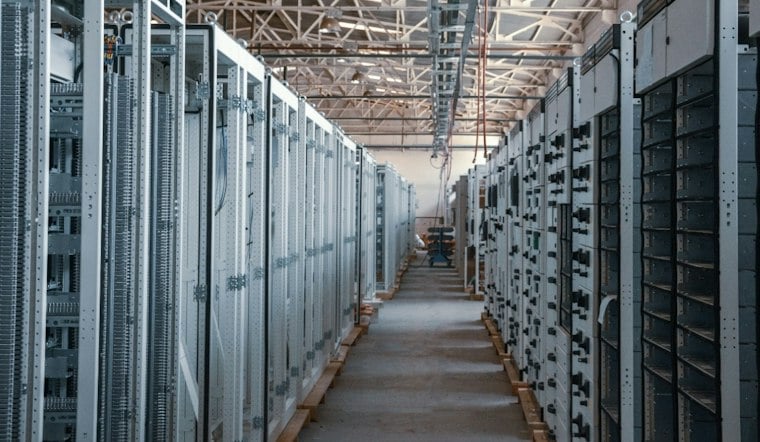
A private landowner has put roughly 1,000 acres of vacant farmland along the Missouri River in Hazelwood up for sale for $45 million, and the sheer scale of the site has city officials scrambling to get ahead of a possible data-center proposal before one even arrives. Hazelwood's City Council is now weighing a temporary ban on large data centers, with a vote on a moratorium set for its Dec. 2 meeting.
The property is being marketed by Schneider Commercial Partners as the Wilco Industrial Center, located at 4815 Aubuchon Road, according to St. Louis Post-Dispatch reporting by Nassim Benchaabane. The tract is described as one of the largest contiguous stretches of vacant land left in St. Louis County, a rarity in an area that has filled in over recent decades with subdivisions, office parks and commercial development. It also sits on high-voltage transmission infrastructure that could support hyperscale data centers and other large businesses, a feature that marketers have flagged as a selling point.
Hazelwood officials say no formal data-center proposal has landed yet. Kevin Foley said the city wants to prepare anyway, telling the newspaper that officials simply do not know whether a proposal could arrive as soon as next month. That uncertainty is what pushed the council to vote Wednesday to schedule a community town hall on data centers, now planned for January 2027, even before any project is on the table.
A Region Already Grappling With Hyperscale Projects
Hazelwood is far from alone. Data centers have become hyperscale projects proposed across the St. Louis region, fueled by a wave of business interest in artificial intelligence and data storage. In Ferguson, officials granted up to $1.5 billion in tax incentives to developer James Onder for a data center and tech hub, while a developer is building a separate data center in Berkeley near St. Louis Lambert International Airport. A $3 billion, 120-megawatt project has also been proposed in Midtown St. Louis.
That surge has generated backlash elsewhere in the metro. Ferguson residents are petitioning to recall council members who supported their city's data center deal and are demanding either a clawback of the incentives or a citywide vote — echoing a similar fight unfolding farther from St. Louis, where STLPR reported that Ferguson's council approved its redevelopment of the 217-acre former Emerson campus by a 4-3 vote, with up to $22 billion in industrial revenue bonds attached and room for a future 300-megawatt data center. Separately, Ferguson petitioners are seeking to recall council members who supported the deal. Meanwhile, groups elsewhere are circulating a petition to put a data-center ban on the 2027 St. Louis ballot, and St. Charles County adopted its own countywide moratorium in July, lasting at least six months.
Supporters See Revenue, Critics See Risk
Supporters of data centers argue the projects generate meaningful revenue for city services and schools, a case Hazelwood officials will have to weigh against local pushback. Some residents and environmental groups oppose the facilities over environmental burdens, strain on public resources and road infrastructure, and worries that artificial intelligence could threaten jobs.
Resident Nicole Gipson has called on the Hazelwood City Council to adopt a temporary ban and hold public meetings before any decision is made, suggesting the Wilco site could instead become a solar farm, athletic fields or nature trails. Council member Robert Smith said a moratorium would buy the city time to establish rules and regulations, adding that Hazelwood would tolerate no data centers under current conditions. Fellow council member Lisa Simpson said the city could move quickly by studying how other jurisdictions have handled similar proposals, stressing that residents need to know what is happening.
How Other Cities Have Handled the Same Pressure
Hazelwood's deliberations track a pattern playing out nationwide as local governments try to get regulatory frameworks in place before developers show up. In Rochester, Minnesota, planning staff proposed a temporary ban defining a data center as any facility used principally for the storage, management, processing or transmission of digital data, citing a statewide uptick in development and discussion tied to AI and cloud computing, according to twincities.com.
San Jose's City Council unanimously approved a similar pause on all land-use approvals for data centers and other large energy-use projects, covering 12 proposals already under city review, per San José Spotlight. That freeze will last until the council finalizes a regulatory package. McHenry County's board in Illinois went further, approving a 12-month moratorium by a 17-1 vote, as reported by shawlocal.com.
San Francisco offers a sense of how long these fights can drag on. The city's Board of Supervisors unanimously voted to extend its existing zoning moratorium on new data centers until next September, with Planning Department staff warning in their report that significant uncertainties remain regarding the scale and nature of future data-center development, according to The San Francisco Standard. The same report noted that peak electricity transmission across the city is already near capacity, meaning new data centers would compete directly with other development, including housing — a tension that underscores why cities like Hazelwood are moving to study the issue before, not after, a proposal lands.




