

























































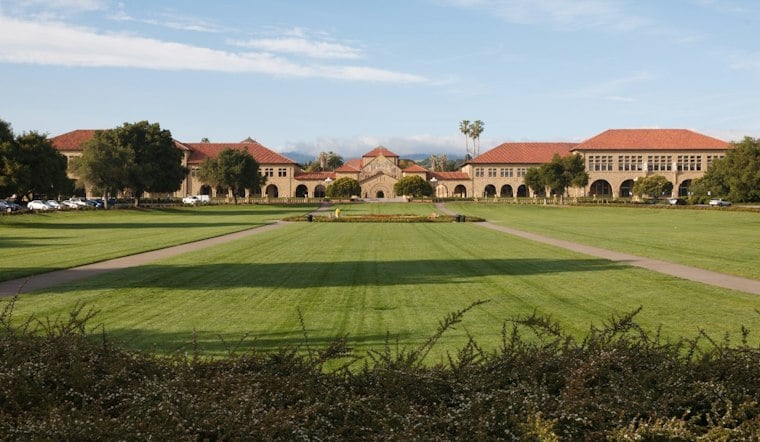
An anonymous Stanford graduate says she was raped in her dorm room at 19, and that it took the university nearly two years to find the other student responsible — only for him to receive a two-year suspension instead of expulsion. Despite Stanford determining that the student had vaginally, digitally and orally raped her, he remained eligible to return to campus and graduate with his degree as of this fall.
A First-Person Account Breaks Years of Silence
The woman, writing under a pseudonym, detailed her ordeal in a first-person essay published by the Stanford Daily, the university's student-run newspaper, which made an exception to its usual policy against anonymous bylines to run her account. The Daily said it reviewed contemporaneous emails, text messages and documents to corroborate previously unreported claims in the piece. As the New York Post reported, her account describes a process riddled with delays on both the university disciplinary side and in the criminal justice system.
In her essay, the author wrote that she had struggled for the past four years to make sense of what happened to her, and that Stanford took two years to complete the Title IX process in her case. During those proceedings, she said she skipped shared classes and feared encountering the other student on campus, and missed opportunities including studying abroad while the case dragged on. She also said the proceedings were repeatedly delayed and rescheduled.
Campus Police Accused of Lost Paperwork and Months of Silence
According to the author's account, Stanford campus police waited four months after her initial report to reach out to witnesses and conduct phone interviews. The Stanford University Department of Public Safety submitted the case to the Santa Clara County District Attorney's Office for review in late 2023, per her account, but when she sought an update nearly four months later, the District Attorney's Office said it had returned the case to campus police for further investigation — which campus police denied ever receiving.
Follow-ups by the author and victim advocates eventually led police to discover that the original submission had been incomplete and did not include witness reports. In May 2024, a detective told her that prosecutors had decided to file charges, a decision the District Attorney's Office later confirmed by email — but the charges were not entered into the system until five months after that decision was made. The District Attorney's Office apologized for the delay, the author said. The office officially filed three felony charges in the case — rape of an intoxicated person, oral copulation of an intoxicated person, and penetration by force — according to an earlier Stanford Daily report. The author said the criminal justice process remains unresolved four years after the rape, and that preventable errors and prolonged delays wasted years of her life.
Stanford Promises a Privileged Review, No Timeline
After leaving Stanford, the author earned undergraduate and graduate degrees and moved to another state, according to her account. In 2025, she said she contacted Stanford Provost Jenny Martinez, who connected her with Patrick Dunkley, the university's vice provost for institutional equity, access and community. Dunkley told her Stanford would conduct an attorney-client privileged review of sanctions imposed by its Office of Community Standards and Title IX office over the previous five years, looking for patterns that might warrant more consistent outcomes. The author criticized the university for not disclosing the review's findings, and said Stanford and law enforcement had failed her and countless others.
Stanford Title IX annual reports cited in her account indicate that only one reported hearing addressing nonconsensual intercourse has both concluded and resulted in a finding of responsibility since the 2019-2020 academic year. A separate Stanford Daily report found that the Title IX process in her case took almost two years — six times the university's own three-to-four-month estimate — with the pre-hearing stage alone stretching to 627 days against an estimated 138.
A Parallel Case at Cornell Draws Comparison
The author's essay drew a comparison to a case at Cornell, where a former student accused seven fraternity members of sexually assaulting her. According to the New York Times, the Tompkins County district attorney declined to prosecute the men in 2024, and none has been criminally charged. Cornell's own three-member disciplinary panel, which met on Zoom over 12 days in May 2025, handed down sanctions that varied widely: two of the men were expelled, one who had already graduated was barred from campus, and two more were suspended, while the remaining two received lighter punishments.
Specific outcomes detailed by the Times show just how uneven that process was — Winston Lee was suspended for two years while Gillio Lopes received a three-semester suspension and two years of probation, and Diego Sarabia, who had already graduated, was barred from campus for three years. New York Gov. Kathy Hochul ordered an independent review of Cornell's handling of the case and appointed Attorney General Letitia James as a special prosecutor with authority to bring criminal charges. The Stanford case, by contrast, resulted in a single two-year suspension for a student found responsible for rape, a outcome the author says still allowed him a path back to campus and toward his degree.





