

























































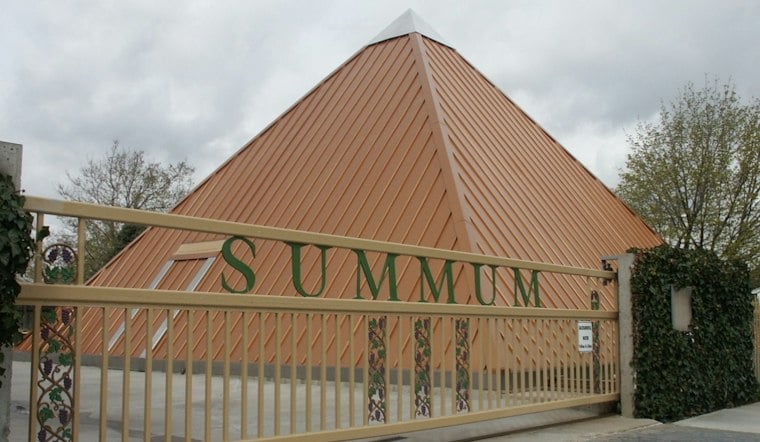
The Summum religious group has filed a new appeal against Salt Lake City, arguing that a proposed 10-story, 252-unit apartment complex planned just southwest of its sacred pyramid would unlawfully block sunlight the group says is essential to its religious practices. The filing, submitted October 2, targets a long-running development fight over the West End Apartments project planned at roughly 730 W. 900 South in the Poplar Grove neighborhood, next door to Summum's pyramid at 707 W. Genesee Avenue.
According to buildingsaltlake.com, Summum representatives say the apartment building would block light that is integral to the religious proceedings held inside the pyramid, and the group warns there will be times of year when it receives no sunlight at all if the project moves forward. Per the appeal, the development would place the pyramid in some degree of shadow in March, June, September, and December each year, and Summum filings say the project would threaten the pyramid's sunlight access for at least four months annually. The group also argues, per the appeal, that the building would amplify Interstate 15 noise into the pyramid.
A Pyramid Built for the Sun
Summum built its pyramid in 1979 specifically for access to sunlight, and the group says its religious practices there include meditations, candle-lighting using the sun's rays, and growing plants used to produce what it calls its sacred wines, or “nectar publications.” Summum secured Utah's first wine license in the 1980s to create that sacred wine. Su Menu, president of Summum, has said sunlight is vital to the group's practices and that plants in the church's greenhouse also need sunlight in the winter.
Su Menu has said his spiritual name means “giver of life to plants” and that he cannot fulfill that role without the sun's life-giving properties, adding that with significantly diminished light, the group's spiritual plants cannot survive and thrive in its greenhouse. The appeal also contends that adherents cannot simply perform their sunlight practices elsewhere, since the property was consecrated for religious purposes and includes spiritually programmed crystals positioned around the grounds that interact with sunlight.
How the Project Got Here
The site's path to a 10-story apartment complex stretches back years. A 2023 staff report from the Salt Lake City Planning Commission, reviewed via slcdocs.com, shows the applicant sought to rezone two vacant parcels at 792 W. 900 South and 875 S. 800 West from M-1 light manufacturing to R-MU residential/mixed use. Planning staff recommended against the rezone at the time, and no specific future development plans had been submitted with that application.
The West End Apartments proposal followed the rezone request. Architecture firm Helix Architecture + Design submitted a design-review application to the Planning Commission in December 2024 for a project combining a parking garage with the 10-story apartment complex, according to The Salt Lake Tribune, which detailed the current appeal. The Planning Commission approved that design in June 2025, but Summum appealed the approval, and the city rescinded it that September. Commissioners then directed Helix to provide additional information specifically about the project's effects on Summum's religious practices.
Dueling Claims Over a Shadow Study
Helix submitted a shadow study along with supporting information last month, and the Planning Commission subsequently issued preliminary approval for the structure. The commission's decision letter states that the proposal provides equal or greater sunlight availability than other developments permitted under current zoning, across the dates and times measured throughout the year. Summum's appeal disputes that conclusion, saying the same study actually confirmed the building would create substantial amounts of shade on the group's sacred property.
Summum's appeal, filed with assistance from the Salt Lake City law firm Fabian VanCott, alleges that the Planning Commission's recent approval substantially burdens the group's religious free exercise. The filing asserts that if the project proceeds as approved, it will violate Summum's rights under Utah's Religious Freedom Restoration Act and the First Amendment. The developer behind the project could not be reached for comment, per buildingsaltlake.com's reporting.
A Group With a History of Religious-Rights Fights
This is not Summum's first legal battle over its religious practices. The group took a free speech case to the U.S. Supreme Court in the 2000s after suing Pleasant Grove City for permitting a Ten Commandments monument in a public park while rejecting Summum's proposed Seven Aphorisms monument. Per supreme.justia.com, the Supreme Court ultimately ruled that placing a permanent monument in a public park amounts to government speech and is therefore not subject to scrutiny under the Free Speech Clause — a loss for Summum in that earlier fight.
As first reported by The Salt Lake Tribune, the current dispute now rests with city officials as they weigh Summum's latest appeal against the project's preliminary approval. For now, the fate of the West End Apartments — and the question of how much sunlight will continue to reach the pyramid on Genesee Avenue — remains before Salt Lake City.


