

























































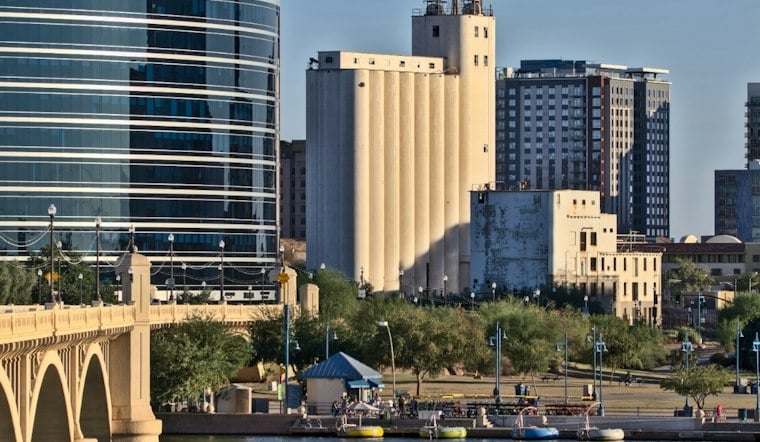
Tempe officials are asking residents to weigh in on a draft plan that could shape the look and feel of the city's historic downtown for decades, with particular attention on the long-vacant Hayden Flour Mill and the parking lots that surround it along Mill Avenue. The Downtown Tempe Historic Core Plan is described as an advisory draft meant to guide future decisions, and city officials say it does not change zoning or impose new requirements on property owners.
City staff and consultants presented an early version of the plan and gathered public feedback at a virtual meeting, according to citizenportal.ai. The preliminary guidelines cover historic preservation, redevelopment, parking, walkability and transit around Mill Avenue, touching on draft height zones, incentives for adaptive reuse and public-realm priorities. City staff have cautioned that the materials remain preliminary and subject to change as feedback comes in.
As ABC15 Arizona reports, the draft prioritizes shade and walkability and calls for a pedestrian-focused, multimodal downtown rather than one built around car dependency. That direction tracks with what Tempe has heard from residents elsewhere: among respondents to the city's Transportation Plan 2050 research, 67% cited a desire for more shade and 33% wanted better separation between pedestrians and vehicles as reasons they'd walk or roll more, per Tempe's Transportation Plan 2050 data. The same research found 63% of respondents already use transit, while 37% do not.
The Fate of the Hayden Flour Mill
At the center of the plan is the Hayden Flour Mill, a city-owned structure described in the draft as the most iconic building in Tempe's historic core, according to ABC15's reporting. The plan identifies the mill as a major catalyst site for future redevelopment and envisions rehabilitating and adaptively reusing the structure rather than tearing it down — the draft explicitly does not propose demolishing it. Planners also want any new development around the site to maintain views of Tempe Butte.
The mill building and its silos have sat empty since the operation officially closed in 1998, according to Cronkite News. The current structure, which stands at the corner of Mill Avenue and Rio Salado Parkway, operated from 1918 until its 1998 closure and remains the oldest cast-in-place, reinforced concrete building in Tempe, the outlet notes. A redevelopment plan approved for the site calls for new restaurants and shops, a public park, restoration of the mill and its silos, and an improved trailhead to A Mountain. The Hayden Flour Mill was added to the National Register of Historic Places in 2025, per ABC15.
Barbara Poulson told ABC15 she hopes the mill could become a museum, modernized while retaining its historic character. The historic core plan also calls for additional public input as plans for the mill advance.
Parking Lots Near Mill Avenue Draw Scrutiny
The draft plan also zeroes in on two surface parking lots on the east side of Mill Avenue owned by Tempe Mission Palms, identifying them as key opportunity sites, per ABC15's account. The plan states that redevelopment there should reflect the scale of nearby historic buildings and reinforce Mill Avenue's historic character, while noting that any agreement with the lot's owner should preserve the property's existing economic value. The draft also observes that surface parking currently uses land that could otherwise strengthen the district's historic character.
To address parking more broadly, the plan recommends expanding shared parking strategies and lists demand-based pricing for public parking facilities as a possible future tool — while acknowledging that such pricing could face resistance from the public or other stakeholders. Downtown Tempe currently has 590 on-street parking spaces, according to Downtown Tempe's own figures.
Jen Nesbit, who owns the Shoe Mill across the street from the lots in question, told ABC15 that many of her customers park there and that redevelopment should retain parking for people visiting downtown. Downtown visitors quoted by the station echoed similar concerns, with one saying parking is already tight and another describing the area as lacking parking and congested. A separate visitor told ABC15 the city should plan for Arizona's climate and carefully consider any changes to transit.
What Comes Next for the Draft
Nesbit also told ABC15 she hopes future development brings new life to Mill Avenue's historic buildings, envisioning vibrant small businesses alongside more art, music and culture downtown. That sentiment arrives amid broader strain on the corridor: retail vacancy along Mill Avenue sits at roughly 12%, according to azfamily.com, which has reported on business owners' concerns tied to the city's two-year Refresh Tempe project. That effort has brought sidewalk improvements, added shade trees and other changes meant to make the district more walkable and bike-friendly, though it has also disrupted access and sales for some merchants, the outlet reported.
According to the city's own planning page, once the Downtown Tempe Historic Core Plan is complete it will be presented to City Council for adoption, per the City of Tempe. A revised version of the plan is expected to return to the Historic Preservation Commission and Development Review Commission before going to City Council, with consideration by the council likely in early 2027, per ABC15. The public survey on the draft plan remains open through Nov. 1 for residents who want to shape how Tempe's historic core evolves.





