

























































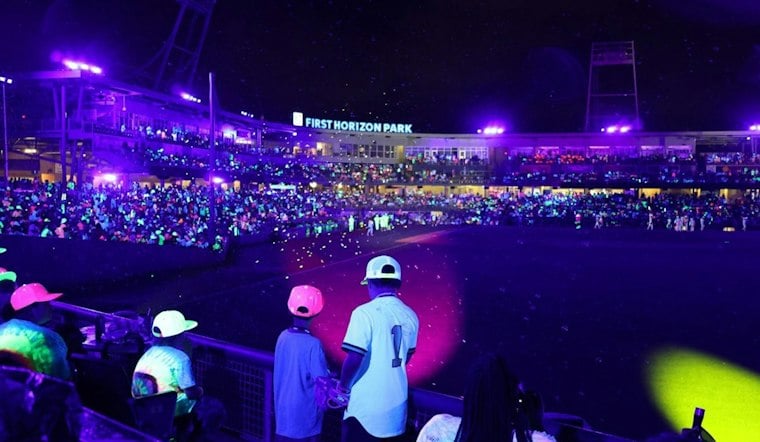
With early voting already underway ahead of the November 3 election, Tennessee's gubernatorial candidates are being pressed on a question that has nothing to do with taxes or schools in the traditional sense, and everything to do with baseball: should the state help bring Major League Baseball to Nashville, and who should pay for it? Their answers touch on economic development, Nashville's capacity to support a team and how any ballpark deal might divide costs between private investors and the public.
Candidates Weigh In As Expansion Talk Swirls
Republican Marsha Blackburn described a potential Nashville franchise primarily as an economic-development question, saying, “This is one of those issues you would look at as economic development,” according to Fox 17. She also said Tennessee should prioritize employing Tennessee workers on state-related projects, the outlet reported.
David Hatley struck a more enthusiastic tone, telling the station, “I would support anything that's smart growth for Nashville.” He added that he believes the city has the capacity to sustain a big-league club, saying, “I think we all would. I mean, this city can support it.” Hatley also said Nashville should first assess its finances and address issues in government, per the same report.
Green Points To Memphis As A Warning Sign
Jerri Green took the most cautious position of the three, calling for close scrutiny of how any Nashville ballpark deal would split costs between private investors and the public. “We have to look very careful at how much of that needs to be privately funded versus publicly funded,” she said, according to the station's report.
Green pointed to Memphis's own experience as a cautionary example, noting the city's affection for its Triple-A team even as the arrangement has proven costly for its municipal landlord. “We have a great minor league team here in Memphis, the Redbirds, we love them,” she said, adding that the setup shows how expensive a team can be for the city that hosts it. Memphis financed the purchase of AutoZone Park, the Redbirds' home, through a $24 million bond issue arranged through the Memphis Center City Revenue Finance Corporation, a joint commission of the City of Memphis and Shelby County, with the St. Louis Cardinals later acquiring the franchise, which was to be leased to the ballpark from the city under a long-term agreement. Green also drew a comparison to the region's other pro sports teams, noting that Memphis already has an NBA team while Nashville has NHL and NFL franchises.
Public Opinion Still Leans Against Tax Dollars
Tennessee voters themselves have shown more skepticism than enthusiasm for using state money on a stadium. A July 2024 survey found just 27% of voters supported using state tax dollars to build a new MLB stadium in Nashville, while 58% opposed it, according to the Beacon Poll. That opposition cut across party lines, with the poll showing it was strongly opposed by Republicans, Democrats and independents alike, and among Middle Tennesseans specifically, 32% supported the idea compared with 59% opposed.
The political jockeying comes as Nashville's baseball bid remains very much a work in progress. Music City Baseball, the group preparing for a possible expansion opportunity, is still missing a general partner and a stadium site, according to reporting by The Athletic. The group's managing director, John Loar, has said he would like a ballpark site selected by 2026, per the same report. Nashville currently has no stadium capable of holding an MLB team, Fox 17 has reported separately.
Why Nashville Keeps Coming Up In Expansion Chatter
MLB Commissioner Rob Manfred has called Nashville popular in expansion-team discussions, and a 2023 Athletic poll of MLB players found 69% selected Nashville as the best potential expansion city. Manfred has said he intends to have two new teams selected before he retires in 2029, according to The Athletic's reporting. Music City Baseball envisions a mixed-use development and ballpark entertainment district modeled after The Battery in Atlanta, according to the Sports Business Journal.
Money remains the biggest open question. Bid groups project the potential expansion fee could range from $2 billion to $2.5 billion per market, according to Forbes, which also reported that as of April, MLB expansion remained at no official stage. A Tennessee legislative summary reviewed by the Tennessee General Assembly indicates Metro Nashville could impose an additional hotel privilege tax of up to 1% of the consideration charged by an operator, with proceeds retained by the metropolitan government for the sports authority to pay debt service and capital improvements tied to an enclosed stadium.
The timing of the debate has an unlikely backdrop: as the candidates sparred over baseball economics, the Milwaukee Brewers stood just one win away from clinching their first World Series title, Fox 17 noted. For Tennessee voters heading to the polls, the question of whether Nashville ever joins the major leagues may hinge less on star power and more on who is willing to foot the bill.





