

























































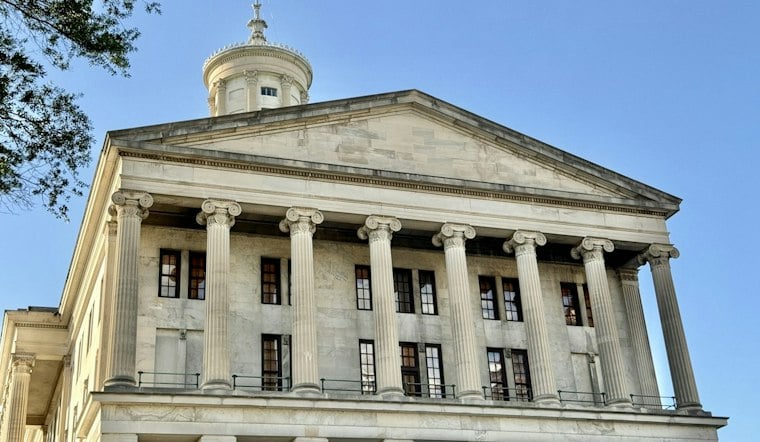
Tennessee has not collected a statewide property tax since 1949, but next month voters will decide whether to make that arrangement permanent by amending the state constitution. Amendment 2, appearing on the November ballot, would strip the General Assembly of its current authority to create a statewide property tax at any point in the future, even though lawmakers have left that rate at zero for more than 75 years.
As reported by WSMV, Tennessee law currently sets the statewide property tax rate at zero percent, but the legislature could change that rate at any point without a constitutional amendment. Amendment 2 would close that door permanently, while leaving untouched the ability of local governments to levy property taxes the way they do now. Tennessee's constitution also prohibits a state income tax, as Ballotpedia notes.
Why Supporters Say the Ban Protects Growth
Jack Powers, vice president of policy and advocacy at the Beacon Center of Tennessee, said the state has made itself attractive for people to move, raise families, and earn a living, and argued property taxes would make all three harder, per the same WSMV report. Powers said he does not believe Tennessee will need to turn to property taxes in the future and believes other revenue options would exist if the state ever needed them. State Representative Tandy Darby (R-76), who sponsored the amendment, argued that prohibiting state property taxes puts taxpayers first and protects local control, according to Ballotpedia.
State Representative John Ray Clemons, a Democrat, acknowledged that while a state property tax was unlikely to ever be imposed, some voters still support additional constitutional safeguards against the possibility, the same Ballotpedia account notes. That bipartisan acknowledgment underscores a central tension in the debate: whether banning a tax tool that hasn't been used in generations is prudent protection or unnecessary rigidity.
Critics Warn of a Regressive Tax System
Nashville Senator Heidi Campbell has pushed back, telling WSMV that Tennessee may be the most regressive state in the country. The state collects revenue primarily through franchise excise taxes, sales taxes, and locally mandated property taxes, and Campbell said that system burdens the poorest residents. Tennessee has the second-highest sales tax in the country, per the same WSMV report.
Campbell also raised a forward-looking concern: the state may need property tax authority in the future, including potentially taxing corporations building data centers in Tennessee, and she warned that a permanent ban would remove that option and could leave residents taxed in a way that disproportionately hurts less affluent Tennesseans. Her critique tracks with outside data. An ITEP report found Tennessee has the third most regressive tax system in the nation.
Tennessee's Tax Mix Presents a Trade-Off
Tennessee's tax system reflects a trade-off: its reliance on sales taxes can place a heavier burden on lower-income residents.
If Amendment 2 passes, reversing course later would not be simple. Undoing a constitutional property-tax ban would require another amendment to pass through two legislative sessions, with a supermajority vote in the second, per Ballotpedia. Campbell has argued that a permanent ban would remove a potential future property-tax option.
How Amendment 2 Reached the Ballot
Tennessee's amendment process involves two legislative sessions and a supermajority vote in the second. Amendment 2 cleared that process as HJR 81 in the 113th General Assembly and as SJR 1 in the 114th, according to Ballotpedia.
A Ballot Math Quirk Could Decide the Outcome
Passing isn't just about winning more yes votes than no votes. Under Tennessee's constitutional formula, the total number of yes votes on Amendment 2 must also exceed half of all votes cast in the concurrent governor's race, according to the Tennessee Secretary of State. That means voters who cast a ballot for governor but skip the amendment questions altogether effectively raise the bar for passage, since their ballots still count toward the governor's race total even though they add nothing to the yes column.
Ballot placement could matter here. Tennessee election officials placed the 2026 constitutional amendment questions at the top of the ballot immediately following the governor's race, a layout that took up nearly three pages on Davidson County sample ballots before any legislative candidate races appear, the Nashville Scene reported. That structure raises the possibility of ballot fatigue or drop-off on down-ballot questions, though the amendments themselves come before, not after, the fatigue-prone candidate races.
Local Property Taxes Remain a Separate System
Amendment 2 would not touch how cities and counties tax property locally. In Memphis, the assessor has warned that eroding downtown commercial values could shift more of the tax burden onto homeowners, a concern Hoodline has detailed in Memphis. Separately, Blount County commissioners debated their rate earlier this year.
The property tax ban has already surfaced in local races. In Nashville's District 60 contest, Republican candidate Eva Angelina Romero endorsed Amendment 2 as part of her campaign, Hoodline reported in a piece examining that state legislative matchup. Whether that kind of down-ballot alignment translates into enough yes votes to clear Tennessee's unusual threshold will not be clear until Tennesseans cast their ballots in November.





