

























































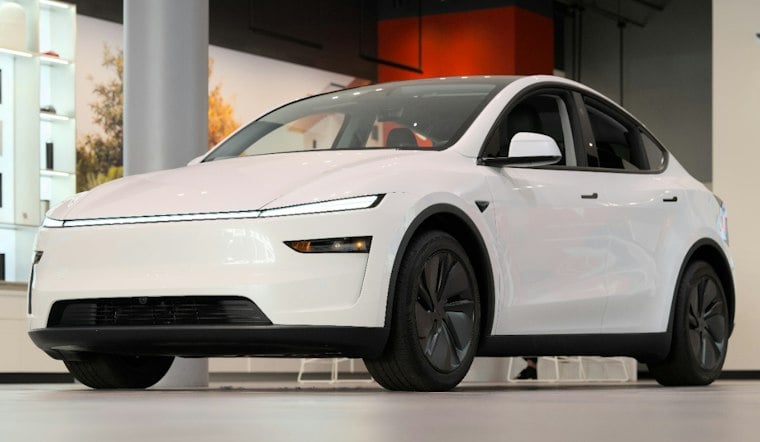
Tesla now says unsupervised Full Self-Driving for customer-owned cars won't arrive until the second quarter of 2027 — and even then, your Tesla won't be able to drive itself just anywhere. The company says the feature will work only inside the geofenced zones where its Robotaxi service already operates, a far cry from the anywhere-anytime autonomy Tesla has long promised owners.
According to electrek.co, Tesla AI chief Ashok Elluswamy described the plan as owners essentially adding their own vehicles to Tesla's managed Robotaxi fleet rather than unlocking standalone self-driving freedom. That means an owner's car would only drive itself unsupervised where Tesla's Robotaxi service already runs, per the same report. The Verge adds that customer Model Ys must first be folded into Tesla's geofences and fleet-management system before they can operate fully autonomously as part of that fleet, according to The Verge.
Low-Speed Routes, No Highways, Limited Turf
Low-Speed Routes, No Highways, Limited Turf Even within those zones, Tesla's Robotaxi operations stay cautious. The service sticks to low-speed routes, largely avoids highways, and steers clear of the harder parts of town, the electrek.co report notes. Tesla's FSD system in personally owned vehicles has not yet arrived in unsupervised form, and the company has said broader commercial Robotaxi expansion will wait for a future software release known as FSD version 15, according to Not a Tesla App.
Tesla's Robotaxi footprint has been growing, if unevenly. The company began removing human safety monitors from some Austin vehicles roughly six months before announcing in June that unsupervised rides were available across the entire Austin metro area, Business Insider reported. By the end of August, Tesla had expanded that Austin service area to roughly 288 square miles — about 9% larger than before, adding around 24 square miles that stretched north toward Pflugerville along the US 183 corridor, according to Teslarati. An earlier account from Business Insider had placed the Austin zone at about 260 square miles and excluded high-speed roadways; the two figures reflect different snapshots in time and the dossier does not resolve the discrepancy.
How Big Is the Fleet, Really?
The scale of Tesla's ambitions runs into some messy bookkeeping. Tesla reported nearly 2 million cumulative unsupervised Robotaxi miles by the end of the third quarter of 2026, per electrek.co, while Business Insider had separately reported nearly 2.5 million cumulative paid miles by the end of the second quarter — different metrics from different moments that this article does not attempt to reconcile. Tesla's fleet in Texas included 362 Model Y Robotaxi vehicles and 449 Cybercab vehicles authorized for driverless operations, CNBC reported from the company's third-quarter earnings. Active FSD subscriptions, meanwhile, climbed 67% year over year to 1.74 million, according to the same CNBC report.
Where exactly Robotaxi operates also depends on which account you read. Electrek describes Tesla's service as active in six U.S. metros, with most of those service areas covering only small slices of their cities. Tesla is also eyeing Phoenix and Las Vegas next, with preparations described as underway, per Business Insider.
Hardware Owners Left Waiting
Not every Tesla on the road is even eligible for the eventual rollout. Owners of vehicles equipped with Tesla's older HW3 computer have already been told those computers cannot run unsupervised FSD at all, and Tesla has not offered a clear upgrade plan, electrek.co reported.
Regulators are watching closely in the meantime. The National Highway Traffic Safety Administration escalated its investigation into Tesla's FSD system to a full engineering analysis covering 3.2 million vehicles, Reuters reported. The agency cited nine incidents potentially tied to a visibility issue, including one fatal crash and two injury crashes.
For now, according to Business Insider, the promise of a Tesla that drives itself anywhere remains tied to wherever the company's own Robotaxi service happens to already be.


