

























































Bowling Green, a town of roughly 4,000 people in northeast Missouri, is seeking $80,000 for a bronze statue of its most famous resident, Lowell “Cotton” Fitzsimmons. The project would give the hometown of the longtime basketball coach a permanent public tribute; Fitzsimmons coached the Phoenix Suns in three separate stints and won more than 800 NBA games before his death in 2004.
The fundraising drive began in June and has raised nearly $44,000 toward its $80,000 goal, according to WGEM, which first reported on the effort. Arizona’s Family later covered the campaign in Fitzsimmons’ former NBA city. Organizers plan a life-size depiction of Fitzsimmons, who was 5-foot-7, on a pedestal that would bring the structure to 10 feet tall. The city’s target is to complete the project by late spring or early summer of 2027.
Where ‘Cotton’s Corner’ Will Stand
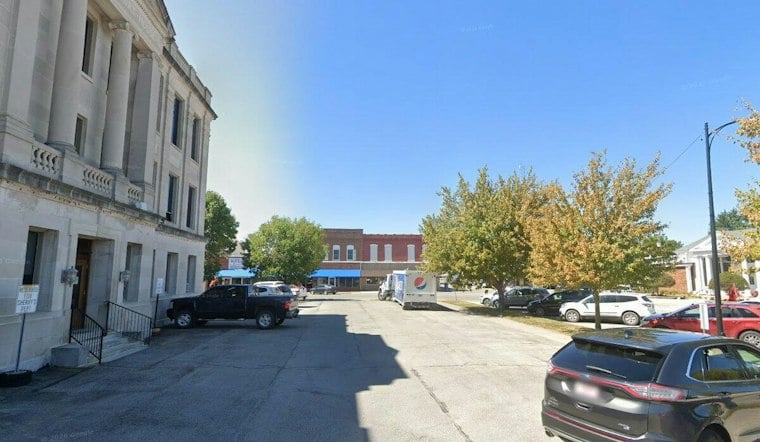
The statue is planned for a currently vacant lot across the street from the southwest corner of the Pike County Courthouse in downtown Bowling Green, per the same WGEM report. Organizers want the spot to be known as “Cotton’s Corner,” complete with pavers and benches surrounding the statue itself. The campaign didn’t begin until after organizers had acquired the site, established tax-exempt status for the project, and received the blessing of Fitzsimmons’ widow, JoAnn, and the rest of his family.
That tax-exempt status has since come through: the project has received 501(c)(3) designation, meaning donations are tax deductible and donors will receive mailed receipts. Anyone giving $1,000 or more will have their name placed on a plaque on the statue’s pedestal. Checks can be mailed to the Pike County Genealogical Society at 5 East Church Street in Bowling Green, Missouri 63334, with donors asked to write “Cotton Fitzsimmons Statue” in the memo line.
From a Small-Town Nickname to the NBA Sidelines
Fitzsimmons was born in Hannibal, Missouri, and his family moved to Bowling Green when he was young. The nickname that stuck for life came from his fourth-grade classmates, who started calling him “Cotton” because of his hair. He grew into a 5-foot-7 shooting guard who led Bowling Green High School to two trips to the Missouri state basketball tournament, with his high school coach, James A. Wilson, leaving enough of a mark that JoAnn Fitzsimmons later said Wilson was a father figure her husband “respected, admired, and loved.”
Fitzsimmons enrolled at Hannibal-Lagrange University in 1952, where he averaged 25.5 points per game and later had his jersey retired by the school. He went on to Midwestern State University, scoring 1,095 career points and averaging 13.3 points over 82 games while helping the Midwestern State Mustangs reach the 1956 NAIA tournament quarterfinals, and he later earned a master’s degree in administrative education there.
A Coaching Career That Started in Junior College
Fitzsimmons’ coaching career began at Moberly Junior College, where he led the program to back-to-back national titles in 1966 and 1967. Sources differ slightly on his exact record there: the Kansas State Athletics site lists a 224-58 mark over his time at Moberly, while the Missouri Sports Hall of Fame credits him with a 223-59 record over nine seasons starting in 1958.
He became head coach at Kansas State in 1968, compiling a 34-20 record over two seasons and leading the Wildcats to the 1970 Big Eight championship and a Sweet Sixteen appearance in that year’s NCAA tournament, earning Big Eight Coach of the Year honors along the way. From there, Fitzsimmons moved into the NBA, coaching the Atlanta Hawks from 1972 to 1976, the Golden State Warriors from 1976 to 1977, the Buffalo Braves from 1977 to 1978, the Kansas City Kings from 1978 to 1984, and the San Antonio Spurs from 1984 to 1986.
Three Tours With the Phoenix Suns
Fitzsimmons’ name is most associated with Phoenix, where he coached the Suns across three different tenures. WGEM’s report lists those stints as 1970-72, 1986-92 and 1996-97, while Kansas State’s athletics site lists the middle stretch as 1988-92 rather than 1986-92 — a discrepancy the available sources don’t resolve. The Missouri Sports Hall of Fame credits him with a 341-208 record and five playoff appearances over eight seasons in Phoenix. He retired just eight games into the 1996-97 season.
By the time he stepped away, Fitzsimmons held an 832-775 career NBA coaching record and ranked as the eighth-winningest coach in league history, a mark that has since slipped to 10th all-time as other coaches have piled up wins, according to Kansas State’s athletics department. He won NBA Coach of the Year twice, in 1979 and 1989, honors that came during his time with the Kings and the Suns respectively. Phoenix later inducted him into the team’s Ring of Honor in 2005, and the Suns named an arena after him along with a race at a Phoenix racetrack, the Cotton Fitzsimmons Mile Handicap.
Honors and a Lasting Influence
Fitzsimmons was inducted into the Missouri Sports Hall of Fame in 1981 and the Naismith Memorial Basketball Hall of Fame in 2021. He died of lung cancer in 2004 at age 72.
A Hometown Tribute and a Wider Legacy
Bowling Green’s 2025 comprehensive plan says the Pike County Courthouse was built in 1917 and has a statue of Congressman Champ Clark at its south entrance. That existing monument is separate from the proposed Fitzsimmons statue, which would stand across the street, according to the City of Bowling Green’s comprehensive plan. The proposed statue would add a hometown tribute alongside Fitzsimmons’ basketball honors. Separately, the Phoenix Suns/Phoenix Mercury Foundation’s annual Spirit of Cotton Award recognizes an Arizona high school basketball coach for leadership and community service and provides a $10,000 grant for the winner’s school athletic program.
Bowling Green Mayor Tom Thompson, elected in April 2026 after running unopposed, is leading the statue effort, WGEM reported. Thompson played basketball in nearby Canton, Missouri, in the early 1990s and has described the proposed pedestal and plaza. With roughly $36,000 still needed to reach the $80,000 goal, organizers hope to complete the project on schedule in 2027.





