

























































Residents of San Ygnacio gathered for a town-hall celebration on October 10, marking what they say is a halt, at least for now, in border-wall construction that has loomed over their small Zapata County community. The tiny South Texas town, with fewer than 500 residents, said contractors had been kept out of San Ygnacio for four and a half months, preserving the town's access to the Rio Grande in the process.
A Petition Lands in a Congressman's Hands
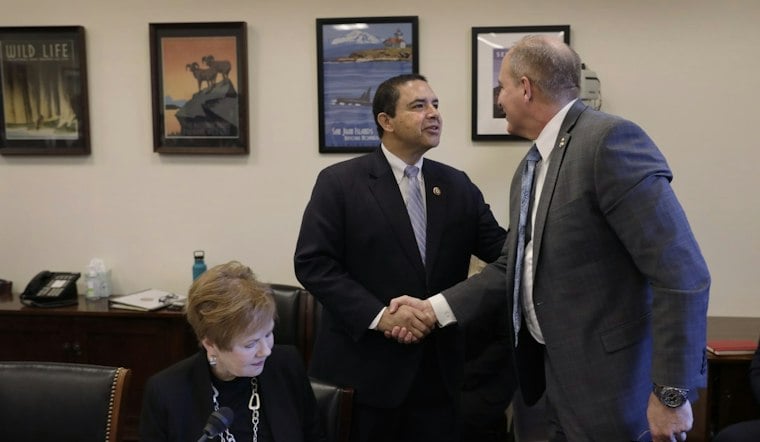
During the celebration, residents presented a petition with 174 signatures asking for an exemption from any future border-wall construction, according to CW39 Houston. The petition was handed to visiting U.S. Rep. Henry Cuellar, a Texas Democrat who was on hand for the event. Cuellar has previously asked federal officials to consider exceptions for projects in Laredo, Zapata County and the Big Bend region, citing concerns about flooding, drinking water and public lands, per TPR.
The celebration comes even as a new 30-foot-tall steel border wall has already gone up along riverbanks on the northwest side of San Ygnacio, the station's report notes. That stretch of construction underscores how contested the ground still is, even as residents cheer the broader pause. The Guardian has described San Ygnacio as a Mexican American border town of roughly 400 people, while CW39's reporting puts the population at fewer than 500 — a discrepancy the available reporting does not resolve.
Lawsuits and a Federal Pushback
Two San Ygnacio residents have filed lawsuits against the federal government alleging what they call the illegal taking of their borderlands, per the same cw39.com account. U.S. Customs and Border Protection has responded that the land currently being cleared by contractors is owned by the U.S. International Boundary and Water Commission, not by private landowners, and that the agency has secured the necessary rights for the work. CBP also said it does not conduct border-wall construction activities on private property without appropriate permissions or legal access.
San Ygnacio's fight is not without precedent in the town's own history. In 1951, 222 residents signed a petition seeking help to prevent the town from being flooded during construction of Falcon Dam, according to MyFox8. That earlier organizing effort has become a touchstone for residents who see their current petition drive as part of a longer tradition of pushing back against federal projects that threaten their town.
Part of a Wider Fight Across South Texas
San Ygnacio's standoff is unfolding against a backdrop of broader legal and political battles over border infrastructure in Texas. A federal judge recently blocked further border-barrier construction in the Big Bend region by granting an environmental group's motion for a preliminary injunction, as reported by the Texas Tribune. Six lawsuits have been filed over the Big Bend wall altogether, and construction work in and around Big Bend National Park had been paused through September in a separate case.
Opposition to wall projects in that region has drawn an unusual coalition, with landowners, some Trump voters, ranchers and local law enforcement questioning whether a wall is necessary there, according to the Los Angeles Times. The Big Bend sector covers about a quarter of the length of the U.S.-Mexico border but accounts for only 1% to 3% of migrant apprehensions each year, the Texas Tribune reported. Meanwhile, Congress appropriated $46.5 billion for border-related projects in 2025 under the Big Beautiful Bill, funding that included no exemptions for border-wall construction, CW39 noted.
Not far from San Ygnacio, CBP data showed migrant encounters in the Laredo Sector climbing to 1,484 in April, up 98% from a year earlier, according to Border Report. Cuellar has said that if Democrats win control of the House in the November 3 election, he expects to become chairman of the House Homeland Security Appropriations Subcommittee — a position that could give him more leverage over how border funding gets spent in places like Zapata County.





