

























































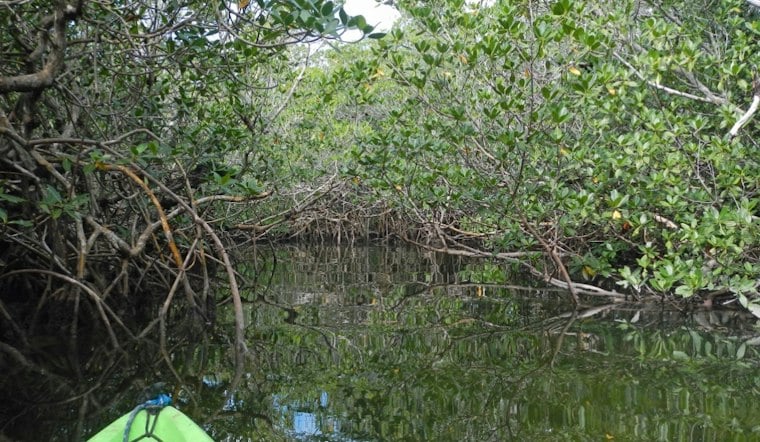
A tightly duct-taped brick of cocaine stamped with a cartoon image of Tom the Cat wearing sunglasses turned up Friday around 12:40 p.m. in mangroves off John Pennekamp Coral Reef State Park on the ocean side of Key Largo. The roughly 1-kilogram, or 2.2-pound, package was also marked with the number 333. It is unclear who found the drugs, but deputies were alerted soon after.
The find, first reported by the Miami Herald, marks at least the second brick of cocaine found in the Florida Keys this week. According to the Herald's reporting, the package matched a separate kilogram of cocaine found nearby two weeks earlier in the same area. The Monroe County Sheriff's Office said labels such as Tom the Cat and 333 let drug smugglers know who bought the contraband and where it is intended to go, according to the same report.
Every cocaine package discovered this way has been turned over to U.S. Border Patrol, authorities said. The practice of marking bricks with cartoon imagery and numeric codes appears to be a recurring feature in the Keys' drug-smuggling trade, the outlet's reporting notes, functioning as a kind of shipping label for traffickers moving product through the island chain.
A Week Full of Washed-Up Packages
This was not an isolated incident. On Monday, a kayaker came across a half-kilogram of cocaine off Summerland Key in the Lower Keys, per the Herald's account. A separate Miami Herald story reported that a kilogram brick had been found in the same area nearly two weeks before the kayaker's discovery.
Days later, on September 28, a fisherman in a kayak found roughly half a kilogram of suspected cocaine off Sugarloaf Key at about 2:15 p.m., according to Keys News. That outlet reported the item was packaged like similar bricks of suspected cocaine recently found in the Lower Keys. Accounts of these separate discoveries describe differing locations and packaging details, and the evidence does not establish whether they stem from the same smuggling operation.
More Finds Across the Keys
Other packages have surfaced elsewhere in the island chain. NBC6 reported that a package believed to contain cocaine, marked with the number 332, was found in the mangroves at Harry Harris Park, discovered around 5:40 p.m. by a passerby doing a cleanup on East Beach Road who then notified authorities. That report places the Florida Keys park discovery on a Monday evening, a detail that does not align with the timeline given for the Key Largo mangrove find described above.
A separate account distributed via Newsbreak described a 2.2-pound package marked 333 as having been found on Summerland Key in the Lower Keys around 2 p.m. on a Wednesday afternoon, after a resident turned the brick over to the Monroe County Sheriff's Office. That version differs from other reporting on timing and location, and the dossier does not resolve which account applies to which specific package.
Common Occurrence, Serious Consequences
Finding cocaine bricks and marijuana bales washed ashore or floating at sea is described as fairly common in the Keys, according to the Herald's broader coverage of the region's drug-smuggling patterns. The same reporting notes that these loads are typically lost in transit during smuggling runs, washing up far from their intended destination.
The discoveries come months after federal prosecutors announced that three members of a large-scale cocaine trafficking organization operating in the Florida Keys were sentenced to federal prison in August for their roles in a years-long conspiracy to distribute cocaine throughout Monroe County, according to the U.S. Attorney's Office for the Southern District of Florida. It remains unclear whether that case connects to the recent string of mangrove and shoreline finds.



