

























































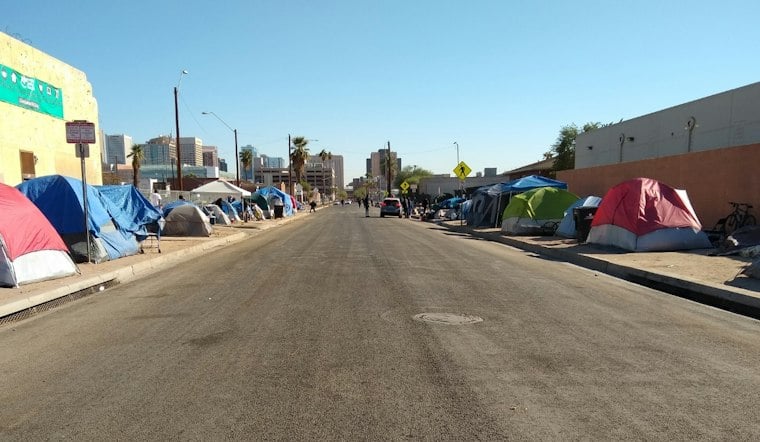
A cluster of genetically related tuberculosis cases is spreading among people experiencing homelessness in the Phoenix area, and county health officials say it keeps growing nearly two years after it was first detected. Maricopa County health officials say the cluster is affecting the unhoused community but poses no risk to the broader Maricopa County population, even as new cases continue to surface.
The Maricopa County Department of Public Health first identified the cluster in 2024, and it continues to expand with several new genetically linked active cases, according to a health alert issued by the department. The department said it is now working to identify and notify anyone who may have been exposed to people within the cluster. A spokesperson for the Maricopa County Department of Public Health confirmed the agency has responded to the cluster, though the spokesperson declined to disclose where it is located, as reported by ABC15 Arizona.
County health officials stressed that while the cluster is affecting the unhoused community, it does not pose a risk to the Maricopa County community at large, per the department. Health officials are working with nonprofits that serve people experiencing homelessness in the Phoenix area as part of the response, the station's report notes.
Nonprofit Partners Step In To Help Reach At-Risk Residents
Keys to Change, described as the largest campus in Phoenix assisting with shelter and other services, said it coordinates with the county health department in both proactive and reactive ways, per the same account. Amy Schwabenlender of Keys to Change said the organization appreciates MCDPH's support in monitoring communicable diseases and offering regular guidance, testing and immunizations.
The health department is working closely with partners to bring services directly to those at highest risk rather than waiting for people to seek care on their own. That includes offering multiple free screening events to people who are at higher risk, along with education about how TB spreads, how it does not spread, and how to prevent its spread, the article notes.
How Screening And Treatment Work
Initial testing for TB includes a blood test known as an Interferon-Gamma Release Assay, according to the health alert. For patients who screen positive on that test or show symptoms associated with active tuberculosis, the department recommends a chest X-ray and/or sputum testing for AFB smear and culture.
MCDPH routinely investigates all active TB cases, identifies close contacts who may be at risk of infection, and connects patients with evaluation and treatment. The department also connects anyone who tests positive with care so they can receive treatment, the same bulletin states.
Tuberculosis is spread through the air by infectious droplets generated when a person with active pulmonary TB coughs, talks or sings, per the health department. Officials cautioned that TB can begin with few or no symptoms, which can make early detection difficult, even as they noted that screening for the disease is readily available and that treatments can cure it.
A Pattern Seen In Other Cities
Outbreaks tied to homelessness and shelter settings are not unique to Phoenix. A CDC-published report on a 2017–2018 Minneapolis outbreak among people experiencing homelessness urged local health departments to expand beyond traditional contact tracing by leveraging partnerships and existing systems to reach contacts exposed in shelters. A separate CDC account described a 2015–2017 outbreak of isoniazid-resistant tuberculosis identified among residents of homeless shelters in Atlanta, Georgia.
Federal data underscore how often homelessness intersects with TB diagnoses nationally. A CDC table found that 698 people, or 7%, reported experiencing homelessness at the time of their TB diagnostic evaluation, while a broader CDC report documented 50 large tuberculosis outbreaks across 23 states between 2017 and 2023.
Tuberculosis is also a reportable disease in Maricopa County by law, meaning private providers are required to report TB cases to the Maricopa County Department of Public Health. For now, county officials say they hope the combined efforts of individuals, partners and MCDPH will stop the cluster from spreading to more people, even as the exact scope and location of the outbreak remain undisclosed.




