

























































The United States suspended consular services at its embassy and consulates across Brazil starting Friday, October 2, citing security concerns just two days before the country's first-round presidential election. The move left Americans needing emergency help with a single option: call a duty officer by phone instead of showing up at any U.S. diplomatic facility.
According to a security alert posted by the U.S. Embassy and Consulates in Brazil, routine consular operations would halt beginning that Friday. The notice stated plainly that “Consular Services in the U.S. Embassy and Consulates in Brazil will be suspended starting Friday, October 2 due to security concerns,” without detailing what prompted the decision. The suspension was due to security concerns.
The suspension wasn't limited to the United States. As reported by Bloomberg, Australia also halted its consular services in Brazil ahead of Sunday's vote, with both countries pointing to security concerns. Bloomberg's report notes that the U.S. embassy specifically instructed citizens seeking emergency assistance not to visit diplomatic facilities and to instead reach a duty officer by phone.
A Knife-Edge Race Heading Into Sunday
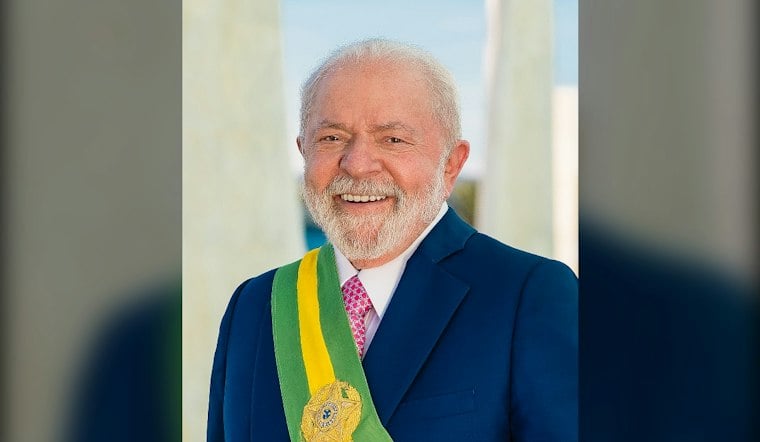
Brazil's largest country in Latin America was gearing up to vote in a first round that will almost certainly send the race to an October 25 runoff, since no candidate appeared likely to clear the 50 percent threshold needed to win outright. Incumbent leftist President Luiz Inácio Lula da Silva was locked in a near-identical standing with Senator Flávio Bolsonaro, the right-wing challenger and son of former President Jair Bolsonaro.
Polling compiled by Reuters showed Lula and Bolsonaro tied in a likely October 25 runoff, with an Atlas poll giving Lula 47.6 percent support and Bolsonaro 47.7 percent in projected second-round voting. The outlet reported that corruption, the economy and crime have dominated voter concerns, while undecided voters made up just 5 percent of the electorate in a Quaest poll published September 28. Separately, AS/COA's poll tracker found that both candidates carried rejection rates of around 50 percent, describing the contest as a technical tie just two weeks before the first-round vote.
Months Of Diplomatic Friction
The timing of the suspension follows a stretch of escalating tension between Washington and Brasília. Reuters reported that the United States revoked the visa of Brazilian Ambassador Maria Luiza Ribeiro Viotti after Brazil withheld approval of U.S. ambassadorial nominee Daniel Perez and denied visas to two American diplomats. The same report noted Washington had imposed a 25 percent tariff on several Brazilian products, citing what it described as unfair trade practices, in a dispute it characterized as an escalation in the deepening rift between the Trump administration and Lula's government.
Earlier, Brazil denied visas to two State Department officials because it said their planned visit could cast doubt on the country's electoral system — claims the State Department called baseless, describing the visit as routine, Reuters reported in July.
Crime Policy Divides The Candidates
Crime and security have featured prominently in the campaign, with Flávio Bolsonaro making it his top issue, according to the Brookings Institution. Brookings reports that Bolsonaro has called for more maximum-security prisons, mass incarceration, tougher criminal penalties and lowering the age of legal culpability to 14 for serious crimes, alongside expanded facial-recognition technology. Lula, meanwhile, launched a program called Brazil Against Organized Crime in May, backed by roughly 1.065 billion reais in direct federal resources and up to 10 billion reais in financing for states and municipalities, targeting criminal groups known as the PCC and CV through financial disruption, prison security and homicide investigations, per the same analysis.
The two governments have also clashed ideologically over how to classify those groups: Brookings notes the Lula administration strongly opposes designating the PCC and CV as foreign terrorist organizations, while the Trump administration has embraced that approach.
The disputed custody status of Jair Bolsonaro has drawn attention. The BBC has reported that the elder Bolsonaro is serving a 27-year prison sentence for plotting a coup after losing the last election.
As The New York Times reported, the suspension came amid unspecified security concerns.





