

























































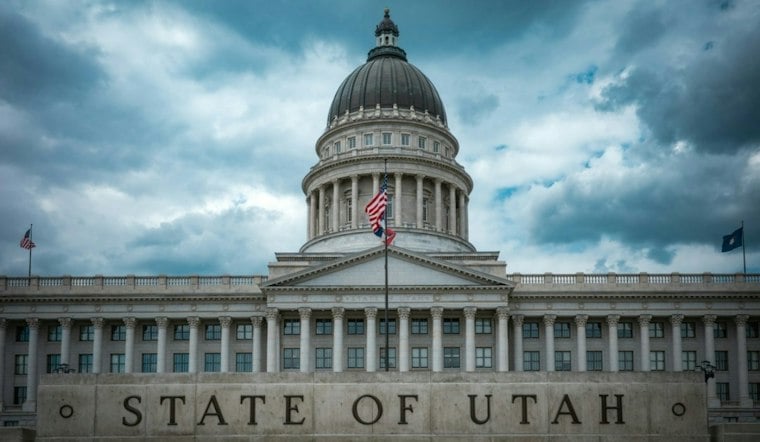
Utah voters will decide next month whether to scrap a 130-year-old constitutional requirement that future amendments be printed in newspapers before they ever reach the ballot box. Constitutional Amendment A, appearing on the November 3 general election ballot, would replace that newspaper mandate with online publication on state websites for 60 calendar days before an election.
The push for change traces directly back to a costly legal mess in 2024. As The Salt Lake Tribune reports, the Utah Constitution's Article XXIII, Section 1 has required that the text of any proposed constitutional amendment be published in newspapers across the state at least two months before election day, a rule that has been in place since the state constitution was ratified roughly 130 years ago. Newspaper archives show the requirement was not always met, according to the Tribune's reporting, and in 2024 that gap proved fatal to two separate ballot measures.
That year, Republican legislators had proposed an amendment to clarify the legislature's ability to repeal or change citizen-passed ballot initiatives, per the Tribune. The Utah Supreme Court voided that amendment, finding the legislature had failed to meet the constitutional publication requirement and separately deeming the ballot language itself deceptive. The high court's ruling, detailed by Ballotpedia, unanimously affirmed a lower court decision. That 2024 legal challenge, which targeted a measure known as Amendment D, was brought by the League of Women Voters of Utah and Mormon Women for Ethical Government.
Two Amendments, One Fatal Flaw
The 2024 fallout was not limited to a single measure. Courts voided two separate legislatively referred constitutional amendments that year — one involving state income tax revenue allocations and the other the legislature's authority over citizen initiatives — both because election officials failed to satisfy the newspaper publication requirement, according to Ballotpedia. Both invalid amendments remained printed on the 2024 ballots, but state judges ordered that no cast votes for them be counted.
This year, the newspaper mandate is still in force one more time. Both constitutional amendments on Utah's 2026 ballot were required to be published in newspapers, and per the Tribune, that publication cost an estimated $1.4 million. Separate legislative communications cited by Indigov put the recurring cost of newspaper notices at roughly $800,000 per election cycle. The debate also reflects changing information habits and the cost of print notices.
How Amendment A Would Work
Amendment A would remove the requirement that future proposed constitutional amendments be published in newspapers, replacing it with publication in a manner provided by statute for 60 calendar days immediately preceding the next general election, the Tribune reports. A companion bill states that publication on the lieutenant governor's website and the public meetings notice website would provide sufficient notice going forward. Under that companion legislation, House Bill 481, future notices would be designated a Class A Notice under Utah Code Section 63G-30-102, legally requiring posting on the state's public notice portal and the state legislature's website, according to Ballotpedia. HB 481 would automatically take effect January 1, 2027, if voters approve Amendment A, and a separate Utah state law passed in 2025 already requires future ballot initiatives to meet the same publication standard as constitutional amendments.
The measure originated as House Joint Resolution 10 during the 2025 legislative session and, per the Tribune, passed the legislature unanimously. State Rep. Anthony Loubet and Sen. Dan McCay, who sponsored Amendment A, said it updates how public notice is delivered without eliminating it, and that modernizing the constitutional requirement can maintain transparency, improve accessibility, and save taxpayer dollars. No organized opposition to the measure has emerged.
Quiet Measure Shares Ballot With a Fight
Amendment A's smooth path through the legislature stands in sharp contrast to its ballot companion. Constitutional Amendment B, also before voters this November, would raise the threshold for passing citizen-initiated tax increases from a simple majority to 60%, and it has drawn organized opposition from civic groups including Better Boundaries, according to Utah News Dispatch. Amendment A, by contrast, advanced through the legislature with unanimous bipartisan support and generated virtually no public controversy.
Utah's Track Record on Amendments
History suggests Amendment A faces favorable odds regardless of the lack of opposition campaigns. Since Utah achieved statehood in 1895, voters have approved 132 of the 188 legislatively referred constitutional amendments put before them, a 70.2% historical passage rate, according to Ballotpedia.
To become part of the Utah Constitution, Amendment A needs approval from a majority of electors voting on it, after having already cleared the two-thirds vote of elected members in each legislative house required for any constitutional amendment to reach the ballot, per the Tribune. Utah voters who plan to vote by mail must ensure ballots are received by their county clerk by 8 p.m. on Election Day, November 3, while those dropping ballots off in person must use a dropbox by that same 8 p.m. deadline.
A 2026 Hoodline report on Amendment B's divisive tax threshold fight also includes background on the court ruling that struck down Amendment D over the newspaper publication defect now at the heart of this year's reform effort.





