

























































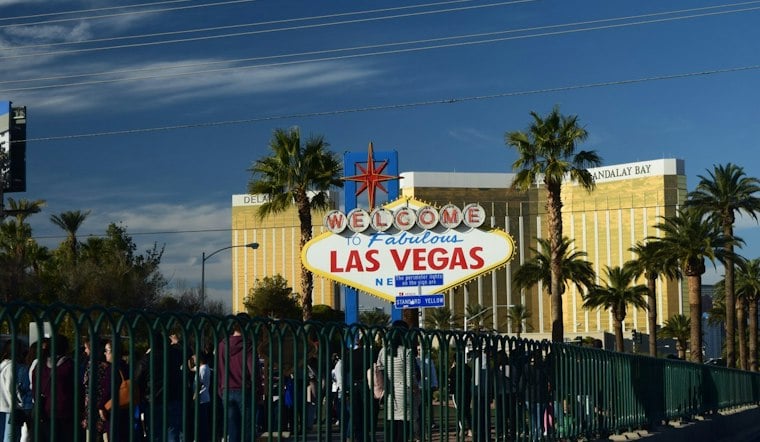
The Welcome to Fabulous Las Vegas sign will glow yellow, orange, and turquoise Monday afternoon as Clark County Commissioner Tick Segerblom hosts a ceremony honoring Indigenous Peoples' Day at the landmark, with the ceremony scheduled for 4 pm. The event is billed as a tribute to the histories, cultures, and contributions of Indigenous peoples, and it will include a performance by traditional dancers following the lighting.
According to KLAS 8 News Now, Segerblom said the day honors tribal nations that have called the region home since time immemorial, and that lighting the landmark in Indigenous colors reminds neighbors and visitors that Southern Nevada's story begins with Indigenous communities. Clark County has said it is proud to walk alongside its tribal partners, per the same report. Indigenous Peoples' Day itself is framed as a holiday meant to correct incomplete historical narratives, honor tribal nations, and recognize the contributions of Native American communities.
A Recognition Fight That Predates the Lighting Ceremony
The timing carries extra weight because Nevada does not officially observe Indigenous Peoples' Day in October. In June 2025, Governor Joe Lombardo vetoed Assembly Bill 144, a measure sponsored by Assemblymember Shea Backus, a Cherokee Nation citizen, that would have established the second Monday of October as the state's official Indigenous Peoples' Day, according to Nevada Public Radio. Lombardo argued the holiday deserved a date separate from Columbus Day rather than sharing it.
Instead, Nevada Revised Statute 236.037 authorizes and requests the governor to proclaim August 9, aligning with the United Nations International Day of the World's Indigenous Peoples, a designation first set by state legislation in 2017, according to the Nevada State Legislature. That split means Monday's county-level ceremony and similar community events operate independently of the state's calendar, standing as a local assertion of recognition even without a statewide October holiday.
Voices From the Community
Barbara Hartzell, a member of the Chemehuevi Indian Tribe and executive director of NATIVE Alliance, is expected to speak at the ceremony. Hartzell said Indigenous Peoples' Day celebrates who Indigenous people are today, per KLAS 8 News Now, adding that Indigenous cultures are being carried forward and Indigenous communities are growing stronger. She said Indigenous people are thriving, leading, and building what comes next. Separately, Native Voters Alliance Nevada advocated for state-level recognition of the holiday following the 2025 legislative session.
Southern Nevada's Indigenous population is substantial and largely urban. About 50,000 self-identified Native American residents live in Clark County, according to 2019 U.S. Census data cited by ICT, representing one of the fastest-growing urban Indigenous populations in the southwestern United States. The county is also home to two federally recognized tribes, the Las Vegas Paiute Tribe and the Moapa Band of Paiutes, though fewer than 1,000 Native Americans live on tribal reservation lands within the county, per the Neon Museum.
Why the County, Not the City, Runs the Show
Commissioners, not Las Vegas city officials, organize the lighting because the sign itself sits outside municipal boundaries. The 25-foot-tall landmark stands in the median of Las Vegas Boulevard in unincorporated Paradise, Nevada, south of Russell Road, placing it under Clark County jurisdiction rather than the City of Las Vegas, according to YESCO. That jurisdictional quirk explains why county commissioners, rather than mayors, routinely lead events at the sign.
Indigenous Peoples' Day has also been marked at the sign. The county regularly changes the sign's bulb scheme to mark other causes too, including turquoise and purple for World Suicide Prevention Day, blue for Child Abuse Prevention Month, and rainbow colors for Pride Month, according to Clark County Government.
The sign itself carries its own historical weight. Designed in 1959 by artist Betty Willis and erected by Western Neon, it later came under Clark County through a sale or lease arrangement, and YESCO maintains it; Willis never copyrighted the Googie-style design because she considered it a gift to the city. The landmark, known for its double-backed construction, internal lighting, and flashing perimeter incandescent bulbs, was officially listed on the U.S. National Register of Historic Places on May 1, 2009.
The sign has also served as a backdrop for community milestones, including filming for the Filipino Town Las Vegas anniversary celebration. Monday's ceremony adds Indigenous Peoples' Day to that growing list of causes the landmark has been lit up to honor.



