

























































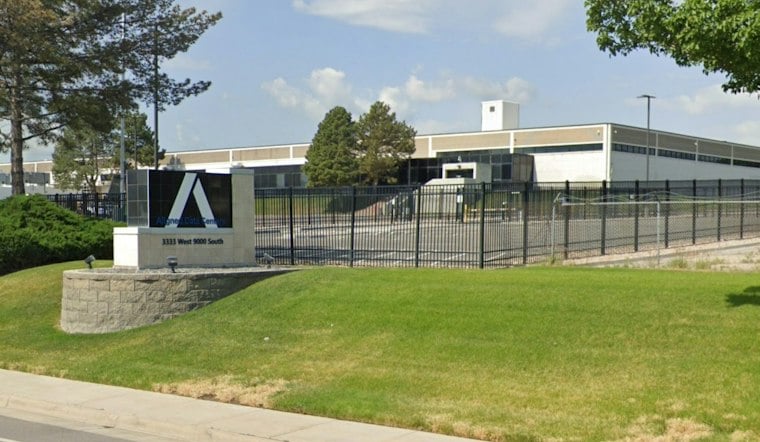
Theresa Sorensen has lived in her West Jordan neighborhood for more than three decades, and these days she says the sound coming from across the street is impossible to ignore. A steady low hum drifts from the data center campus nearly every day, but when the backup generators kick on, it turns into something much louder — loud enough, she says, to hear in every room of her house.
Sorensen's home sits near Aligned Data Center's West Jordan campus, a roughly 55-acre complex, according to ABC4 Utah. She told the outlet that the noise makes it hard to hold a conversation or enjoy her backyard, and that the unpredictability is part of what wears on her. “You never know when they're going to kick on. My property taxes keep going up,” Sorensen said, adding that she plans to sell her property within the next couple of years.
Neighbors Describe Lost Views and Sleepless Nights
Sorensen isn't alone in her frustration. Allen Smith, who has lived in the neighborhood for 30 years, said his family was there long before the data center went up, and that the building's height cost residents their view. He also said generator emissions are visible from his property, and that the noise doesn't stay contained. “The noise carries and echoes off our houses,” Smith said, describing sleepless nights that sometimes push him to make his own background noise just to fall asleep.
Steve Ready, a self-described light sleeper, said the generators run on an unpredictable schedule that has jolted him awake in the middle of the night, including once at 3 a.m. “3 a.m., they're running, it's like a wind tunnel,” he said. With more data centers being proposed across Utah, Ready said he wants other neighbors to pay attention early, before construction begins near their own homes.
What Aligned Says About Its Generators
Aligned Data Centers has said its backup generators are housed in sound-reducing enclosures and are generally used only for maintenance or during emergencies, and that the company has taken steps to reduce impacts on neighbors. In a separate account reported by KSL, the company said the generator exhaust equipment sits mostly idle throughout the year, running only for brief compliance testing, grid emergencies or planned utility outages. A KSL decibel meter recorded a reading of 70 decibels about a block away from the West Jordan facility.
The company's footprint in the area has grown steadily. Aligned announced in 2022 that it planned to build SLC-03, a new data center on the West Jordan campus expected to add more than 100 megawatts of capacity, according to a company press release. Years earlier, in 2019, Aligned said its full-build Salt Lake City campus would eventually offer 780,000 square feet of space and 130 megawatts of capacity.
Generator Noise Is a Recurring Complaint Nationwide
The complaints in West Jordan echo a broader pattern showing up around data centers elsewhere. Standby generators are a common source of low-frequency noise and infrasound during testing or outages, and cooling towers and large fans can also send low-frequency sound beyond a site's boundaries, according to Data Center Knowledge. That outlet notes infrasound is increasingly part of community debates over data centers, even though reported health effects have not been fully validated.
In Sterling, Virginia, residents near a Vantage data center have reported hearing constant generator noise, in part because the facility was never connected to the power grid, leaving its generators as its only source of electricity, per NewsNation. One neighbor there resorted to pressing plexiglass against a window and using sound meters to track the noise. In Vineland, New Jersey, the fallout went further: state regulators fined the company building a data center more than $1 million for operating 62 natural-gas generators without a permit, as reported by WHYY. Residents there complained of a whining metallic noise, air emissions, water use and declining property values, and some of those complaints led to a class-action lawsuit.
The Vineland case escalated even further, with New Jersey ultimately ordering the operator, DataOne, to pay a $1.1 million fine for installing and operating gas generators without required permits, according to Ars Technica. That outlet reported that residents also filed a federal lawsuit after the facility racked up public-health violations for excessive noise.
Utah's Broader Data Center Debate
West Jordan's frustrations are part of a wider conversation playing out across Utah as more data centers get proposed. A University of Southern California study found no effect on power prices from data-center entry for investor-owned utilities serving Utah between 2020 and 2025, according to Deseret News. But researchers cited by that outlet also found that while data centers can initially lower local property-tax rates, depreciation of servers and other personal property can cause those rates to climb again — a University of Utah study found one data center's taxable valuation could fall from $1 billion to $620 million after just one year, and to $70 million by year five.
Utah currently offers post-performance tax incentives that rebate up to 30 cents per dollar of tax revenue in urban areas and 50 cents in rural areas, the same report noted. Elsewhere in the state, officials have projected that the future Creekstone Energy Project data center in Millard County would create 106 full-time jobs averaging $160,000 per job — the kind of economic upside that supporters point to even as neighbors in places like West Jordan weigh the tradeoffs against noise and disrupted sleep.


