

























































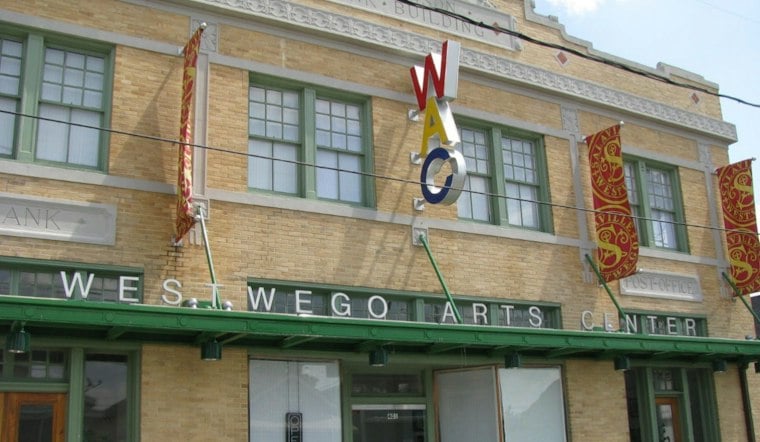
A five-block stretch of Westwego known as Sala Avenue is filling back up, with artists converting long-empty storefronts into studio galleries and small businesses moving into renovated city-owned buildings for a fraction of what similar space would cost across the river. The transformation centers on a former bank building that sat vacant for 13 years before painter Joshua Wingerter turned it into a two-story, 4,000-square-foot studio gallery in 2020.
Wingerter's gallery anchors what city officials now call a cultural district, a designation described by nola.com as part of a broader push to revive the street. Westwego has renovated vacant city buildings and leases them for less than $1,000 per month, according to City Council member Lisa Valence, who represents District 3. Wingerter said the low overhead is the whole point for artists who would otherwise struggle to afford a storefront. “You’re going to pay an obscene overhead,” he said of typical small commercial space, a cost Sala Avenue lets artists sidestep.
Wingerter has since acquired four additional properties in the area and said he has hosted 10 other local artists in his spaces. He mentors emerging artists who share studio space with him upstairs, according to Discover Louisiana Travel. The building he occupies formerly housed a bank before standing empty for over a decade.
A Family Footprint and a Free Fridge
The Wingerter name extends beyond the gallery walls. His sister owns Historic Grounds, a coffee shop that opened in the Westwego Cultural Center nearly a year before the nola.com report published, while his mother owns Little Kitchen, a restaurant near Sala Avenue. Wingerter also maintains a community fridge stocked with free food inside his building, hosts block parties and school field trips there, and has painted murals on schools, utility boxes and the levee, per the same account.
Other businesses have joined the mix. Ribmaster Soulfood and BBQ opened a second location last month in a former food bank building, and a clothing boutique is expected to open soon in a building owned by Valence on Sala Avenue. Brian Bush owns the Carnival Sculpture Gallery on the street, featuring Mardi Gras costumes and carnival flowers, while nearby Throw Dat, a Mardi Gras supply store, hosts crafting events for the public.
New Artists Betting on the Street
Carlos Luis Zervigón, a sculptor and New Orleans School Board member, is building a studio gallery in Westwego expected to open in 2027.
Nearby on Louisiana Avenue, Thomas Bruno built a warehouse with four art studios, including his own, in 2022 and is now constructing four more studios next to it. Together with Wingerter's expanding footprint, the additions suggest a broader pattern of artists converting underused industrial and commercial buildings into working studio space, though the full scope of that trend beyond Sala Avenue has not been independently documented.
The Theater at the Heart of It All
The Westwego Performing Arts Theatre, located at 177 Sala Ave. and operated by the Jefferson Parish Performing Arts Society, has grown alongside the street. The theater seats 255 people across 12 rows of raked seating, according to Visit Jefferson Parish.
This year the theater launched a VIP lounge inside a former light and sound booth and bought the former Temento's fishing shop to store costumes and set designs.
City Plans More Connections to the River
Westwego officials are also looking to physically link the district to the riverfront. The city plans to build a walkway over River Road to Lazy River Landing and a bike path running from the levee to Bayou Segnette on the city's south end.
Separately, city officials have spent more than a decade discussing reviving a ferry line between Westwego and Audubon Park, a service that shut down after the Huey P. Long Bridge opened in 1935. Westwego's visitor infrastructure already includes a farmers and fisheries market with covered vendor booths, an outdoor amphitheater and arts-and-crafts offerings, according to Visit Jefferson Parish, giving the city additional draws beyond Sala Avenue itself.
A Street Named for a 19th-Century Landowner
Sala Avenue takes its name from Pablo Sala, who bought the land in 1892 and named the surrounding area Salaville. The area once served as a starting point for a westward railroad line and a hub for maritime workers, and by the early 1900s Sala Avenue had grown into a downtown lined with clothing stores, seafood processing facilities, doctors' offices and barrooms.
That commercial identity faded after the Westbank Expressway opened in the 1960s, a shift followed by business departures and a gradual turn toward residential use along the street. Westwego has since designated Sala Avenue an official historic district, founded the Westwego Historical Society and launched the Westwego Historical Museum. The street today features QR-code signs pointing visitors to local landmarks, including True Vine Baptist Church, described as the second-oldest Black church on the West Bank.
Westwego officials and Wingerter have invested in the area for six years to build what they describe as an arts and culture hub, and the recent wave of openings suggests that effort is gaining visible momentum. Whether the planned 2027 studio gallery or the River Road walkway ultimately materialize remains to be seen, but for now, artists and small-business owners are betting that Sala Avenue's cheap, spacious buildings are worth the wager.



