

























































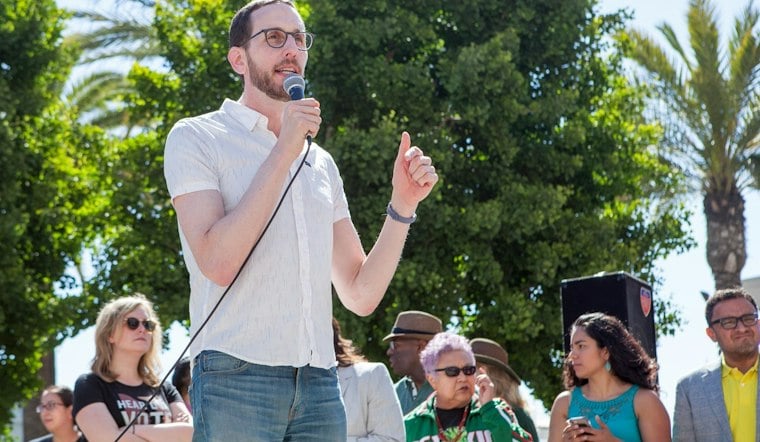
Scott Wiener has authored 186 bills in the California Senate since the 2017-2018 session, more than any other senator during that stretch, with 97 of them signed into law. Connie Chan has cast 84 land-use votes since joining the San Francisco Board of Supervisors, and on multiple occasions she voted against or sponsored resolutions opposing new housing density. The two numbers, drawn from a fresh data analysis, illustrate just how differently the two Democratic rivals racing to succeed former House Speaker Nancy Pelosi have approached the city and state’s housing fights.
According to the San Francisco Chronicle, the data team analyzed authorship and roll-call vote data from both the Board of Supervisors and the state Senate.
Wiener’s Volume, Chan’s Resistance
Wiener averaged about 19 bills passed per session overall, ranking second among all California Senate legislators during that period in total bills passed and signed, and fifth among lawmakers who served at least four sessions. Narrowing to housing and land-use bills specifically, he averaged more than four passed per session, the most of any senator measured. Wiener has run for Congress on that record, framing his work as removing regulatory barriers and limiting cities’ ability to block new homes, including his authorship of SB 79, a state law allowing greater housing density near transit stations.
Chan, by contrast, has emphasized tenant protections and affordable-housing funding over market-rate construction. A separate analysis using a nominate algorithm, which grouped legislators according to similarity in their votes across 418 contested Board of Supervisors votes since 2020, placed Chan toward the progressive end of the spectrum — though not at its extreme — and ranked her second among colleagues, behind Supervisor Aaron Peskin, for opposing housing deregulation and supporting tenant protections.
Specific Projects Chan Opposed
Chan sponsored a resolution opposing SB 79 and voted for legislation to curb density and height along the northern waterfront. Separately, as reported by CalMatters, she helped kill a proposal in 2021 for a nearly 500-unit mixed-income development near a BART station. The data analysis adds that she opposed other individual projects, including a plan to replace a parking lot with hundreds of homes, a 10-unit development, and nine condos that would have replaced a medical facility.
Not every vote cut the same direction. Chan has supported a 98-unit affordable housing development for seniors built on the site of an abandoned funeral home, CalMatters notes, and the data analysis found she steered funding to nonprofits operating supportive housing. Her budgets as a supervisor passed unanimously or near-unanimously on the full board. In 2022, she co-authored an affordable-housing ballot measure with Peskin that competed with a similar measure spearheaded by then-Mayor London Breed; both failed to pass, and Chan’s version was considered more restrictive and less likely to spur construction.
Debate Over Local Control Persists
The fight over local authority has continued into this year’s housing debates. As detailed by the San Francisco Examiner, Chan voted against Mayor Daniel Lurie’s Family Zoning plan and unsuccessfully sought to exclude all existing residential properties from upzoning, limit building heights and densities in certain locations, and shield roughly 20,000 additional rent-controlled apartments from the changes.
Corey Smith, who leads the Housing Action Coalition, a group that advocates for more housing and has endorsed Wiener, said Wiener would focus on housing production in Congress while Chan would focus on protecting existing communities. Sunny Angulo, who runs Propel San Francisco, a progressive group backing Chan, offered a different read, arguing that high interest rates — not insufficient deregulation — have kept private developers from building more, and that market-rate reform simply has not been working.
Did Wiener’s Bills Actually Produce Housing?
Ben Metcalf, managing director of UC Berkeley’s Terner Center for Housing Innovation, said Wiener pursued bills opposed by entrenched and powerful interests, even though he did not win every fight, describing him as the biggest glutton for punishment among his peers in that regard. Wiener’s proposals have frequently drawn opposition from unions, real estate associations, and fellow Democrats alike.
Wiener’s supporters argue that older reforms such as SB 35 have already produced tens of thousands of affordable housing units, while newer measures like SB 79 — signed by the governor and filed with the secretary of state on Oct. 10, 2025, according to California Legislative Information — simply have not had enough time to show results. They maintain fewer homes would have been built at all without Wiener’s bills. Even so, California housing prices have continued to climb and production has stagnated this decade, a backdrop that both candidates agree defines the stakes of the race even as congressional representatives are not particularly involved in setting San Francisco’s own housing policy, which remains largely the province of state and city government.
Wiener and Chan do agree on one thing: that affordability is the top issue facing San Franciscans and that the city lacks housing across all income levels. Wiener enters the general election as the front-runner after taking about 41% of the vote in the June 2 primary, 11 points ahead of Chan, though Chan performed better in precincts with fewer college graduates while Wiener did slightly better in areas with a more progressive voting history, the Chronicle has reported.





