

























































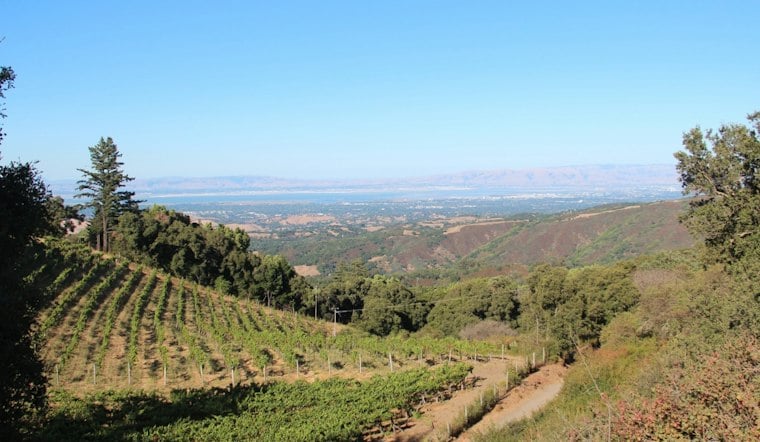
High above Silicon Valley on Skyline Boulevard, Thomas Fogarty Winery just marked 45 years of winemaking with a complete overhaul of how it welcomes visitors, swapping a dim, view-starved tasting room for one with picture windows framing the valley floor and the Diablo mountain range beyond. The Woodside estate celebrated its anniversary on October 3, debuting the new space alongside sound baths, yoga classes, and geology seminars aimed at convincing nearby residents that a serious wine region exists in their own backyard.
According to winemaker and general manager Nathan Kandler, the winery's old tasting room simply did not do the property justice. “The wines are great but the view sucks,” Kandler said of the previous space, as reported by the San Francisco Chronicle. The newly opened Redwood Room, a converted event space that debuted in September, replaces that dimmer setup with picture windows overlooking Silicon Valley and the Diablo range, giving guests an unobstructed vantage point from the winery's perch in the northern Santa Cruz Mountains.
The push comes as the winery works through what Kandler described as a slowdown in tasting interest since the pandemic, per the same Chronicle report. That local trend mirrors a wider industry contraction: Silicon Valley Bank's 2026 Direct-to-Consumer Wine Report found a negative 2.12% trailing-12-month reservation growth rate among its respondents, with the decline uniform across regions, according to Edhat. For family-owned operations like Thomas Fogarty, that matters enormously, since the same report found direct-to-consumer channels generated 72% of total revenue in fiscal year 2025, with tasting room visits and wine clubs each accounting for roughly a quarter to a third of that total.
A Winemaker Trying to Put the Santa Cruz Mountains on the Map
Kandler envisions the winery becoming an accessible destination for visitors from San Francisco and the South Bay, telling the Chronicle that the Santa Cruz Mountains offer a different wine-country experience than Napa or Sonoma. The estate sits less than an hour's drive from both San Jose and San Francisco and draws its current customer base from locals, Stanford visitors, hikers and cyclists exploring the network of trails near the property. Yet Kandler said many local residents do not even know the Santa Cruz Mountains exist as a wine region, a gap the winery is now trying to close with sound baths, yoga, and geology lectures taught by a Stanford University professor.
That obscurity is not for lack of pedigree. The Santa Cruz Mountains AVA was designated in 1981, the same year Dr. Thomas Fogarty founded his winery on the Woodside estate, and the appellation was the nation's eighth AVA and the first ever defined by mountain elevation and fog lines rather than political boundaries, according to background compiled from Wikipedia's entry on the Santa Cruz Mountains AVA. Vineyards must sit at least 400 feet above sea level on the ocean side and 800 feet on the bay side, with some climbing past 3,000 feet. The mountains themselves stretch more than 1,000 square miles from the South Bay down to the Salinas Valley, yet the AVA's 480,000 total acres contain only about 1,500 acres of planted grapevines, a fraction of Napa Valley's roughly 45,000 and Sonoma County's 60,000, per reporting from SOMM TV Magazine.
Fog Lines, Fault Lines and a Second Ranch for Cabernet
Thomas Fogarty's main estate sits at roughly 2,000 feet along Skyline Boulevard, high enough to keep its 30 acres of organically farmed vineyards above the summer fog, conditions that favor cool-climate grapes like the Chardonnay grown in the estate's Langley Hill Vineyard. That same elevation logic shapes how the winery handles Cabernet Sauvignon, which it grows instead at a ranch about a half hour south of the main property, where warmer conditions, higher elevation and sandstone-rich soils suit the variety better. SOMM TV Magazine notes the AVA is bisected by the San Andreas Fault and discusses geological differences across it, alongside the region's highly localized microclimates.
The region's reputation for quality is not new. Santa Cruz Mountains wine earned global recognition when Ridge Vineyards' 1971 Monte Bello Cabernet Sauvignon placed first in the 30th-anniversary re-tasting of the Judgment of Paris in 2006, according to the Mississippi Free Press. The area was considered one of California's premier wine-growing regions before Prohibition, phylloxera, and suburban growth took their toll, and most of its wineries today remain small and family owned, Thomas Fogarty included. Silicon Valley's own growth has reshaped the area's weekend traffic in other ways too, bringing bigger crowds to nearby Alice's Restaurant and Apple Jack's Roadhouse Bar along the same mountain roads.
A Winery Built on Open Space, Now Navigating Loss
The estate's origins trace back to Dr. Fogarty setting aside 350 acres in Woodside as open space under California's Williamson Act. He partnered with fourth-generation grape grower Michael Martella in 1977 to clear the land and plant the estate's first vines before founding the winery itself in 1981. Fogarty, a Stanford cardiovascular surgeon who invented the balloon embolectomy catheter and held more than 190 medical patents, according to Vascular News, died in December at age 91.
His death came just months before the winery's 45th anniversary and the unveiling of its reimagined visitor experience, a convergence that gives this year's hospitality push added weight. The timing also lands amid a difficult stretch for California wine broadly: national industry revenue fell 21% from 2020 through 2025, a slide that has pushed major producers into restructuring and, in at least one case, Chapter 11 bankruptcy, as Hoodline reported in its coverage of Gundlach Bundschu's Sonoma Valley filing. Against that backdrop, Thomas Fogarty's bet on sound baths, yoga, and a window-lined tasting room is less a luxury flourish than an attempt to keep a 45-year-old estate relevant to the Silicon Valley audience sitting just down the hill.



