

























































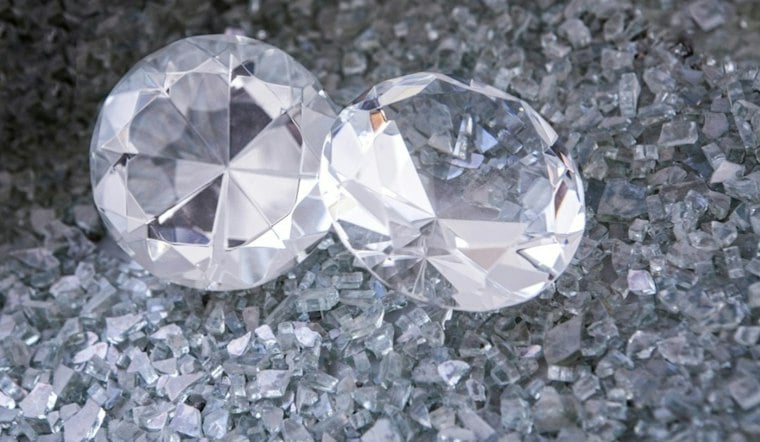
A rough diamond weighing 176.29 carats — more than twice the size of the gem Richard Burton once bought for Elizabeth Taylor — is making its first appearance in the United States this week at a jewelry store in Lighthouse Point. The stone, named Owishi, will be on display from 6:30 to 8:30 p.m. Thursday at J.R. Dunn Jewelers, located at 4210 N. Federal Hwy., according to the store.
Owishi was recovered on May 10, 2026, at the Southern Coastal Mine in Namibia by Namdeb, a joint venture between Origin de Beers Group and the Namibian government, as reported by the Miami Herald. The find was described as the largest diamond of its kind recovered at the mining operation in two decades — a milestone confirmed by the Gem & Jewellery Export Promotion Council, which reported the diamond was discovered at the Southern Coastal Mine in Oranjemund. In Oshiwambo, the name Owishi refers to a rare form of honey found underground that is notoriously difficult to locate, per the same report.
A Presidential Unveiling and a National Pledge
Namibian President Netumbo Nandi-Ndaitwah unveiled the diamond in September, according to the Herald's report, calling the discovery a source of national pride and a financial opportunity for Namibia. At a ceremony in Windhoek, she said the find presents a chance to strengthen the country's natural diamond industry and increase the economic value derived from its mineral resources, according to Observer24. The Herald also reported that Nandi-Ndaitwah said the country's underground wealth should create shared prosperity, and that she hoped the discovery would be the first of many, bringing a financial windfall to Namibia.
Origin de Beers Group, described in the Herald's reporting as a co-owner of Owishi and one of the world's leading diamond companies, is hosting an invitation-only private event for the Lighthouse Point display. Event security will be tight, per the report, though attendees will have the opportunity to get close to the diamond. Lynn Serfaty said Owishi is exceptionally rare, while Sean Dunn said few people will ever have the chance to hold a rough diamond weighing 176 carats, according to the Herald's account.
Bigger Than the Stone Taylor Wore
Owishi weighs more than twice as much as the Taylor-Burton diamond, the famous 69.42-carat pear-shaped stone cut from a 240.80-carat rough diamond found in South Africa's Premier mine in 1966, according to Mouawad. Accounts of how Richard Burton came to own that diamond for Elizabeth Taylor differ: the Herald's report states he bought it at auction for $1.5 million in 1969, while Mouawad's history says collector Robert Kenmore won the 1969 auction for $1,050,000 before Burton later negotiated to acquire the stone from him. The New York Times, reporting at the time, wrote that Cartier bought the 69.42-carat stone at auction for $1,050,000 and then sold it to Burton for Taylor — and that neither Burton nor Cartier would disclose the price Burton ultimately paid.
Namibia and Origin de Beers Group have not announced a price for Owishi, and the diamond is not officially on the market yet, the Herald reported. Gem experts have estimated it could be valued anywhere from $5 million to $25 million, a range Observer24 also cited in its own reporting on the stone's possible worth depending on its eventual polished yield.
Questions Over Sourcing and the Kimberley Process
Namibia participates in the Kimberley Process, the international certification system established in 2003 to prevent rough diamonds from financing armed conflicts, and the country has a government-run system for inspecting diamond shipments and issuing required rough-diamond export certificates, according to the Herald's reporting. There is no public evidence that Owishi is a conflict diamond. Still, human rights advocates have criticized the Kimberley Process definition of conflict diamonds as too narrow, the report noted.
Origin de Beers Group says its diamonds are responsibly sourced and that it uses tracking technology to document each stone's journey from its original source, per the company's own statements cited in the Herald's coverage. The global diamond market itself has been shifting: Nandi-Ndaitwah pointed to changing consumer preferences, international price fluctuations and growing competition from laboratory-grown diamonds as pressures facing the industry, according to the Gem & Jewellery Export Promotion Council. Namibia's rough diamond production held broadly steady at 531,000 carats in the second quarter of 2026, Observer24 reported, up from 459,000 carats in the final quarter of 2025 and following 556,000 carats in the first quarter of the year — figures the outlet attributed partly to higher-grade Namdeb mining offsetting disruptions at Debmarine Namibia.
The Miami Herald's report on Owishi's South Florida debut was written by Luisa Yanez, with contributions from staff writer Madeleine Marr.




