

























































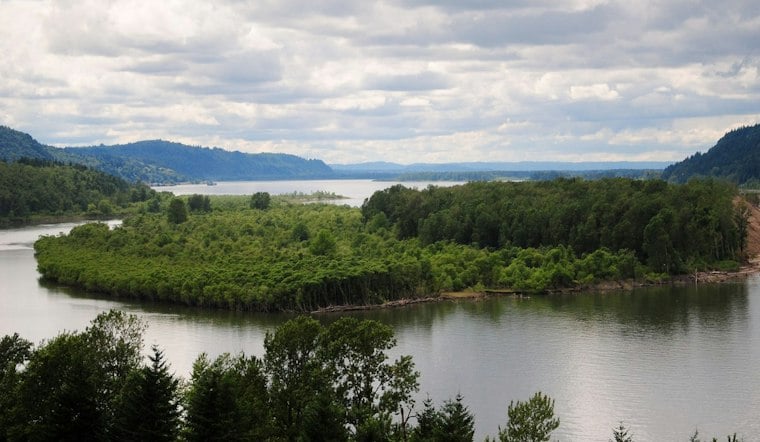
Some of the timber pilings holding the lower Columbia River's shipping channel in place date back to 1885, and after more than a century underwater, a lot of them are falling apart. The U.S. Army Corps of Engineers has now committed $98.5 million over the past four years to rebuild 18 of these aging pile dikes across four project areas, with one site already finished and another targeted to finish by November 30.
The investment, spread across Sand Island, Baker Bay, Cottonwood Island and Miller Sands, breaks down to $54 million for Sand Island, $18 million for Baker Bay, $8 million for Cottonwood Island and $18.5 million for Miller Sands, according to DredgeWire. Baker Bay repairs were completed on October 24, and Sand Island was on track to finish by the end of this month at the time of DredgeWire's report. Cottonwood Island and Miller Sands aren't expected to be done until 2028.
The work marks the largest phase of pile-dike improvements since a 2011 systemwide assessment identified widespread deterioration across the Columbia River system, the outlet reported. Repairs at each site involve replacing deteriorated timbers, rebuilding protective stone aprons and restoring shoreline connections — essentially rebuilding structures that, in some cases, have stood for more than a hundred years.
Why These Wooden Structures Matter So Much
Pile dikes work quietly but do heavy lifting for the river system. They use river currents to prevent sediment from piling up in the navigation channel, which reduces how much maintenance dredging is needed and helps keep commerce flowing, said Matt Craig, project manager for the Army Corps' Portland District, per the same DredgeWire account. “Reliable navigation depends on reliable infrastructure,” Craig said.
The lower Columbia River's pile-dike network isn't small — it includes 233 structures stretching 143 miles, built between 1885 and 1969. Beyond keeping the channel clear, the dikes protect the Corps' beneficial-use islands, where dredged material gets placed during channel maintenance, preserving valuable placement capacity under the river's dredged-material management plan.
Neil Maunu, executive director of the Pacific Northwest Waterways Association, framed the stakes in economic terms, saying that keeping the Columbia River open and reliable is essential to the regional economy. That economy leans heavily on the river: roughly 56 million metric tons of cargo move through the lower Columbia each year, supporting more than $24 billion in annual commerce, the report states.
Shoaling, Safety and a Salmon Habitat Side Effect
Shoaling has affected access near the mouth of the Columbia River, and the repairs are expected to improve navigation conditions for Coast Guard crews responding to emergencies in that stretch. Stabilizing West Sand Island specifically also supports a U.S. Geological Survey water-quality monitoring station, according to the DredgeWire report.
There's an ecological angle to the aging wooden structures, too. Pile dikes have created and protected shallow-water habitat used by juvenile salmon over the decades, and the Corps says it continues to study how navigation infrastructure and adjacent habitat can work together to support both navigation reliability and a healthier river ecosystem.
That tension between channel maintenance and river habitat isn't new. A 2005 report by the National Marine Fisheries Service, cited by High Country News, found that dredging and wetland filling has been one of the major causes of habitat loss in the estuary over the past century — with seventy percent of the river's marshes eliminated and more than a third of its salmon and steelhead populations now extinct. The outlet also reports that the Corps removes 6 to 9 million cubic yards of sediment from the lower Columbia each year just to maintain the shipping channel, and that officials now say they're running out of places to put it.
Engineering the Fix at Sand Island
The Sand Island system at the center of this year's largest award consists of four pile dikes located between river miles four and seven near the mouth of the Columbia, according to a project document from the U.S. Army Corps of Engineers Portland District. The design calls for replacing the existing timber piles with rock armoring in the shoreward, shallower sections of the dike, and with steel pipe piles in the deeper, riverward portions.
Engineering firm Taylor Engineering, which the Corps engaged to evaluate repair alternatives for the Sand Island and Baker Bay systems, reported that dike inspections in 2010 and 2014 rated the Sand Island structures in poor condition, warning that further degradation would have reduced navigability in the region. The firm separately noted that deterioration at Baker Bay had caused the dikes there to lose their hydraulic function, contributing to channel shoaling and shoreline erosion.
The Corps' own environmental review laid out what inaction would look like: under a no-action scenario, the agency's project document predicted that no pile-dike surface structure would remain at Sand Island fifty years from now. The Corps' Finding of No Significant Impact ultimately determined that the repair project would not cause significant adverse effects on the quality of the human environment, while a National Marine Fisheries Service biological opinion found the work would not jeopardize listed species or adversely modify their designated critical habitat.
The repair push is tied to a broader Army Corps effort called Building Infrastructure, Not Paperwork, which focuses on smarter contracting, streamlined permitting and improved project planning, DredgeWire reported. The initiative aims to deliver critical infrastructure more efficiently — a goal that, for the stretch of river running past Sand Island and Baker Bay, now has a completed project and a nearly finished one to show for it.



