

























































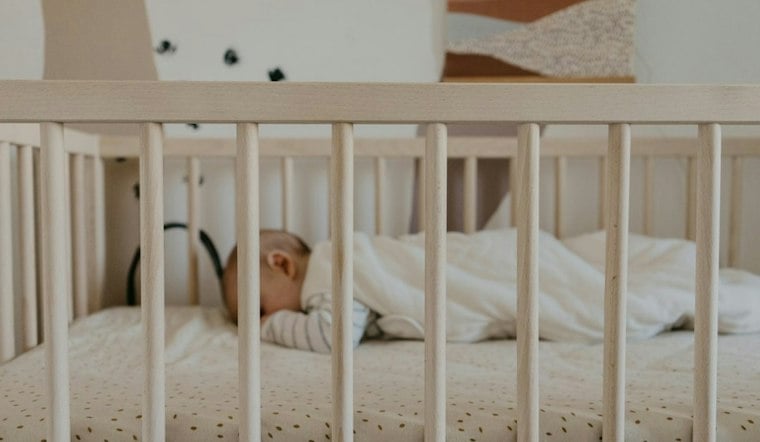
Families shopping for secondhand baby gear online may be stumbling into products that are not just outdated but outright illegal to sell. Consumer Reports tested four major resale platforms between May and June of this year and found banned or recalled children's products listed for sale on every single one of them, according to WCVB anchor and reporter Ben Simmoneau.
The investigation, detailed by Consumer Reports, focused on four categories with known safety hazards: drop-side cribs, infant inclined sleep products, infant in-bed sleepers, and padded crib bumper pads. Testers evaluated eBay, Facebook Marketplace, Mercari, and Craigslist using the platforms' iOS and Android apps, and found banned or recalled items for sale on all four, as reported by WCVB.
Facebook Marketplace stood out as the worst offender in the review, turning up listings in all four banned categories the testers searched. The numbers were especially alarming for in-bed sleepers: evaluators stopped counting after finding 50 of them within just 65 listings reviewed, per the same account. In-bed sleepers carry suffocation and asphyxiation risks and are not supposed to be used for infant sleep at all.
A Law Meant to Keep These Products Off the Market
Congress already addressed this exact problem once. The Safe Sleep for Babies Act, passed in 2021, banned inclined sleepers and crib bumpers outright, according to Deseret News. Yet the items keep turning up in secondhand listings years later, and federal regulators have been blunt about what that means legally.
The U.S. Consumer Product Safety Commission says selling any recalled product is illegal, whether through a formal online marketplace or an in-person sale. The commission's rules apply broadly, too — not just to retailers, but to anyone who sells or distributes consumer products, including individuals running yard sales and flea markets, according to the U.S. Consumer Product Safety Commission.
Why Inclined Sleepers Remain Deadly
The stakes behind the ban are not abstract. An American Academy of Pediatrics study found that 158 infant deaths between 2009 and 2023 were linked to inclined sleepers, including at least 50 that happened after the products were recalled in 2019, Consumer Reports reports. Deaths tied to the devices fell from 22 to 14 in the year following that recall, held steady for two more years, then dropped to nine in 2023 — progress that safety advocates say is undercut every time a banned sleeper resurfaces for sale.
Oriene Shin, a safety advocate quoted in the Consumer Reports coverage, pointed to a core problem with policing online marketplaces: for every listing that's removed, another can take its place. The scale of the enforcement challenge is reflected in federal numbers, too — the acting chairman of the CPSC said the commission issued 82,000 takedown notices in just the first half of fiscal year 2026.
Recalls on the Rise Across the Board
The broader recall picture has been worsening for a decade. The CPSC recalled 145 baby and children's products in 2025, more than twice as many as in 2015, per Deseret News. Baby and children's products made up 34% of all CPSC recalls last year, up from 23% a decade earlier, and children's sleep-product recalls alone jumped to 38 in 2025 after running between six and 15 a year from 2015 through 2022.
How Platforms Responded
Platform responses to the findings varied sharply. eBay removed a padded crib bumper that Consumer Reports flagged within 30 minutes, though it left a reported infant in-bed sleeper up, according to USA Today. Facebook Marketplace, Craigslist, and Mercari did not remove any of the products Consumer Reports reported to them, the outlet found.
Meta told Consumer Reports that recalled products are prohibited under its policies and that it relies on a combination of automated detection and human review to enforce them, per WCVB's reporting. Consumer Reports said both eBay and Facebook Marketplace updated their prohibited-products policies after the concerns were raised, while Mercari said it plans to add a feature allowing users to report recalled or banned products, USA Today reported.
Car Seats Carry Their Own Hidden Dangers
Sleep products were not the only concern researchers flagged. Consumer Reports warned that used child car seats can carry risks that are impossible to spot by eye — hidden damage, missing parts or labels, expired materials, or history in a crash that a listing would never disclose.
Benjamin Hoffman, a physician with the American Academy of Pediatrics, put the guidance plainly: families should never use a hand-me-down or secondhand car seat unless they can be completely certain of its history, he told Consumer Reports. Child car seat experts say that in most cases, buying new is simply the safest option.
What Shoppers Can Do
Secondhand baby gear remains a popular way for parents to save money, but the investigation underscores the need for diligence before buying. Consumer Reports advised shoppers to check Recalls.gov for safety alerts using a product's exact name or model number before purchasing anything used. It offered the same advice to anyone trying to sell baby gear online: check whether an item has been recalled before ever posting the listing.



