

























































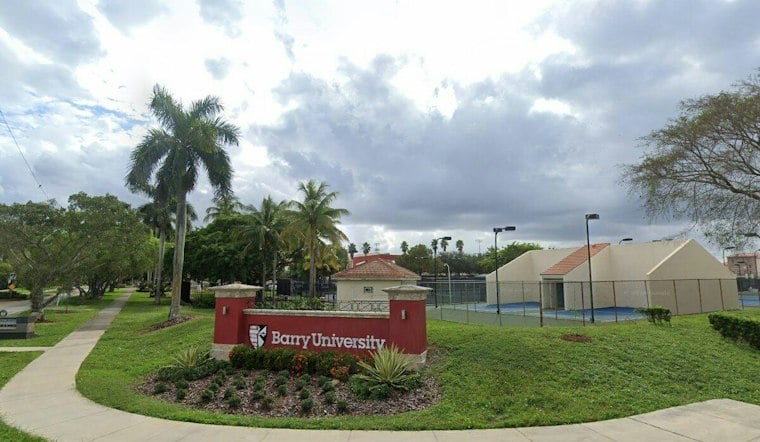
Barry University says it has secured state funding for a new First Responder Risk Detection Training Program designed to help emergency workers across Florida better recognize suicide risk among their own ranks. The Miami Shores school says the initiative is expected to begin rolling out this fall and could eventually support training for close to 8,000 first responders statewide.
According to Miami's Community Newspapers, Barry University advocated for the appropriation itself, and the school says the funding was approved and signed as part of Florida's 2026-27 state budget. Per Barry University, the school secured $500,000 in state funding for the program, though a LegiScan snippet of introduced budget bill text lists a $2 million figure tied to a Barry University first responder risk detection project — a discrepancy between the introduced language and the university's own account that remains unresolved in available records.
Florida's broader spending plan covering the appropriation runs from July 1, 2026 through June 30, 2027, according to the Florida House of Representatives. Barry University says the appropriation moved forward through a bipartisan effort, crediting state Senator Shevrin Jones and Representative Alex Rizo with supporting it.
What the Training Covers
The university says funding will cover operations, program execution, curriculum development, and training for instructors who are themselves current or former first responders. Barry University plans to use a train-the-trainer model, preparing those instructors to deliver standardized training across the state rather than relying on Barry staff to teach every session directly.
The school says the training curriculum will be created by Barry University and co-developed by Dr. Rodolfo Bonnin, dean and professor of the university's School of Mental Health and Social Work, and Frank Galgano, director of emergency management programs at Barry. The program is designed to improve decision-making under high-stress conditions, reduce reliance on subjective judgment and emotional reaction, and enhance both responder safety and public trust. Barry University also says the effort aims to increase successful connections to appropriate mental health care and, more broadly, to improve the quality, consistency and safety of suicide crisis responses across Florida.
Mike Allen said first responders deserve training that supports their well-being and their ability to serve, and said the investment will strengthen Florida's public safety infrastructure through a proactive, standardized approach. Representative Alex Rizo said Barry University's plan will improve first responders' well-being and safety, and said he championed its funding.
Why Florida Lawmakers Are Watching Firefighter Suicide Data
The push for standardized training comes against a backdrop of grim numbers tracked by researchers and state task forces. A study from UCF RESTORES identified 307 suicide deaths among Florida fire service members between 1999 and March 2026 by linking nearly three decades of state records. The same research found deaths were most concentrated among fire service members ages 35 to 54, with firearms accounting for 66.4% of the deaths identified, and noted 21 deaths in 2024 and 18 in 2025 as part of an upward trend after 2014. UCF researchers cautioned that their findings represent descriptive counts rather than rates and cannot determine why any individual death occurred.
A separate tally compiled by the Firefighter Behavioral Health Alliance put Florida's total at 182 recorded firefighter suicides since the organization began gathering data in the early 2000s, which WINK News described as the highest raw number of any state. That outlet also reported the alliance's estimate that only about 60% of firefighter suicides are ever reported, pointing to the absence of a mandatory central reporting system as part of the gap. A 2023 First Responder Suicide Deterrence Task Force report found that first responders made up just 1.4% of Florida's workforce but accounted for a suicide rate of 40.2 deaths per 100,000 emergency responders — more than twice the rate among working-age Floridians generally — with 247 Florida first responders lost to suicide between 2017 and 2022.
Other State and Local Efforts Underway
Barry University's program is not Florida's only recent investment in first responder mental health. The 2023 task force report noted that the state had previously dedicated $12 million to the Building First Responder Resiliency program to expand access to behavioral health services for responders and their families. The Florida State Fire Marshal has also rolled out a statewide Zero Suicide Prevention Framework for the fire service built around seven elements — lead, train, identify, engage, treat, transition and improve — per the same UCF account.
At the local level, Greater Naples Fire Rescue has been developing its own behavioral health access plan, which the WINK News report describes as including automatic Critical Incident Stress Debriefings after severe calls, with crews pulled out of service to talk. That department's plan also calls for partnering with therapists familiar with first responder culture and extending resources to retirees, the report notes.
Barry University's page notes that first responders across the United States respond to a suicide-related call roughly every 11 minutes, and the school says more suicides among first responders are reported each year. Looking ahead, Barry University says it plans to build further partnerships with public safety agencies, first responder organizations, healthcare professionals and behavioral health leaders across Florida as the training program takes shape this fall.



