

























































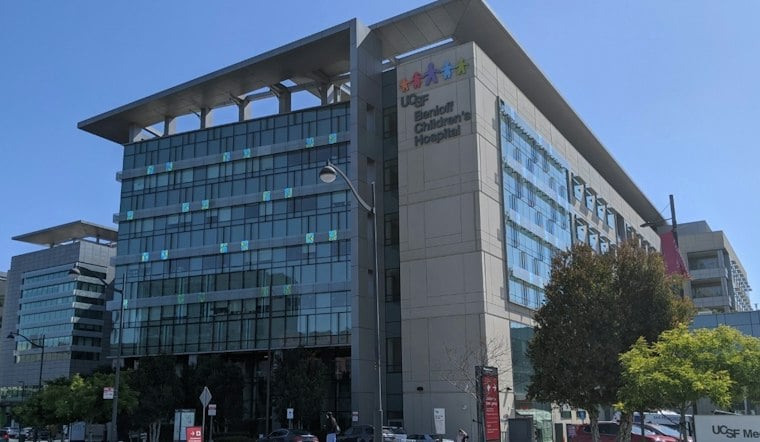
A Bay Area 3-year-old is celebrating one year in remission from a rare blood cancer, an illness first found in infancy.
CBS News reported the milestone in a story published Nov. 13. The child was treated through a clinical trial conducted at UC San Francisco, the same university that has published a separate, much more detailed record on one very rare childhood leukemia.
A Program Built From Infancy Up
UCSF Benioff Children's Hospitals says its Pediatric Blood Cancer Program spans infants, adolescents and young adults, up to age 30. The page also says pediatric cancer patients may be able to receive promising experimental treatments by joining a clinical trial.
The hospital describes itself as a nationally recognized center of excellence for juvenile myelomonocytic leukemia, or JMML, which it calls a very rare cancer. A 2015 UCSF report said JMML mainly affects children under 4.
Those lines are the hospital describing its specialty, not a chart on the 3-year-old. CBS described a rare blood cancer and a UCSF trial. JMML is the rare leukemia UCSF has chosen to name.
A 2019 Fusion, Then a Transplant
In 2019, UCSF wrote about an infant named Quincy who had JMML. Testing found an unusual alteration in which a gene called FLT3 becomes fused to another gene, CCDC88C. He received sorafenib. His white blood cell count fell from an abnormally high 70,000 to a normal 10,000. About two months after the medication began, he was healthy enough for a bone-marrow stem-cell transplant.
A related UCSF account framed that case around a drug for adult liver cancer. The biology came with a recommendation, dated Sept. 11, 2019: "We recommend that all patients without Ras mutations undergo RNA sequencing to identify any fusions that might be treated with targeted therapies."
An infant in that 2019 reporting cannot be a 3-year-old in November 2026. The ages do not line up, whatever the diseases have in common as rare blood cancers of early childhood.
Trametinib, in Groups of 10
UCSF Pediatrics reported a multicenter trial, led by researcher Elliot Stieglitz, that tested trametinib in children with relapsed or chemotherapy-resistant JMML. Seven of the 10 children did not have their cancer progress and were still alive after 24 months. The university presented the work as less toxic and more targeted.
The American Association for Cancer Research described a phase II trial of trametinib in 10 pediatric JMML patients. Five had objective responses, two complete and three partial. Two had stable disease. Three had progressive disease. One count is survival without progression at two years. The other sorts response, stability and progression. Both use the same drug and a group of 10, and the two head counts should not be added into a larger roster.
UCSF Pediatrics says Stieglitz and the team have launched a follow-up clinical trial to bring trametinib to newly diagnosed JMML patients, and notes that the disease has seen few clinical trials. That follow-up is aimed at children at diagnosis. It is not a label the remission report puts on this 3-year-old.
The week’s news is still the smaller fact. A Bay Area child, diagnosed in infancy, has a year of remission after a UCSF trial. The hospital’s published path on JMML is the longer one: sequence the fusion, consider a drug built for another cancer, then test the next drug in groups small enough to count. That record does not name this child. The year in remission does.





