

























































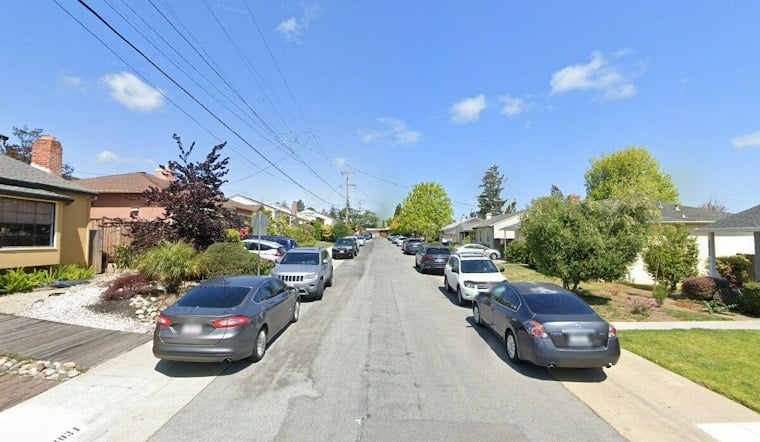
Beverly Street will not be part of San Mateo's expanded residential parking permit zone near Hillsdale High School after all, following a unanimous vote by the city's Sustainability and Infrastructure Commission to grant a resident appeal removing the block from the program. Commissioners sided with neighbors who said their support for the plan had evaporated once they understood how the permits would actually work.
The commission's Nov. 4 vote came after Beverly Street residents filed an appeal to counter an expansion application that San Mateo's Public Works department had approved in April 2025, according to the San Mateo Daily Journal. The newspaper, whose report was authored by Cecilia Schutz, notes that the Hillsdale High School residential parking permit program is designed to restrict nonresidential student parking on neighborhood streets in order to address visibility and safety concerns, with the covered area stretching from 31st Avenue to 30th Avenue. City records cited by the paper show San Mateo received the original expansion request in April 2025, after which staff conducted occupancy counts and widened the study to streets with regular parking spillover, extending the study area from Mason Lane to Fernwood Street and eventually covering Beverly Street, Del Monte Street and 30th Avenue.
How Support Flipped From 80% to 38%
According to the Daily Journal's reporting, the occupancy study — which targeted typical school days and weekends — found that Hillsdale High School and the Mandarin school generated high levels of parking during the study periods. That data led Public Works to approve the expansion for Beverly Street even as 30th Avenue failed to meet the occupancy threshold and was cut from the plan. The outlet's account also states that March 2026 neighborhood surveys initially yielded positive support for the permit program, with Beverly Street inclusion drawing 80% support before residents filed their appeal on July 1, 2026 — support the paper reports later fell to 38%, below the required threshold.
The Daily Journal reported that post-appeal support of 38% was below the required 67% threshold. The city's own Residential Parking Permit Program Policy and Procedure, adopted in September 2019, specifies that at least 50% of households in a proposed program area must respond to a survey and that at least 67% of those respondents must support the proposal. The document also notes that a residential parking permit does not guarantee or reserve a parking space for its holder.
Residents Describe Safety Concerns and Second Thoughts
Marie Dyer, identified as a Beverly Street resident and the original petitioner for the permit program, told commissioners that passing vehicles create a safety issue when cars park on both sides of the narrow street, and said aggressive student drivers fail to yield properly, per the Daily Journal's reporting. Beverly Street residents also expressed concern about safe navigation when vehicles line both sides of the street, and reported that improper parking makes it difficult for wheelchairs, walkers and strollers to navigate the sidewalks, the paper's account states. Residents identified emergency vehicle access as a primary deterrent to allowing unrestricted student parking on the block.
Several Beverly Street residents urged the Sustainability and Infrastructure Commission on Nov. 4 to remove their block from the approved expansion, according to Citizen Portal's coverage of the meeting. Residents objected that the expansion could limit visitor parking, require burdensome renewals and push student parking onto neighboring streets, the outlet reported. Multiple speakers at the meeting suggested speed bumps or better enforcement as possible alternatives or additions to permits.
Joanne Dill told the commission she supported safety measures but questioned what specific conditions the permit would address and whether alternatives had been considered, per the Daily Journal. That tension between supporting the broader goal of the permit program and doubting its specific design surfaced repeatedly during the discussion.
Commissioners Weigh Rules Versus Flexibility
Commissioner Jean-Paul Renaud echoed residents' concerns, saying policy restrictions could make denying the appeal difficult, according to the Daily Journal's account. Renaud said he wanted to follow the rules but believed other solutions were possible. Commissioner Kimi Narita said the Beverly Street decision exposed unresolved root issues and said the city should commit to engaging the community to address them, the paper reported.
In the end, all commissioners present voted in favor of granting the appeal, Citizen Portal reported in its rundown of the meeting's votes and actions. The commission directed staff to return with a formal statement of decision at its next meeting, though what that statement will say — and whether it has since been issued — was not addressed in either outlet's reporting.





