

























































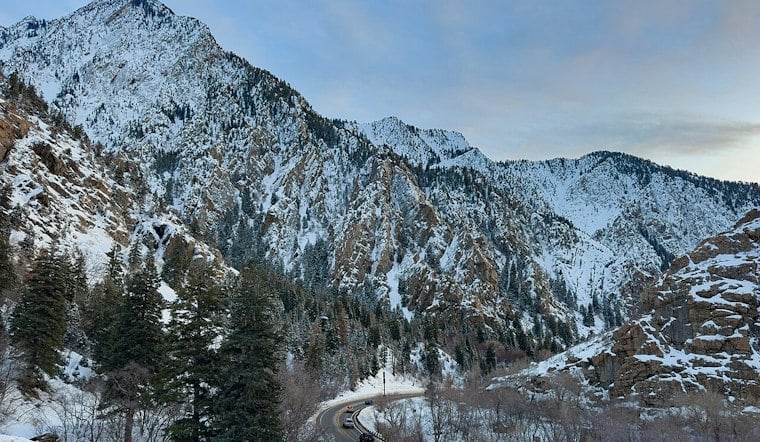
A former Utah Department of Transportation employee is raising alarms about guardrails in Big Cottonwood Canyon that he says have shown visible damage for years, including a torn rail that appears in Google Street View imagery dating back to 2014. Jayson Kesler, who spent about 15 years at UDOT working with sign and guardrail crews, says the problems he spotted raise questions about whether the state’s roadside safety systems are getting the attention they need before another tragedy happens.
Kesler reached out after an earlier report on guardrail conditions in Little Cottonwood Canyon and invited a crew from FOX 13 News into Big Cottonwood Canyon to show what he believes are long-standing maintenance issues. Beyond the torn rail, he pointed to a guardrail end treatment that appears intact in 2018 images but shows damage by 2019 — and, according to Kesler, remains damaged today. At another curve, he noted a hazard marker that appears to have been missing for years.
FOX 13 News was careful to note the limits of what the historical images can prove: they do not establish whether UDOT had documented the problems, assessed their severity, or scheduled repairs. Kesler explained that guardrails and their components are designed to work together as a safety system, with the end treatment specifically meant to help manage a vehicle’s impact in a crash.
A Father’s Mission Since 2016
The scrutiny lands against the backdrop of a father’s yearslong campaign. Steve Eimers began investigating guardrail design and maintenance after his 17-year-old daughter, Hannah, was killed in a 2016 crash — he has said a guardrail went through her car and killed her. Since then, Eimers has traveled the country documenting guardrail concerns and pushing agencies to address safety problems, and he visited Utah this past summer as part of that effort.
During that trip, Eimers said he was especially concerned about older guardrails in the state’s canyons, telling FOX 13 News that Utah’s canyons had extraordinarily obsolete guardrails, reused parts and makeshift combinations. “I saw parts being re-used and Frankensteined,” he said, describing concerns he had in Big Cottonwood and Provo canyons specifically.
“Save one more, and then we’ll go for the next one,” Eimers said, describing his approach to the work. He has said he hopes that finding and fixing problems will help prevent another family from experiencing the kind of loss his own family went through.
UDOT’s Response
UDOT roadway operations manager Jake Brown told FOX 13 News the department inspects guardrails and other barriers every month, and that when crews find damage, it gets added to a repair list. “We inspect the barriers monthly,” Brown said, adding that “we get it on a list and we try to get it done as quickly as possible.”
FOX 13 News sent UDOT the specific Big Cottonwood Canyon locations Kesler identified and requested comment, but the agency did not respond by deadline. A similar pattern played out in a separate FOX 13 News report on Little Cottonwood Canyon, where a driver pointed to rough shoulder asphalt and rusted guardrails on SR-210 ahead of winter weather; in that report, UDOT likewise said it inspects canyon guardrails monthly and places damaged rail on a repair list.
An App Built to Track the Fix
Kesler has also helped develop Report 24/7, an app designed to let drivers report road hazards directly. The app identifies the location of a reported problem, sends it to the government agency responsible for that road, and allows users to track whether the issue has actually been addressed. Kesler said the goal is to make reporting hazards easier while also showing the public what happens after a report gets filed.
A Pattern Beyond Utah
The concerns raised in Big Cottonwood Canyon echo troubling cases elsewhere in the country. In Maine, a damaged guardrail on the Falmouth Spur sat unrepaired for more than six months before it pierced the car of 19-year-old college student Joamaliz Orozco in a crash earlier this year, according to WGME. Maine State Police said that guardrail was first damaged in an earlier crash on July 3, 2025, and state guidelines called for it to be classified as a priority repair with a two-week target completion time — yet WGME found no repair records at the site until documented work finally began on April 6, 2026. The station also reported that, statewide, about three-quarters of Maine’s guardrail repairs are completed within two weeks regardless of priority level.
Just this past Friday, a Warwick man was killed after his car struck a guardrail along Route 184 in Stonington, Connecticut, according to a report from turnto10.com. Eimers said he believed, based on Google Street View imagery, that the rail may have been torn before that crash occurred. Taken together, the cases in Utah, Maine and Connecticut point to a recurring question families and safety advocates keep raising: whether damaged roadside barriers are being tracked and fixed quickly enough to prevent the next fatal crash.




