

























































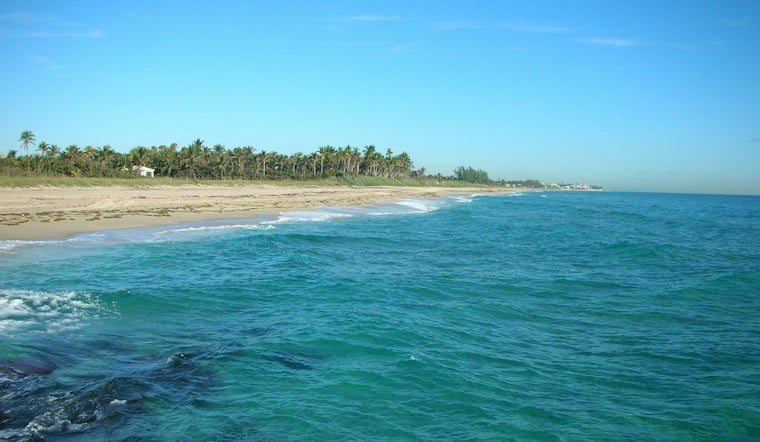
A whale shark turned up close enough for boaters off Boynton Beach to get a look most people never get. The memorable part of that encounter is also the part they are being told not to follow with a hand.
WPBF reported that boaters in the waters off Boynton Beach had a rare chance to see a whale shark up close. The station also reported that authorities issued a reminder that reaching out to touch one is illegal.
Up Close, Then Hands In
Up close is the story. Reaching out is the part authorities do not want repeated. WPBF did not name those authorities, and the reminder itself is the local warning on the record.
The standing federal advice is plainer, and it does not depend on how photogenic the animal is. NOAA Fisheries urges people to watch marine animals from a safe, respectful distance and not to approach or touch them.
Forty Feet Changes the Math
Size is part of why a sighting like this travels. A WFLA report citing the Florida Fish and Wildlife Conservation Commission said whale sharks can exceed 40 feet in total length. That is a fish large enough to make a boat feel ordinary.
The same report described a separate Florida encounter, a whale shark about eight miles west of Loggerhead Key in the Dry Tortugas' northern ecological reserve. Different water. Same basic problem for anyone tempted to treat a passing giant as a photo prop.
What the Longer Gulf Record Shows
None of this schedules the next Boynton Beach appearance. A study published on January 6, 2021, in Frontiers in Marine Science, which lists it in Volume 7 - 2020, examined a different basin: more than 800 whale shark sightings in the northern Gulf of Mexico from 1989 to 2016, plus tracking from 42 tagged sharks.
Those sightings were most numerous in summer and fall, often along the continental shelf break, sometimes in groups. In cooler months, the study found a net movement south. The record also splits in a useful way. Sightings data placed the sharks primarily in continental shelf and shelf-edge waters (81 percent of sightings). Tag data put them primarily in continental slope and open-ocean waters, 91 percent. People mostly notice them where boats already are. The animals spend much of their tracked time farther out.
For the boaters who already had their look, the practical instruction is the unglamorous one: watch from a respectful distance, and leave the reaching to somebody else's bad idea.



