

























































A group of Chicago developers is proposing a $10 billion, 100-acre development on the former Michael Reese Hospital site, with a domed stadium intended to attract the Chicago Bears back to the city. The plan’s central challenge is whether it can assemble enough land in Bronzeville to fit a stadium while avoiding active rail lines and addressing impacts on nearby residents.
The group includes Capri Investment Group founder Quintin Primo and GRIT Chicago, the developers and investors led by Farpoint Development, according to the Chicago Sun-Times. Crain's Chicago Business reported Thursday that the latest rendering shows a stadium, surrounding high-rises and a land bridge to Lake Michigan. The proposal’s expanded footprint is intended to address the site constraints cited in earlier discussions.
A Bigger Footprint to Solve an Old Problem
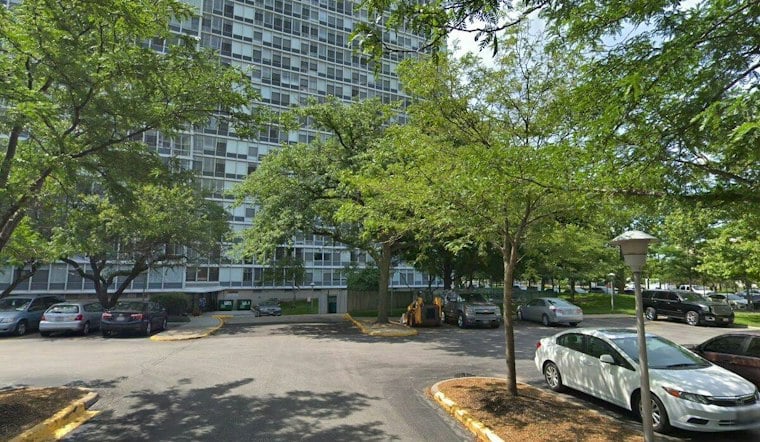
The Bears previously rejected the Michael Reese site, saying it was too narrow and raised safety concerns because the stadium would have to be built over an active rail line, the Sun-Times reported. The new plan would combine the roughly 48-acre former hospital site with neighboring Prairie Shores and proposed air rights over the McCormick Place Marshaling Yard to the east, according to a release distributed via PR Newswire.
That added land is meant to solve the geometry problem outright. Preliminary designs call for a stadium requiring approximately 30 to 40 acres, including a 300-foot security perimeter, that could fit without encroaching on active railroad operations, per the same release. At the center of it all would sit a domed stadium built to hold approximately 75,000 spectators, part of a broader district envisioned at more than 11 million square feet of development.
Housing, a Park and a Land Bridge
Beyond the stadium itself, the plan leans heavily on housing to soften its impact on the existing Prairie Shores community. Developers are proposing more than 5,000 new mixed-income homes within or near the expanded district, including at least 1,000 units of affordable and senior housing alongside student housing, the PR Newswire release states. For residents whose current apartments sit in the project's path, the plan calls for constructing up to 1.5 replacement apartments for every existing unit affected, potentially creating approximately 1,500 new apartments overall.
The proposal also includes a land bridge spanning Jean-Baptiste Pointe DuSable Lake Shore Drive and a new public park of more than 28 acres, tying the development back to the lakefront it borders. It's the kind of amenity-heavy wrapping that's become standard in these pitches, designed to make the case that a stadium here benefits the surrounding neighborhood as much as the team.
An Offer to Buy Out Arlington Heights
Perhaps the boldest line in the pitch is financial rather than architectural. Capri and its investment partners said they are willing to purchase the Bears' Arlington Heights property if the team's existing investment there is an obstacle to considering a Chicago location, according to the Sun-Times account. It's a direct attempt to remove whatever sunk-cost argument might be keeping the Bears committed to their suburban site.
The developers estimate the project could generate about $135 million in annual tax revenue and project approximately $14 billion in regional economic activity during construction. Those are the development team’s projections, not figures from an independent analysis. The Metropolitan Pier and Exposition Authority, which oversees nearby McCormick Place, said it had made no commitments related to the project.
What the Proposal Leaves Unresolved
The scale of the existing community is one measure of what redevelopment would have to address: Golub & Company says Prairie Shores has 1,675 workforce housing apartments and that it acquired the property in 2019. That information establishes the size and housing character of the community, but does not indicate agreed resident protections or resolve who would control land needed for the proposed development. The Bears’ position has also been stated differently in the past: in a stadium letter, CEO Kevin Warren said Arlington Heights was the team’s only viable Cook County location at that time. Separately, CBS Chicago reported that Park District leaders said Soldier Field earns more than 80% of its money from events other than Bears games. That figure concerns Soldier Field, not the Bronzeville proposal, and does not establish how a renovation was financed or what independent audits say about its costs or projected benefits.
The Latest in a Crowded Field of Pitches
The Michael Reese site has drawn a previous stadium proposal. In March 2025, developers proposed a $3.2 billion Bronzeville stadium, the Sun-Times reported at the time, and Farpoint principal Scott Goodman proposed spending $600 million in state money to prepare the site for construction. The current plan carries a price tag more than three times as large and covers a broader development.
The Bronzeville pitch is one of several proposals seeking the Bears’ attention. The Real Deal reported earlier this month that Related Midwest proposed a stadium on a 440-acre former U.S. Steel South Works site on Lake Michigan that the firm already controls. Related Midwest’s president has argued that its proposal would be less disruptive to housing than plans centered on Michael Reese or Bridgeport’s Rate Field.
The proposal remains contingent on major unresolved questions, including whether the expanded site can be assembled and whether the Bears would consider it. Neither the team nor the exposition authority has indicated that the Bronzeville plan has advanced beyond a developer proposal.




