

























































Cache County voters sent two Democrats to the county council for the first time in two decades, with Mark Nafziger and Allison Goulais both winning seats that had been held by Republicans. The pair are expected to join the seven-member panel in January, flipping what had been an all-Republican council to a 5-2 split across party lines.
It is a result that had not happened in Cache County since 2006, when voters reelected Brian Chambers to a second term on the council, according to The Salt Lake Tribune. Chambers served eight years on the council before leaving after 2010, and no Democrat had won a seat there since. Nafziger ran against Republican incumbent Sandi Goodlander, chair of the previously all-Republican council, while Goulais challenged Republican incumbent JoAnn Bennett, who had joined the council in January after Barbara Tidwell resigned.
The vote counts reported after Election Day varied by outlet. The Tribune's unofficial results showed Nafziger capturing 57.7% of the vote to Goodlander's 42.3%, while Goulais won with 58.5% against Bennett's 41.5%. KVNU reported different figures days earlier, putting Nafziger at 1,411 votes, or 56%, to Goodlander's 1,089 votes, or 43%, and Goulais at 1,153 votes, or 58%, to Bennett's 826 votes, or 41%, according to KVNU. The station also noted that every other contested local race in Cache County went to the incumbent Republican.
A Rematch Two Years in the Making
Goulais's win was a reversal of her own 2024 run, when she lost to Barbara Tidwell for the same seat with 42.3% of the vote. This time, the race drew an unusual cross-party endorsement: Republican Cache County Executive George Daines broke with his party to back Goulais over Bennett in a letter to the editor published toward the end of October, while also endorsing Goodlander against Nafziger. Cache Democrats chair Shannon Rhodes told the Tribune that Daines's endorsement did not sway the outcome in the Nafziger-Goodlander race.
Cache Democrats had identified the two seats as their most winnable based on how the county voted in the 2024 presidential election, and the party poured fundraising money into a coordinated field operation spanning other northern Utah counties. The effort included paid canvassers, phone bankers and volunteers working to spread the candidates' messages, and Rhodes said the coordinated campaign made a huge difference. She also credited the quality of the Democratic candidates, saying they outworked their Republican opponents.
Data Centers Emerge as a Flashpoint
Nafziger said his opposition to data centers resonated with nearly everyone he spoke to on the campaign trail. He described a strong objection to any large data centers being built in Cache County, pointing to environmental and community health concerns, remarks he made in September on Utah Public Radio ahead of the election. He later told the Tribune that people tend to oppose large data centers in their communities because of the destruction of open space, officials' lack of responsiveness to constituents, and leaders overriding public opposition.
That local frustration echoed a wider pattern seen across the country this election cycle. A Route Fifty analysis found that opponents of data-center development were successful in virtually all of more than 40 local ballot measures across 10 states, and exit polling cited in the same report found 56% of voters described AI and data centers as a crucial or major factor in their vote — with 64% of that group backing Democrats. Elsewhere, voters in Harwood, North Dakota, rejected a charter amendment on large industrial projects by a 75% margin among 430 ballots cast, while Emporia, Kansas, voters passed a measure prohibiting high-impact data centers with just over 60% support, according to Route Fifty.
A Shifting Electorate in Logan
Rhodes pointed to demographic shifts around Utah State University as part of the broader picture, saying young adults in the area lean progressive and that the university is growing in both size and diversity. She said students appeared more excited and ready to act in this election than in previous midterms. The Cache County Democratic Party is already looking ahead, searching for candidates to run when other incumbents' terms expire in 2028.
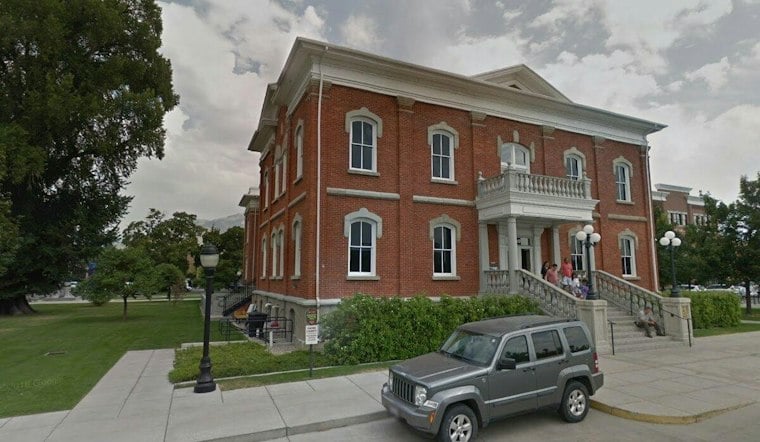
Nafziger had help close to home: his daughter, Alanna Nafziger, advised him on the campaign. She had her own mixed record at the ballot box in recent years, losing a 2025 race against Logan Mayor Mark Anderson before beating him this year for a seat on the Cache water district board. Both winning council candidates are set to be sworn in alongside their Republican colleagues at the old Cache County Courthouse in Logan when the new term begins in January.





