

























































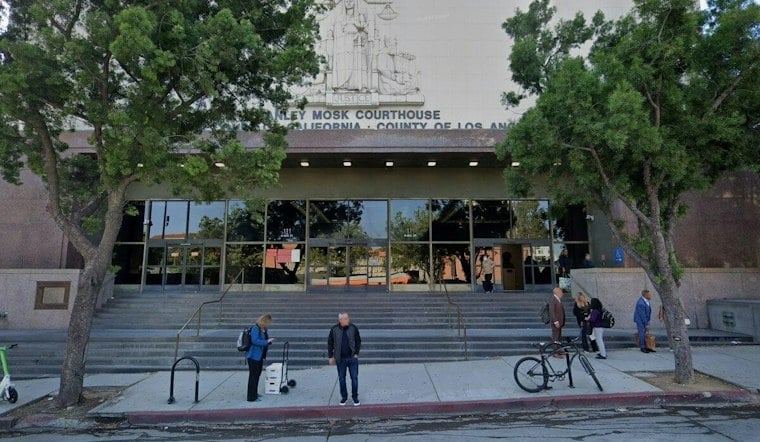
A California appeals court has shut the door on four school districts' attempt to hold Meta, Google, TikTok and Snap financially responsible for student mental health struggles and the staff time schools say they poured into addressing them. The unanimous ruling, handed down Thursday, affirms a lower court's dismissal of lawsuits brought by districts in San Diego, Vancouver, Washington, Brevard County, Florida, and West Warwick, Rhode Island.
The California Court of Appeal's decision deals a blow to districts that argued the platforms' addictive design features disrupted their educational mission and triggered a mental health crisis among students, according to Courthouse News Service. The districts said they had to divert staff time and increase spending on mental health services to deal with the fallout, a claim detailed by mto.com in its summary of the opinion. Those same costs, the court found, were exactly the kind of purely economic losses that the law generally will not let a plaintiff recover without accompanying physical or property damage.
Why the Economic Loss Rule Sank the Case
That economic loss rule became one of the central pillars of the dismissal. Per mto.com's account of the ruling, the court held that the rule barred the districts' negligence claims seeking recovery for their increased operational costs, since schools could not point to physical harm tied directly to the platforms' conduct. The districts had claimed frustration of their educational mission and lost staff time as some students used social media compulsively or developed anxiety and depression, but the appellate panel found those harms insufficient to sustain a negligence theory.
Section 230 of the Communications Decency Act did additional work for the tech companies. The districts had cited TikTok challenges that allegedly encouraged students to deface school property, but the court ruled that the federal statute shielded the companies from liability for property damage stemming from that third-party content, mto.com reported. It is a familiar outcome in platform litigation, where Section 230 has repeatedly blocked claims tied to content posted by users rather than the companies themselves.
Public Nuisance Claims Also Rejected
The districts' public-nuisance theory fared no better. The court rejected it on several grounds, including a lack of standing, insufficient allegations that the harm extended to an entire community, and the districts' failure to establish a legally recognized public right to education under nuisance law, according to mto.com's reporting on the opinion. The panel's reasoning echoed language cited elsewhere in the ruling, noting that public nuisance claims typically concern property rights or public health and safety rather than abstract concepts like a right to education.
Justice Anne Richardson, who authored the unanimous opinion for a panel that also included Justices Elwood Lui and Stephen Goorvitch, did not dismiss the human toll at the center of the case. “We acknowledge the serious allegations of mental health harms experienced by many students and the impact of those harms on plaintiffs' schools and student bodies,” Richardson wrote, in language reported by Bloomberg Law. Still, acknowledging the harm was not enough to keep the lawsuits alive under the legal theories the districts had chosen.
A Much Larger Legal Battle Continues
Thursday's ruling covers only four districts, but it lands inside a sprawling national fight. More than 1,000 school districts nationwide, including at least a dozen in California and Los Angeles Unified, are pursuing claims against the same social media companies over alleged student harms and the costs shifted onto schools, according to EdSource. Those districts are seeking both financial compensation and court-ordered changes to the platforms' products, the outlet reported.
That broader litigation has already produced very different results elsewhere. In March, a Los Angeles jury found Meta and Google responsible for a woman's depression and anxiety in a bellwether trial tied to roughly 2,000 other pending lawsuits brought by parents and school districts, according to NPR. And in May, Breathitt County School District in Kentucky became the first district to settle with social media companies, receiving $27 million, EdSource reported. Terms of that district's separate settlement with Meta were not disclosed, according to the BBC, though the district had already settled the same case with TikTok, Snap and YouTube.
Sources differ on some of the specifics of that bellwether case. EdSource reported that the plaintiff, identified as Glenn-Mills, sued Meta and Google at age 17 and successfully argued to a jury that the companies engineered their platforms to addict children. The BBC, however, described the plaintiff known as Kaley as a 20-year-old woman when reporting the $6 million damages award. Either way, the case illustrates how differently individual student lawsuits have fared compared with the institutional claims school districts have brought on their own behalf.
Advocates for the districts have drawn a comparison to an earlier industry reckoning: in 2019, Los Angeles Unified joined a national class-action lawsuit against the e-cigarette company Juul, which ultimately paid school districts $1.2 billion in 2023, per EdSource. Whether social media litigation follows a similar path toward a large industry-wide payout, or continues to splinter into dismissals like Thursday's ruling and isolated settlements like Breathitt County's, remains to be seen as the thousands of other pending cases work their way through courts nationwide.




