

























































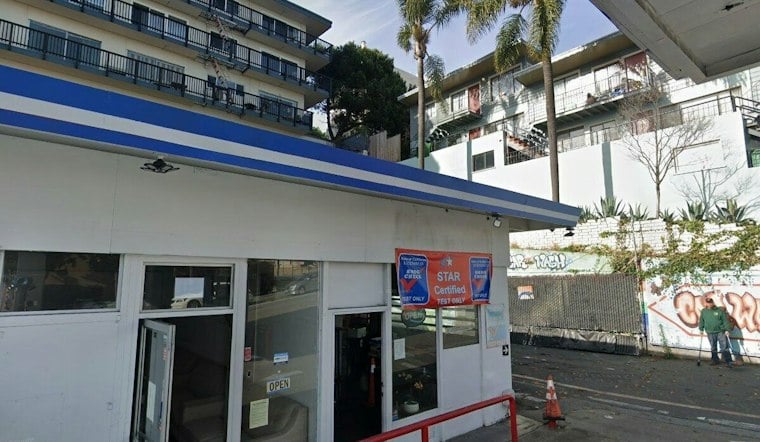
Gary McCoy, San Francisco's incoming District 8 supervisor, has an idea for easing the city's housing crunch: pick one of the Castro's two gas stations and turn it into homes. The Castro, he says, probably doesn't need both the Chevron and the Castro Gas and Food Mart sitting within blocks of each other, and he thinks one could instead hold apartments. But the hurdles facing that idea are not new, and they've stalled similar plans before.
A Supervisor-Elect With a Housing Platform
McCoy won the District 8 seat in October by sweeping every precinct in the district, and converting gas stations and parking lots into homes is part of his housing policy platform. He has proposed building housing on the Castro gas station site as an affordability measure, and says his goal is to build affordable housing more cheaply. As SFGATE reports, McCoy plans to look into the Chevron site specifically once he has assembled his legislative aide team, and he intends to inventory potential housing sites across District 8 after joining the Board of Supervisors in January, with an eye toward fast-tracking project approvals. He has not yet contacted either gas station's owner, and SFGATE says it did not receive responses from either owner by the time of publication.
McCoy's interest in the issue goes back over a decade. He served on the Market & Octavia Community Advisory Committee in 2014, around the same time Scott Wiener supported replacing gas stations in District 8. McCoy has written that a gas station on Market Street stands as a monument to the past amid a housing shortage, a climate crisis and increasing electric-vehicle use. Nothing has changed about his goal, he says, and he remains determined to explore the gas-station housing idea because affordability is his top priority.
San Francisco Already Tried This
The city isn't starting from scratch. The Board of Supervisors approved former Mayor London Breed's Cars to Casas ordinance in December 2022, a measure first introduced in October 2021 to ease housing development restrictions on gas stations, parking lots and other car-oriented parcels, according to the San Francisco Standard. The new planning code section streamlined housing development on former gas stations and parking lots by removing the existing conditional-use requirement to remove an auto use, according to the city's own announcement at the time. The San Francisco Planning Department has logged more than 40 gas-station-to-housing projects since the late 1980s, with filings concentrated during the George W. Bush and Obama administrations, and estimated roughly 500 parcels citywide could be eligible for the Cars to Casas program, per Mission Local.
San Francisco lost nearly half of its gas stations by 2017, a trend tied in part to declining gasoline demand and California's mandate to phase out new gas-powered car sales by 2035, both cited in reporting on the broader shift toward repurposing fuel sites. Several gas stations along Market Street between Van Ness and Castro were slated for commercial and residential development as far back as 2011, according to SF Weekly's account of the city's fuel-site transition.
The Math Doesn't Add Up Yet
The trouble is that the city's own numbers say this kind of conversion rarely pencils out. A 2022 feasibility study found that gas-station conversion costs were too high to be lucrative for developers, and construction and development costs would exceed potential revenue from residential units in every scenario examined. The Standard reported the study evaluated 32 scenarios; Bisnow's account instead put the number at 16 hypothetical scenarios, with neither report reconciling the discrepancy. Either way, the study's conclusion was the same: the proposal produced negative residual values.
Those negative values were steep. Mission Local reported the analysis found negative worth between $93,000 and $635,000 per rental unit, and between $82,000 and $539,000 per unit for condominiums. Bisnow's coverage pointed to construction costs above $700 per square foot as one of several roadblocks to housing construction in the city. Notably, the feasibility study didn't even account for demolition or environmental remediation costs, according to the Standard's reporting, meaning actual project costs could run higher still.
Contamination Could Complicate the Chevron Site
That remediation question isn't hypothetical for the Castro Chevron. The site was flagged in 2024 for petroleum-contaminated soil, and the San Francisco Bay Regional Water Quality Control Board determined that residual petroleum-contaminated soil there could pose a risk to future development. The site had reported a spill from its underground storage tanks back in 2003. The Castro Gas and Food Mart, the other site McCoy is weighing, is located nearby in the same neighborhood.
A Cautionary Tale a Few Blocks Away
San Francisco has watched a gas-station-to-housing plan unravel before. Plans for the 376 Castro Street gas-station site were approved back in 2013 for a six-story building with 24 homes, ground-floor retail and a 14-car garage, according to SocketSite. A legal dispute over ownership and control of the site kept the approved development from moving forward for years, and even after that dispute was resolved, no acceptable offer surfaced by 2017. The property was pulled off the market, and its approved building permits later expired. By 2021, the site and its plans were back on the market with an undisclosed asking price.
Not every former gas station has stalled out, though. SF Weekly notes a project at 3601 Lawton Street is set to replace a former gas station with a multi-unit residential building in the Outer Sunset. And at 3701 Noriega Street in the Sunset District, a former fuel site is now home to Gus's Community Market plus 12 units of housing, the Standard reported. Those examples offer a glimpse of what McCoy is hoping to replicate in the Castro, even as the financial and environmental obstacles that have slowed similar projects elsewhere remain unresolved.





