

























































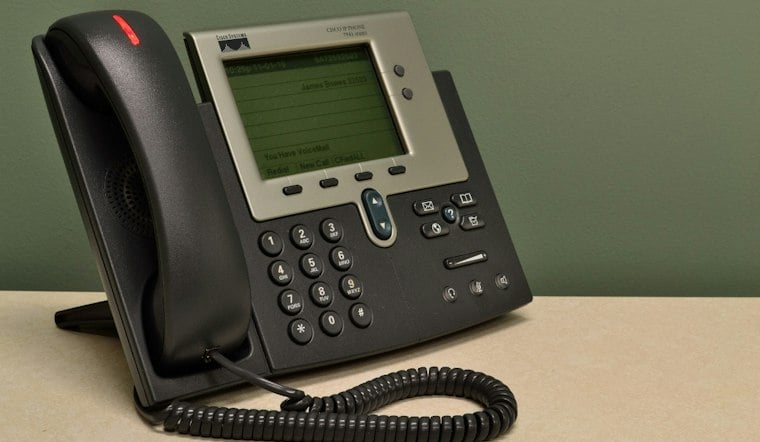
For 90 minutes Tuesday morning, Chicagoans dialing 911 during a medical emergency, a crash, or a crime in progress could not get through. The phone outage at the city's Office of Emergency Management and Communications began at approximately 7:30 a.m. and left callers unable to reach emergency services at the exact moment they needed help most.
The breakdown, first reported by NBC 5 Chicago, hit a center that normally handles nearly 4,000 calls a day. NBC 5's investigative team reported that possibly hundreds of calls for help went unanswered during the disruption, though the station noted there is no independently verified count of how many calls failed to connect. The outage forced 911 operations onto a backup system while primary phone service was restored.
That backup line came with its own limitation: it could handle only one call at a time. An OEMC alert instructed callers to keep trying the backup number if it rang busy, and the agency also told emergency agencies to switch to radio communication, which was faster during the breakdown, the station reported. OEMC alerted Chicago police and fire officials that the 911 center's phones were down, and there were reports of people in need wandering into police districts and fire stations looking for help, according to NBC 5's reporting.
Dispatchers Weigh In On the Alert Itself
An anonymous dispatcher told the station that alerting the proper authorities about a major OEMC problem was standard practice, though the same dispatcher said some colleagues were upset that the alert went out at all. Emergency call takers at the Near West Side center typically hand off incoming calls to police or fire dispatchers, who then relay information to first responders, a process that relies entirely on functioning phone lines to begin.
OEMC officials said the telephone outage was resolved quickly by Motorola and a city operations team. Officials also said the failure did not result from a deliberate act by a malicious actor and was not a cybersecurity issue, according to the same NBC 5 report. Crucially, OEMC said the outage had nothing to do with the new dispatch system the city plans to put into full use next month, nor with the 30-year-old technology still in service until then.
A New System Already Under Fire
Those denials arrive as veteran OEMC dispatchers are sounding alarms of their own about a new computerized dispatch system scheduled to go live December 8. The dispatchers told NBC 5 the system is flawed, that they have not been fully trained to use it, and that public safety will be at risk once it launches. Dispatcher Eugene Roy said problems with the new system could delay call answering and dispatching and cause some calls to be fumbled or dropped, and he pointed to geocoding and address-linking issues with the software, per the same report.
Veteran dispatchers are now planning to submit no-confidence letters to OEMC management, NBC 5 reported. City officials and the system's equipment contractor countered that training has been stepped up over the past two months and that technical concerns have been addressed, according to the station's reporting.
The rollout has already been a long time coming. WTTW reports the new computer-aided dispatch system was first scheduled to roll out in 2023 but was delayed more than three years by the COVID-19 pandemic. City officials say the new system will automatically record when officers arrive at the scene of a 911 call, replacing a legacy process that required officers to manually enter their response status. Accounts of the contract's origin differ: the Race and Equity Project reported a $74.9 million deal with CentralSquare Technologies announced in 2020, while WTTW described a $75 million contract signed with the same company in 2019.
The timeline for the switch itself is similarly muddled across reports. WTTW described the new system as fully deployed starting December 7, while a November 5 update cited by the Race and Equity Project said the Mayor's Office had pushed full implementation to the end of the year. Neither account reconciles exactly with NBC 5's December 8 go-live date cited by dispatchers.
A Data Gap Behind the Debate
The stakes of getting response tracking right are underscored by the city's own numbers. From January through September 2026, Chicagoans made more than one million 911 calls, and city data shows fewer than 70% of them have a recorded police arrival time, according to the Race and Equity Project. Nationally, the pattern is familiar: a Government Technology report notes that outdated technology and underinvestment have affected emergency communications systems across the country.
Chicago is not alone in facing a high-profile 911 stumble this year. In New York City, a routine software upgrade at the Bronx 911 call center caused an August disruption affecting about 1,700 calls, Government Technology reported. More than 700 of those affected calls came from New Yorkers seeking emergency assistance, and about 100 callers never connected with an operator, according to the outlet. The fallout there has prompted New York City Councilmember Oswald Feliz to plan legislation requiring the city to notify the public whenever a 911 outage occurs.





