

























































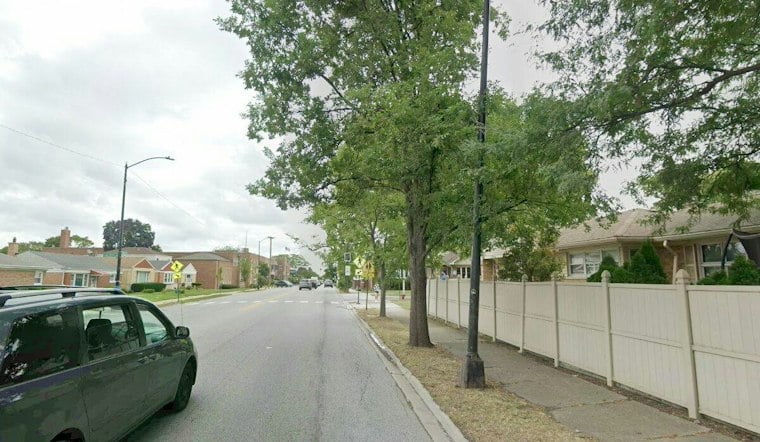
A speed camera near St. Juliana School on the 7500 block of West Touhy Avenue clocked Glenn Nelson at 36 mph in a 30 mph zone, and he's now fighting that warning ticket in circuit court. His argument hinges on something most drivers never think to question: the camera's own calibration paperwork, which he says shows the reading could have actually been as low as 35.38 mph.
Nelson told reporters that speed cameras carry a margin of error, and after reviewing camera calibration records, he questioned whether he actually exceeded the citation threshold at all. As reported by ABC7 Chicago, his case has now reached circuit court, where he argues that people should not be ticketed if they might not have been at fault. The company that owns the camera referred questions back to the city, according to the same report.
Nelson's challenge lands on top of a broader I-Team investigation into whether Chicago drivers may receive speed camera citations despite potentially not violating the law. Chicago's cameras had a reported accuracy of less than or equal to 0.62 mph according to FOIA-obtained records, while the Chicago Department of Transportation has said separately that its cameras may be off by plus or minus 1 mph and still comply with Illinois law and national standards. The agency has also said, in an earlier response, that the cameras meet accuracy standards required under state law and federal guidelines.
A Small Margin, Big Money
Critics argue that even a small camera error margin can have significant consequences for drivers who end up on the wrong side of a citation threshold. Speed camera citations in Chicago include tickets for driving 6 to 10 mph over the limit near schools or parks, as well as citations for driving 11 mph or more over the posted speed.
The dollar figures attached to those citations are substantial. The Chicago Department of Finance reported that 2025 fines for drivers accused of traveling 6 mph over the limit generated nearly $21 million, while fines for drivers accused of traveling 11 mph over the limit generated almost $9 million that same year. Through the end of August 2026, the city had issued more than 550,000 tickets to drivers accused of traveling 6 mph over the limit, plus another 67,000 tickets to drivers accused of traveling 11 mph over, with those citations generating nearly $20 million in fines.
Mark Wallace, leader of Citizens to Abolish Red Light Cameras, has called for a serious audit of the speed camera program. He said the city should not have received $19 million in revenue because it did not account for the margin of error, and argued the audit should determine whether enforcement actually improves traffic safety or simply punishes people least able to afford the fines.
Separate Reports Flag Calibration Questions
A related ABC7 I-Team investigation, examined separately from Nelson's case, obtained calibration reports from five cameras across the city and found radar accuracy within 0.62 mph. Three of those five cameras were among the top 10 grossing locations citywide for 6-to-10-mph-over tickets, according to that ABC7 investigation. CDOT maintained in that same report that the cameras are accurate within the plus-or-minus-1-mph margin of error required by Illinois law and national standards. Chicago currently has 178 speed cameras in operation, with 34 more on the way, and the report noted fines of $35 for driving 6-10 mph over the limit and $100 for 11 mph or more over.
The citywide numbers underline how much is riding on these questions. From January 2023 through the end of February 2025, the city fined drivers almost $144 million from about 3 million speed-camera tickets, with more than $90 million of that coming from the 6-10 mph threshold alone, per that same ABC7 report.
Ticket Volume Keeps Climbing Each Year
According to Illinois Policy, Chicago issued 529,529 tickets in 2025 for driving 6-10 mph over the limit, up from 424,754 in 2024, while tickets for 11 mph or more over the limit rose 30% to 123,786. Total speed-camera revenue climbed to $64.2 million in 2025 from $59.6 million the prior year, with the 6-10 mph tickets alone generating $43.2 million. The outlet also cited University of Illinois Chicago researchers who found little relationship between the number of tickets issued and the safety impact of cameras.
Illinois law, per the Illinois General Assembly's vehicle code, requires routine and independent calibration of the speeds produced by automated speed-enforcement systems to be conducted annually by a qualified person, though the available statutory excerpt does not spell out every procedural detail of that requirement.
For now, Nelson's circuit court fight remains unresolved, and the broader question of how a fraction-of-a-mile-per-hour margin should factor into hundreds of thousands of citations a year is still an open one in Chicago. Whatever the court decides, it won't settle the dispute over whether the city's growing camera network is primarily a safety tool or a revenue engine — a debate playing out one ticket, and one calibration report, at a time.




