

























































Clarksville and Montgomery County leaders say limits on water and electricity make them unwilling to bring in another data center. Mayor Joe Pitts would oppose one in Clarksville because the impacts are unknown and the water capacity isn't there. County Mayor Wes Golden says the county has no resources left to welcome one.
The Google facility already running in Montgomery County is a different question. It has operated on 1.4 million square feet just outside the limits of Clarksville, a city of nearly 200,000 and Tennessee's fifth-largest, since late 2019. 14 News reported this week on that refusal, and on a water figure for the existing center that a nondisclosure agreement still leaves unclear.
A Semiconductor Site That Took Servers Instead
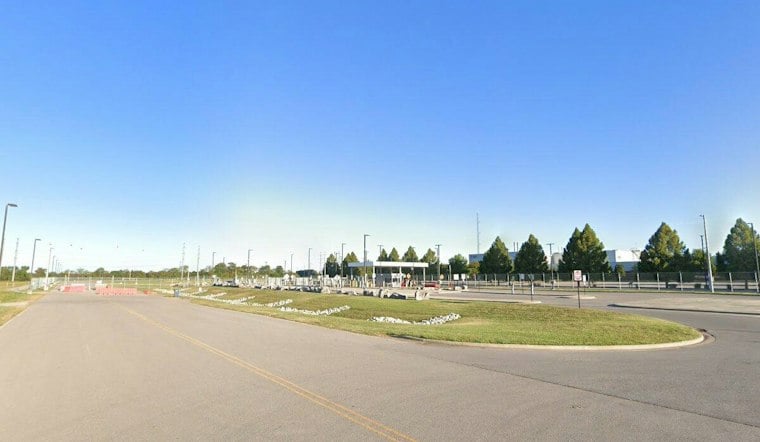
Google opened the center in late 2019. Pitts said data centers were not as prominent then, and 14 News described a community that was indifferent about the arrival. The buildings sit in a large industrial park once planned for Hemlock Semiconductor, which manufactures parts for solar panels. Berms Hemlock installed still border the park.
That account said the data center rescued a site that otherwise would have remained an abandoned brownfield. The facility powers Google Search, cloud storage and Gmail. Servers generate heat, the center uses water to cool them, and the electricity comes directly from the Tennessee Valley Authority rather than through the city's retail electric department.
Google says it has invested more than $6 billion in Tennessee since it arrived. On jobs, Pitts was narrower. He said the data center did not produce as many jobs as Hemlock would have. Greg Farmer, who lives less than half a mile away, just over a berm, told 14 News the center is expanding and has provided local jobs. He said the berms kept additional light off his house, and that light and sound from the site do not reach his home. He has seen no negative effects.
The smaller civic record is easier to list. Google has sponsored community events and supported nonprofits. After the company arrived, Clarksville expanded Wi-Fi in three parks and in low- to moderate-income neighborhoods, serving homes that could not afford internet.
The Water Limit Nobody Can Check
Pitts put the cooling water on a specific site. "We've reached our limit in terms of the amount of water that we can provide for that site," he said. The buildings sit outside the city limits. The supply he is talking about is still city water. He said that ceiling constrains Google's own expansion, and that the company is working with the gas and water department to meet growing needs.
How many gallons that takes isn't public. Google and local government signed a nondisclosure agreement when the company first arrived, so the exact use is unclear. Pitts said the agreement is not a major concern now that it has been signed. Officials can call the site maxed out without residents being able to see the number.
Tennessee's biggest data centers consume millions of gallons a day, the Tennessean reported in August. That is a description of the state's largest centers, not a disclosed total for Montgomery County.
Clarksville had already described a wider squeeze. On July 17, 2024, the city said population growth and the demand that came with it had reduced the available water capacity needed for additional growth. A planned North Clarksville water plant would have a capacity of 36 million gallons a day. The existing South Clarksville plant was listed at 28 million gallons a day, and the city described a future combined capacity of 64 million gallons a day. That update treated the north plant as a project in progress and the 64 million gallons as future capacity.
Power From TVA, Bills on Another Path
Pitts was as direct about electricity. "TVA is struggling to keep up with demand, just the residential and commercial growth," he said. He has tied Clarksville's reluctance to approve another data center to water and electricity together.
Utility bills across Montgomery County have gone up. TVA raised its rates, which caused the city's electricity department to raise its rates. Water rates have also gone up. Pitts attributed those increases to inflation and other price increases, not specifically to Google or to data centers. Farmer said the data center has not affected his water or electric bills.
The valley-wide load is the backdrop, and it is not a Clarksville-only story. TVA chief executive Don Moul said data-center demand climbed to 18% of TVA's industrial load in 2025, and that the authority is projecting data-center growth in the region to double by 2030, Utility Dive reported. A July ThinkTennessee report found data-center electricity consumption in the Tennessee Valley had grown 7.2 times in five years, reaching 9.2 million megawatt-hours in 2025.
The same report said Tennessee areas hosting data centers saw average electricity bills rise 1.6% from 2023 to 2024, compared with 1.3% statewide. That 0.3-point difference covers host areas across the state, not a Montgomery County bill audit. Google's center here takes power directly from TVA, separate from the city department that passed a TVA increase through to its own customers.
A 17-4 Vote With Another Stop Left
County commissioners are putting regulations in place in case another data center is proposed. On Oct. 19, an amended resolution passed 17-4. Clarksville Now reported that it would return to the Regional Planning Commission for review before coming back to the County Commission. As described in that reporting, the measure sets tight limits on future data-center setbacks, noise, and water and power use, and it includes utility-provider confirmation requirements. It is aimed at future facilities, not at Google's existing center.
Golden said he would not support another data center at this time because of current resource use. He also said future resources and technology could change that. Pitts told 14 News that data centers vary, and that local elected officials should investigate environmental safety and resource issues before approving a project.
State environmental review does not settle the local resource question. The Tennessee Department of Environment and Conservation says its permits are not specific to data centers and that it does not approve a data-center project as a whole. It reviews components that may be subject to environmental requirements. A permit on one piece of a project is not a finding that Clarksville has water to spare.
Pauses, Proposals, and the Center Already Here
Nearby governments are writing different versions of the same hesitation. In October, the Evansville City Council approved a 180-day moratorium on new data-center developments within city limits, to study resource impacts, infrastructure demands and zoning, 14 News reported. Vanderburgh County paused new applications while a 13-member committee studies the impacts, with final recommendations expected by Dec. 31. In May, the Daviess County Fiscal Court approved a one-year moratorium on new data-center applications for the county and for Owensboro.
Other projects are still moving. Amazon has confirmed it is in the early stages of evaluating a data center in Posey County, where the Area Plan Commission voted to recommend an ordinance of nearly 40 pages covering height, noise, setbacks, water and power use, and environmental impacts. In Hawesville, TeraWulf is building an AI and high-performance computing campus at the former Century Aluminum smelter site, with a partial opening planned for 2027 and construction completion planned for 2028.
Montgomery County's next date is closer to home. The amended resolution still has to come back from the Regional Planning Commission before the County Commission takes it up again. Out by the berm, Farmer says the center already there is expanding. Pitts says the water the city can provide for that site is at its limit, and that Google is working with the gas and water department on needs that are still growing.





