

























































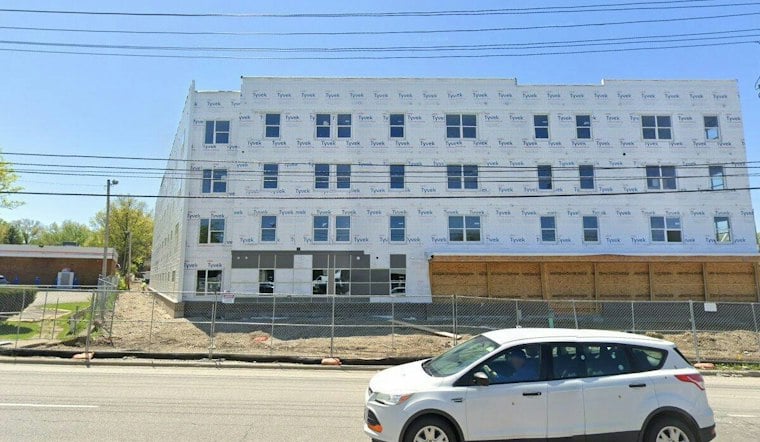
Cleveland Heights City Council is scheduled to consider four tax increment financing districts that would let the city capture new property-tax value from recently improved buildings and put a share of it toward public infrastructure.
The proposals are on the agenda for first reading, not a final vote, according to Cleveland.com. Each one is written as a non-school TIF: a full exemption on the increase in assessed value, payments in lieu of taxes, and a school district that is supposed to keep getting what it would have collected on that increase.
Four Improved Properties, One Mechanism
The addresses are scattered, and so are the uses. The districts would cover 2228 Noble Road, home to the Nobility Court affordable housing complex; 2590 Noble Road, home to ArchWell Health, which specializes in senior health care; 2211 Lee Road, a mixed-use building that includes The Forest Dispensary; and 3957-3965 Mayfield Road, home to Crash Champions, a collision-repair shop.
Assistant Economic Development Director Brian Anderson wrote in a memo that all four properties have seen significant recent investment. The administration says the proposed arrangements are similar to a TIF established in 2024 for the Oak Tree veterinary site.
That is the practical pitch. The improvements are already in the ground. What council is being asked to create is a way to peel off part of the tax growth those improvements produce.
A 100 Percent Exemption, With a School Hold-Harmless
Each proposal would exempt 100% of the increase in assessed value from property improvements from ordinary property taxation for up to 30 years. Owners would not simply stop paying. They would make payments in lieu of traditional property taxes, and a portion of that money would go into municipal public improvement funds.
Under the legislation, the Cleveland Heights-University Heights City School District would continue receiving payments equivalent to the property taxes it otherwise would have collected on the increased value. The base value stays in the ordinary tax system. The fight, such as it is, is over the increment.
The city's own explainer, posted at clevelandheights.gov, puts the maximum term at 30 years and the maximum exemption at 100%. It also says exemptions that exceed 75% of the increase in assessed value, or that run longer than 10 years, require approval from the affected local school district. These four proposals sit at both of those ceilings.
Infrastructure, Not a Revenue Forecast
Council documents say the city's share could fund roads, sidewalks, bikeways, water and sewer improvements, utilities, stormwater work, demolition, streetscape and landscaping, and related professional and financing costs. That is a wide menu. It is not a project list tied to any of the four addresses.
The agenda also includes no estimates of annual or 30-year revenue for any of the four districts. Without those figures, the first reading is a structure debate more than a budget debate. Council can see where the money would be allowed to go. It cannot see, from these materials, how much would actually arrive.
Oak Tree Is the Stated Model
The 2024 Oak Tree veterinary site TIF exempted the school district and collects about two-thirds of the property taxes on the building. The city receives the remaining property taxes instead of its customary 10%. Heights Libraries, Cuyahoga County agencies and Cleveland Metroparks would otherwise share that remainder.
That split is the closest local comparison the administration is offering. The school district is taken out of the redirected increment. Other taxing bodies that would normally divide what is left do not get their usual cut, and the city takes more than its ordinary share.
Earlier Deals Did Not All Work the Same Way
Cleveland Heights has used the TIF label for several different bargains. In August, council approved a 30-year non-school TIF for renovation of the Alcazar Hotel apartments, as reported by Cleveland.com. The city's share is meant to help finance a $15 million renovation. The school district is to receive its full share of property taxes once standard citywide 10-year, 100% abatements expire in 2037.
Top of the Hill was built around bonds. In December 2019, council authorized preparation of $30 million in TIF revenue bonds, and the school district was expected to receive roughly $421,000 a year in payments in lieu of taxes for 30 years, Cleveland.com reported. The reauthorized TIF was set to cover 2021 through 2050.
Cedar-Lee-Meadowbrook pointed a larger share at the developer. About 34% of the payments in lieu of taxes were to go to the school district, while developer F&C could take just over 66% for project costs on the $66 million development, according to Cleveland.com. The district was to receive the first of 30 annual payments in 2026, with those payments projected to reach about $375,000 a year beginning in 2027.
The four districts now before council are not described as financing a named renovation or as sending two-thirds of the payments to a developer. They are framed as non-school districts for public infrastructure, on the Oak Tree pattern, and they are only at first reading.




