

























































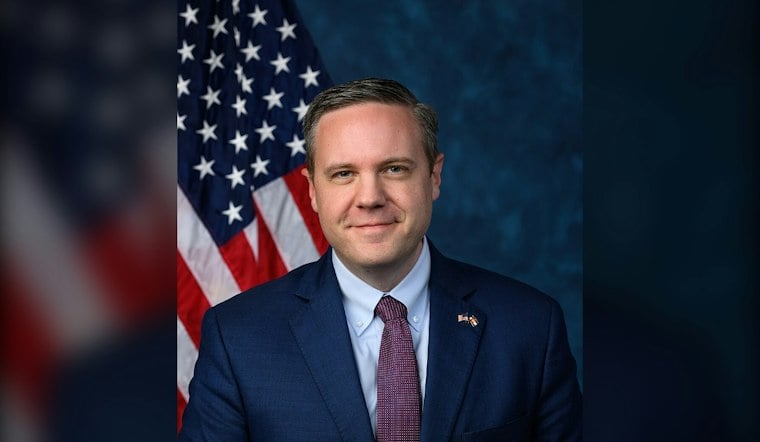
A bill from Colorado Congressman Jeff Hurd aimed at overhauling how the federal government handles tribal economic development regulation cleared the House Committee on Natural Resources on Wednesday. The Tribal Regulatory Reform Implementation Act would shift responsibilities tied to a two-decade-old federal law away from the Department of Commerce, a move Hurd says could cut through bureaucratic hurdles that have long frustrated tribal communities.
According to Denver Gazette, the legislation was introduced last May and modifies the Indian Tribal Regulatory Reform and Business Development Act of 2000. The outlet reports the bill transfers certain administrative responsibilities from the Department of Commerce to the Department of the Interior, while a separate account from KBFT describes it as transferring certain tribal economic development programs between the same two agencies. Both outlets agree on the direction of the shift, even if they characterize its scope somewhat differently.
Hurd represents Colorado's 3rd Congressional District, which includes both the Southern Ute and Ute Mountain Ute Reservations, giving the legislation direct relevance to his constituents. The bill's path to Wednesday's committee vote began with a hearing before the House Subcommittee on Indian and Insular Affairs on June 9, where lawmakers first examined the proposal before it cleared that panel in June.
What the Bill Would Actually Change
Per the bill text obtained by congress.gov, administrative responsibilities and jurisdiction assigned to the Secretary under the 2000 Act with respect to the Authority would transfer to the Secretary of the Interior effective upon enactment. That Authority — formally the Regulatory Reform and Business Development on Indian Lands Authority — is a panel of tribal and business leaders tasked with examining barriers to economic development in Indian Country, and the report notes it would be overseen by the Department of the Interior rather than Commerce.
The underlying 2000 law being amended, Public Law 106-447, has been on the books for more than two decades. It's cited on a government database as the Indian Tribal Regulatory Reform and Business Development Act of 2000, and a separate code page confirms the law has already been amended once before, in 2022.
Hurd's Case for Moving Oversight to Interior
Hurd said the bill's advancement pleased him, framing it as a practical fix rather than a symbolic gesture. He said tribal communities across the country face regulatory challenges that can discourage private investment, delay economic development, and limit opportunities for local business — language the congressman used to describe the stakes for reservations like the ones in his own district.
His stated rationale centers on aligning regulatory authority with the agency most directly involved in tribal affairs. Hurd said moving responsibility to the Department of the Interior could improve coordination and address longstanding barriers to economic development in Indian Country, and he argued the bill aims to address those regulatory challenges by aligning reform responsibility with the federal department primarily charged with tribal affairs.
“I look forward to bringing this legislation to the House floor,” Hurd said, according to the Denver Gazette's reporting on the committee vote. He also said tribal sovereignty and self-determination are strengthened when tribes can develop their economies without unnecessary federal barriers — a line that captures the broader philosophy behind the bill's approach to shifting oversight away from Commerce.
Hurd has indicated he intends to push the measure toward a vote on the House floor, though no date for that step has been set, and whether the bill ultimately clears the full House or Senate remains to be seen.





