

























































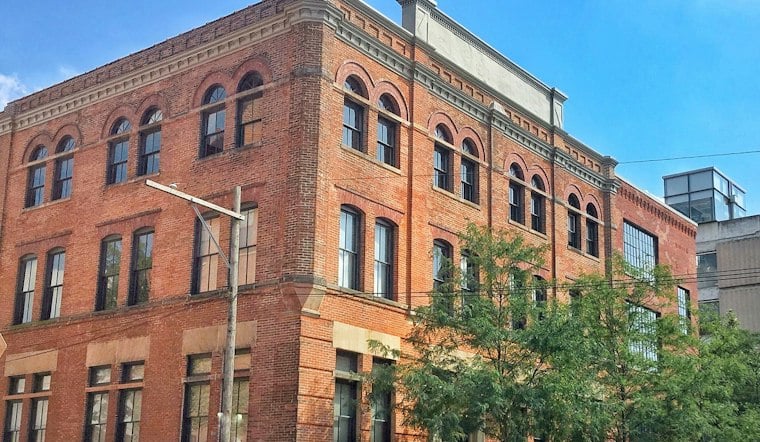
A Trulieve dispensary building in Columbus' Brewery District has sold for $4.15 million, a price that marks the highest sum paid for a retail property in the city's Downtown submarket in eight years. The 9,900-square-foot building at 601 S. High St. changed hands in a deal brokered by Matthews, the commercial real estate firm that represented both the buyer and the seller.
According to a press release from Matthews, the seller was Zoned Properties, a longtime client of the firm, which secured a new 10-year lease with Trulieve before ever putting the building on the market. The buyer was a New York-based private investor who was looking to reinvest proceeds from another property sale through a 1031 exchange, a mechanism that lets investors defer capital gains taxes when swapping one investment property for another. Matthews vice president Alexander Machado, who specializes in single-tenant, net-lease retail properties, brokered the transaction.
Not every outlet agrees on the exact sale price. While Matthews puts the figure at $4.15 million, MJBizDaily reported that the unnamed New York investor paid $4.1 million for the building. Either way, the same report credits Matthews with the eight-year comparison, noting the deal is the most paid for commercial real estate in Columbus during that span.
A Quick Flip for a Fast-Growing Property
The building's rise in value happened fast. As reported by WhatNow, the property was previously purchased for approximately $2.5 million in April 2025, and Trulieve opened its dispensary there that February. The approximately 9,900-square-foot property underwent renovations in 2025 before this latest sale closed at about 1.66 times its approximately $2.5 million purchase price. Franklin County auditor records list the buyer as 601 S High TH LLC, per the same outlet.
WhatNow also reports that, per Machado, the buyer is an individual female investor based in New York who intended to reinvest proceeds from another property sale through the 1031 exchange. The new lease is corporately guaranteed by Trulieve under an absolute triple-net structure that extends through June 2035, with 3% annual rent increases and two additional five-year renewal options. Under a triple-net lease, the tenant, in this case Trulieve, is responsible for covering property taxes, insurance, and maintenance.
Why the Yield Ran High
The transaction closed at an 8.19% capitalization rate, a figure that measures a property's annual net operating income against its purchase price. Machado told Columbus Business First, per WhatNow's report, that financing for cannabis dispensary properties remains limited and more expensive, which contributes to the higher yield investors can command on these deals.
That dynamic tracks with broader guidance on cannabis real estate. A sale-leaseback investment guide from 420property.com notes that pricing in this niche is a function of the proposed rent, lease term, tenant credit quality, and real estate fundamentals rather than replacement cost alone. The same guide says investors underwrite tenant credit, debt-service coverage headroom, asset quality, location, and regulatory durability when evaluating these properties, and it describes triple-net leases as the institutional norm in the sector, with modest, predictable annual rent bumps helping protect both the landlord's net operating income and the tenant's debt-service coverage.
Ohio's Tight License Count Fuels Investor Interest
Machado said the investor was drawn to the deal by confidence in Trulieve as a tenant, the return on the deal, and the real estate fundamentals of the location, according to WhatNow's account. He also pointed to Ohio's regulated cannabis market as a draw for investors generally, noting the state has a limited number of dispensary licenses that restrict how many operators can enter the market. Cannabis dispensaries, unlike traditional retail businesses, also face more challenges when trying to relocate.
MJBizDaily's reporting adds further context on the scale of Ohio's cannabis industry, describing it as a $1.1 billion market with 233 operating dual-use dispensaries statewide, a figure the outlet says falls below the 400 retail locations allowed under Senate Bill 56. MJBizDaily also reports that Trulieve has eight retail locations in Ohio, where adult-use sales launched in 2024. Machado said he expects investor interest in cannabis-related real estate to keep growing and anticipates that financing options for properties leased to cannabis operators could expand in the coming years.




