

























































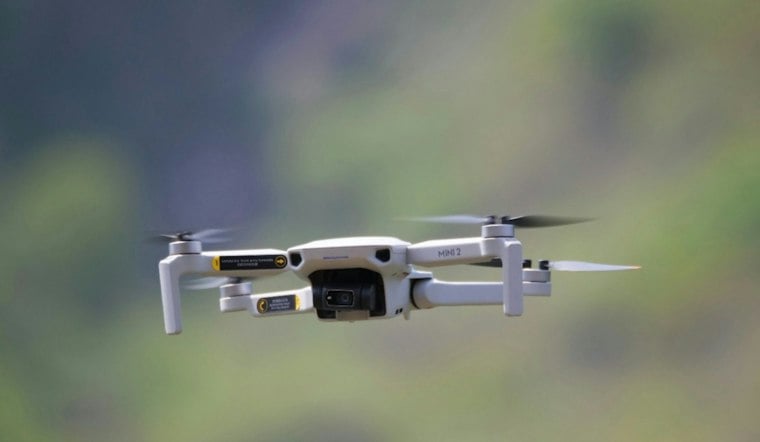
Eighteen drone docks scattered around Columbus can now get a camera-equipped drone to roughly 400,000 Ohio Power customers within five minutes. The utility, formerly known as AEP Ohio, has used drones since 2021, and the program just proved its worth during a stormy August that knocked out power across central Ohio.
Each of the docked drones has a flight radius of about three miles, which according to WOSU Public Media means the fleet can cover the entire area inside the Interstate 270 outerbelt, and then some. Jake Reed, Ohio Power Company's drone program project manager, told the station that the reach extends well past city limits. “We can be anywhere within the central Ohio area, for the most part, in less than five minutes,” Reed said.
One of those docks sits at a substation near Hamilton Road on Columbus' southeast side, part of a network whose first station was installed in July 2025. Pilots never leave the ground — they operate the drones remotely, relying on thermal cameras that let Ohio Power employees spot overheating equipment or other problems and flag them for repair before they fail.
Spotting Trouble Before the Lights Go Out
That early-warning approach has paid off, per Reed, who said the drones have helped identify more than 250 infrastructure or reliability issues that crews were able to fix before they ever caused an outage. The drones also get dispatched to assess damage ahead of human crews when outages do happen, and the same report notes they now assist with 20 to 30 outage calls a week across central Ohio. Reed added that the aircraft can enter areas that might be dangerous for people to access on foot.
The numbers climbed sharply after severe summer storms, including several small tornadoes and high winds, left thousands of central Ohio customers without power. During the August storm, the company leaned hard on its dock network, flying more than 130 missions to clear hazard tickets and dispatch tickets that poured in during the worst of the weather, Reed said. Since July 2026, drones based around Columbus have logged about 1,900 flights, spent roughly 400 hours in the air, and covered around 4,800 miles, according to the station's reporting.
From Pilot Program to Permanent Fixture
The docking network traces back to a single pilot station. The company installed its first permanent drone docking station at a Columbus substation in July 2025, according to AEP Ohio Wire, and by that August the drone team had already flagged 307 equipment issues for proactive repair. Separate company reporting put the 2025 total even higher, crediting the Center for Customer Reliability and operations teams with identifying 383 potential equipment issues through drone inspections that year, per the same outlet's separate account of the program's growth. The company has said these proactive inspections play a key role in reducing outages and improving reliability.
The utility's drone ambitions have steadily expanded. By 2023, AEP Ohio had broadened drone usage to include reliability assessments driven by smart-grid data, and the company began flying drones at night in 2024 to assess storm and equipment damage after dark, per AEP Ohio Wire. The company changed its public name from AEP Ohio to its legal name, Ohio Power Company. NBC4 reported that the first docking station was always meant as a pilot, with the company's stated goal being to eventually expand the program to every area it serves.
Ohio Power Looks Beyond Columbus
Ohio Power now hopes to expand the drone dock program into other parts of the state, though no firm timeline or list of new locations has been announced. Other utilities are moving in a similar direction: PSE&G in New Jersey has described using drones to inspect transmission lines, substations and other equipment with cameras, often skipping the need for employees to climb structures or wait on a helicopter, according to a Morningstar/Accesswire report. That utility said its drones can catch early signs of equipment wear, damaged insulators, loose hardware and vegetation creeping too close to power lines before any of it triggers an outage.
PSE&G also reported that after severe thunderstorms hit in July 2026, a drone survey helped shorten one outage by several hours compared with what might have happened otherwise. The New Jersey utility said the FAA has approved expanded use of its docked drones for flights beyond the operator's direct line of sight, allowing a single remote pilot to oversee up to four drones at once. Whether Ohio Power pursues similar FAA clearances as it grows its own network remains to be seen.




