

























































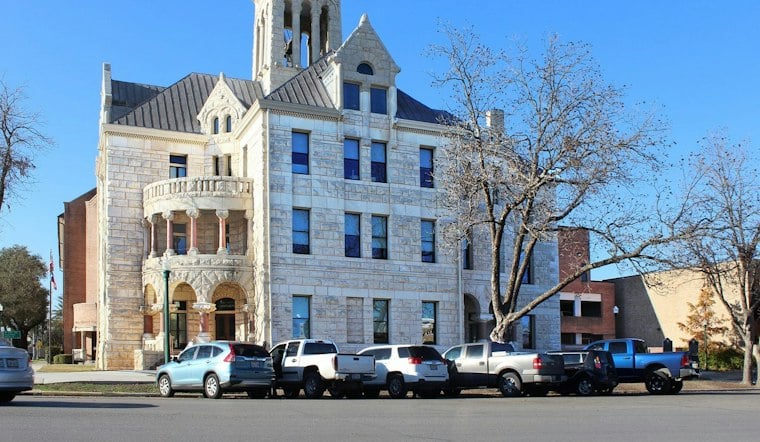
Construction crews are pushing ahead on a 16,000-square-foot mental health crisis facility in New Braunfels, a project county officials say is meant to catch residents in crisis before they end up in an emergency room with nowhere else to go. The Comal County Mental Health Extended Observation Unit and Crisis Residential Unit facility is rising at 3115 W. San Antonio St., with construction now running more than two years after it broke ground.
The project, pegged at $8.75 million according to a report from Community Impact, is funded through the federal American Rescue Plan Act. That figure has shifted across coverage of the project over the past two years: Community Impact itself reported a cost of $8.65 million when the county broke ground in December 2024, and KSAT put the planned cost at $8.5 million in a February 2025 report. The project remains funded by ARPA dollars, per KSAT's reporting.
Project Manager Jaclyn Andrada told Community Impact in an email that the facility aims to address the growing need for accessible mental health crisis services in Comal County and the surrounding area. The county says the completed building will serve individuals experiencing mental health crises, support timely intervention, and reduce reliance on emergency departments that may lack specialized behavioral health services.
Two Components, One Goal: Keeping People Out of the ER
The facility combines two distinct pieces. The Extended Observation Unit is intended to provide short-term observation, assessment and stabilization services for people facing a mental health crisis, the same report notes. The Crisis Residential Unit, meanwhile, is designed to offer a structured, supportive environment for short-term residential crisis stabilization for people who need additional support beyond initial observation.
Comal County Court at Law No. 3 Judge Deborah Wigington said the facility will give the county the ability to provide assessments, crisis intake, stabilization and treatment for residents, according to the same Community Impact report. Wigington added that support from the Commissioners Court and the broader community reflects the county's commitment to addressing unmet mental health needs.
Hundreds of Detentions a Year Strain the System
The push for local crisis capacity comes against a backdrop of heavy demand on outside facilities. KSAT reported in February 2025 that Comal County recorded 581 law-enforcement emergency detentions in the prior year involving people taken to mental health facilities outside the county. That same report said 37 people were court-ordered to a mental health facility and 54 others were placed in protective custody over that same period.
Comal County Commissioners Court has also taken steps aimed at funding the facility's operations once it opens. Court members approved a resolution supporting a request for $9.5 million in state funding to run the extended-observation unit, asking conference committee members to include the money in the 2026–27 biennial budget, according to Citizen Portal. It is not established whether that funding request was ultimately granted.
Groundwater Problems Forced a Costly Redesign
Construction has not gone entirely to plan. Citizen Portal reported that unanticipated groundwater and clay conditions at the site forced a foundation redesign, requiring piers originally designed for about 33 feet to be extended and cased to reach 50 feet. The court approved a structural change order reported in the range of $3.34 million to $3.45 million, funded from ARPA interest and remaining project contingency, per the same report.
Construction on the facility began in September 2024, and the project is now anticipated to be completed in May 2027, according to Community Impact's latest reporting. Earlier accounts gave different timelines: a December 2024 Community Impact report projected the facility would be finished by late 2025 with a 10-to-12-month construction window, while other coverage has cited still different completion expectations. Coverage has not established the facility's actual completion or opening date.
Details about the facility's eventual operations have also varied across reports. The December 2024 Community Impact story described a 16-bed facility serving both voluntary and involuntary patients, with Hill Country Mental Health and Developmental Disabilities set to operate it at an annual cost of $4.5 million and an expected caseload of around 200 people per year. KSAT's February 2025 report similarly named Hill Country MHDD Centers as the operator, identifying Anthony Winn as its director. An Express-News report from November 2024 likewise described the extended-observation unit as being built on the same Interstate 35-area property and operated by Hill Country Mental Health and Developmental Disabilities Centers. Whether those operational details — bed count, operating costs, projected caseload, operator or director — have changed since those earlier reports has not been established.





