

























































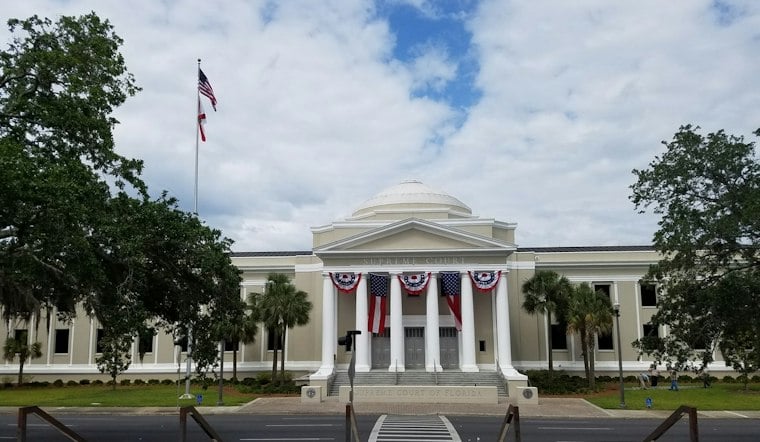
A Miami-Dade grievance committee has found probable cause for a formal complaint accusing Roland Sanchez-Medina, a Coral Gables attorney and former president of the Florida Bar, of 17 professional-conduct violations. The complaint is expected to reach the Florida Supreme Court by Dec. 22.
The Miami Herald reported the finding by the Bar's 11th Judicial Circuit Grievance Committee, and a notice of probable cause puts the filing on that December timetable. The committee notified Sanchez-Medina on Oct. 23. Probable cause is a charging step. It is not a decision that the Bar has proved the accusations, and it is not a sanction.
What The Finding Starts
Sanchez-Medina served as Bar president for a one-year term from 2024 to 2025. He had already spent 10 years on the Bar's Board of Governors. Barry Richard and Gwen Daniels are his defense attorneys in the disciplinary matter. The grievance committee that found probable cause has 10 members, three of whom are not lawyers.
He said he respects the Florida Bar's responsibility to investigate professional-conduct concerns, and he asked others to reserve judgment until the process concludes. He also said he has practiced law for 34 years.
A former president on the receiving end of a public disciplinary file is an awkward place for the person who just finished leading the organization that licenses Florida lawyers. The awkwardness does not convert a probable-cause finding into a result. The case still has to be filed, heard, and reviewed.
How The Case Moves From Here
Once probable cause for further proceedings has been entered, the Florida Bar treats the disciplinary case as public information. Bar guidance says counsel then files a formal complaint with the Florida Supreme Court, after review by the Board of Governors. The court assigns a judge or retired judge as referee.
The referee hears witnesses, takes evidence, and decides whether the Bar proves its case. The report that follows is supposed to summarize the testimony, state what was proved, and cite the case law behind any discipline recommendation. Sanchez-Medina's defense lawyers and Bar prosecutors will both argue. The referee may recommend sanctions. The report itself does not end the case.
The Supreme Court can approve or disapprove any part of that report, including findings of guilt and recommended sanctions. In the Herald's account of the same machinery, the court can accept, modify, or reject the report. Either formulation leaves the last call in Tallahassee, not with the 10-member committee in the 11th Circuit.
Most consumer complaints never get this far. In a typical year, the Bar's Attorney Consumer Assistance Program handles about 13,000 requests for assistance, and roughly a quarter of those inquiries produce a disciplinary file. Probable cause is a later cut.
A Civil Case Filed The Same Day
Oct. 23 was a busy date. The same day the committee notified Sanchez-Medina, Mercedes del Carmen Piedra Rodriguez filed a separate lawsuit in Miami-Dade Circuit Court against him, SMGQ Law, and associates Kelly Marie Scott and Andrew Portillo. Robert Stok, Moshe Katz, and Luis Barreto brought the case. It alleges legal malpractice, breach of fiduciary duty, and constructive fraud. Those are pleadings, not findings.
The suit concerns her late husband, Francisco Martinez-Celeiro, who died on Sept. 1, 2021. His assets and net worth were valued at about $351 million when the prenuptial agreement was signed. The complaint says he asked SMGQ to revoke that agreement so Rodriguez would be protected after his death and her spousal rights restored.
Her lawyers claim the firm produced one revocation without witnesses and had another notarized over a FaceTime call, then mishandled her interests while the estate was being administered. The complaint alleges she had the right, as a surviving spouse, to elect 30% of his elective estate. Florida sets the elective share at 30%. It also alleges Sanchez-Medina sent her signed notice waiver to the estate's counsel on Oct. 12, 2021, and that counsel filed the notice the next day.
A probate court dismissed the election as untimely. The complaint says the order stopped there: "The Order did not reach the merits of Mercedes's entitlement to an elective share." The pleading's account of the damage is just as blunt. "She lost that right because of the professional failures of the lawyers and law firm she had relied on since 2018."
That 30% is an election against an elective estate, not a court-awarded cut of the 2018 net-worth figure, and no ruling in the complaint decides the share on the merits. Sanchez-Medina said his firm disputes the allegations, intends to defend itself, and will address the claims in court.
The Earlier Key Largo Accusation
Trust-account money has been an issue in a separate complaint as well. On Nov. 15, 2024, Christos "Nicko" Christidis filed a Florida Bar complaint accusing Sanchez-Medina of misappropriating $625,000 in a deal for a Key Largo commercial building. The Herald reported that he held $625,000 of the deal's $1.4 million in his trust account and did not turn it over to the seller, Morgan.
His denial was not subtle. "I categorically and unequivocally deny misappropriating $625,000," he said. That 2024 complaint is a different file from the grievance committee's new probable-cause finding. The new matter still has its own clock.
If Bar counsel files by Dec. 22, the Supreme Court assigns a referee, and the next arguments are made in a hearing with witnesses rather than in a committee notice. The civil case proceeds on the circuit-court docket beside it, not inside it.





