

























































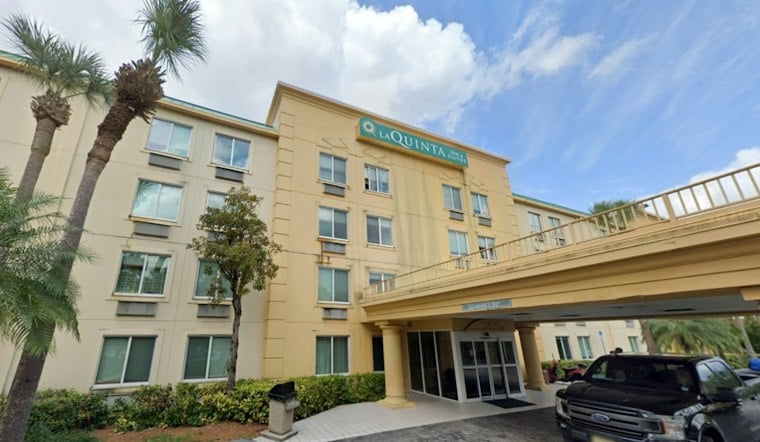
A former hotel in Cutler Bay has been transformed into Hideaway Bay, a complex of affordable studio apartments built specifically for older adults who once had nowhere else to go. The property can accommodate 130 residents, and many of the people who live there are 55 or older and living with a disability. Rent runs about $300 a month on average, calculated at 30% of each resident's monthly income.
The idea, as described by NBC 6 South Florida, was simple: take an aging hotel and turn it into housing that actually works for an older population, many of whom live on fixed incomes. Residents sign one-year leases, and tenants are selected through referrals rather than a general waitlist. Those who move in gain access to transportation, educational resources, and financial services meant to help them stay housed for good.
Denny Baldonado, director of Hideaway Bay, said the model was built around the reality that older residents need stability more than almost anything else. He has placed people he personally knew from the streets into units at the property, watching them settle into routines that once felt impossible. Baldonado said residents have expressed real joy simply because the facility finally meets their basic needs.
One Resident's 15 Years on the Street
Alex De Pazos, 56, spent 15 years experiencing chronic homelessness before landing at Hideaway Bay. Now he works as a gig worker and has something he says he had not had in a very long time: a furnished room, a private bathroom, and a safe, quiet home. De Pazos told the station the new place felt like a brand-new hotel room, and he has since taken on a volunteer role helping run Bible study and bingo games for fellow residents.
The building itself offers furnished living spaces, onsite laundry, and shared areas where residents gather for breakfast and dinner. Units are also being outfitted with kitchenettes, giving tenants more independence in their day-to-day routines. The approach reflects a broader strategy the Miami-Dade Homeless Trust developed in 2023 specifically to address the housing needs of homeless adults ages 55 and older.
Homelessness Numbers Tell a Mixed Story
Just how much progress Miami-Dade is making depends on which count you look at. According to Miami-Dade Homeless Trust data cited by NBC 6, the number of people counted as homeless in the county topped 3,700 in August, reaching 3,748, a 5% increase compared with the same time the previous year. Experts cautioned that these figures represent only a snapshot of the problem, since counting everyone experiencing homelessness can be difficult.
A separate measure, the Homeless Trust's official point-in-time count conducted in January, found 3,648 people experiencing homelessness in 2026, a 1% increase of 33 people over 2025, according to the Miami-Dade Homeless Trust. That same report also recorded a sharper jump in unsheltered homelessness specifically, which rose 38% from 858 people in 2025 to 1,184 in 2026. The two counts use different methods and comparison periods, and the Trust's figures should not be read as describing the same measurement.
A Growing Pipeline of Supportive Units
Hideaway Bay fits into a larger push by the Homeless Trust to add 1,000 extremely affordable and supportive housing units across the county. So far, 326 project-based units have come online, with another 377 in the pipeline, bringing the total toward 703. The 107-unit Hideaway Bay property itself was acquired in January 2025 with financial support from City of Miami HOME-ARP funds and Miami-Dade County HOMES funding, per the Trust's gaps and needs report. By June 2026, the Miami Herald reported the complex was home to 93 residents, with the property owned by the Homeless Trust and operated by New Hope CORPS.
Converting old hotels into housing for people who were previously unhoused is not unique to South Florida. In Dorchester, Massachusetts, a former Comfort Inn was redeveloped into 99 single-occupancy homes, with 96 units already occupied by people who used to live on the street when it opened, as reported by The Boston Globe. That project was developed by The Community Builders, with on-site services run by Pine Street Inn. In Brooklyn, a former hotel for Jehovah's Witnesses was converted into a 30-story supportive housing building with nearly 500 units, according to The New York Times. And in the Des Moines metro, two former hotels are slated to become affordable housing campuses offering nearly 200 units with on-site support services, Iowa Public Radio reported.
For now, Hideaway Bay stands as Cutler Bay's answer to a problem playing out in cities nationwide: aging hotel stock sitting empty while older adults cycle through homelessness with few places built for their specific needs. For residents like De Pazos, the fix is less about policy debates and more about a locked door, a private bathroom, and a bingo night with neighbors who understand exactly what he went through to get there.




